Department of Radiology, China Resources & WISCO General Hospital, Wuhan, 430080, China.
Department of Biochemistry and Molecular Biology, China Medical University, Shenyang, 110122, China.
BMC Med Imaging. 2020 May 24;20(1):56. doi: 10.1186/s12880-020-00456-5.
Coronavirus disease 2019 (COVID-19) is a highly infectious disease caused by the new coronavirus. Previous studies have shown that the chest CT examination plays an important role in the diagnosis and monitoring of COVID-19. However, some patients with COVID-19 had low white blood cell counts and reduced lymphocyte ratios. Multiple CT examinations may cause radiation damages as well as increase the apoptosis of peripheral blood lymphocytes. A new low-dose CT method should be developed because the regular CT may aggravate the disease.
Sixty cases were randomly divided into the study group (n = 30) and control group (n = 30). The lung window was reconstructed by Karl 3D iterative technique in the study group. The image quality was subjectively evaluated by two senior chest group diagnostic physicians using a 5-point double-blind method. The value of CT measurement and its standard deviation (SD) was used as an objective evaluation criteria. The volume of CT dose index (CTDI), dose length product (DLP) and effective dose (ED) from the two groups were compared and analyzed statistically.
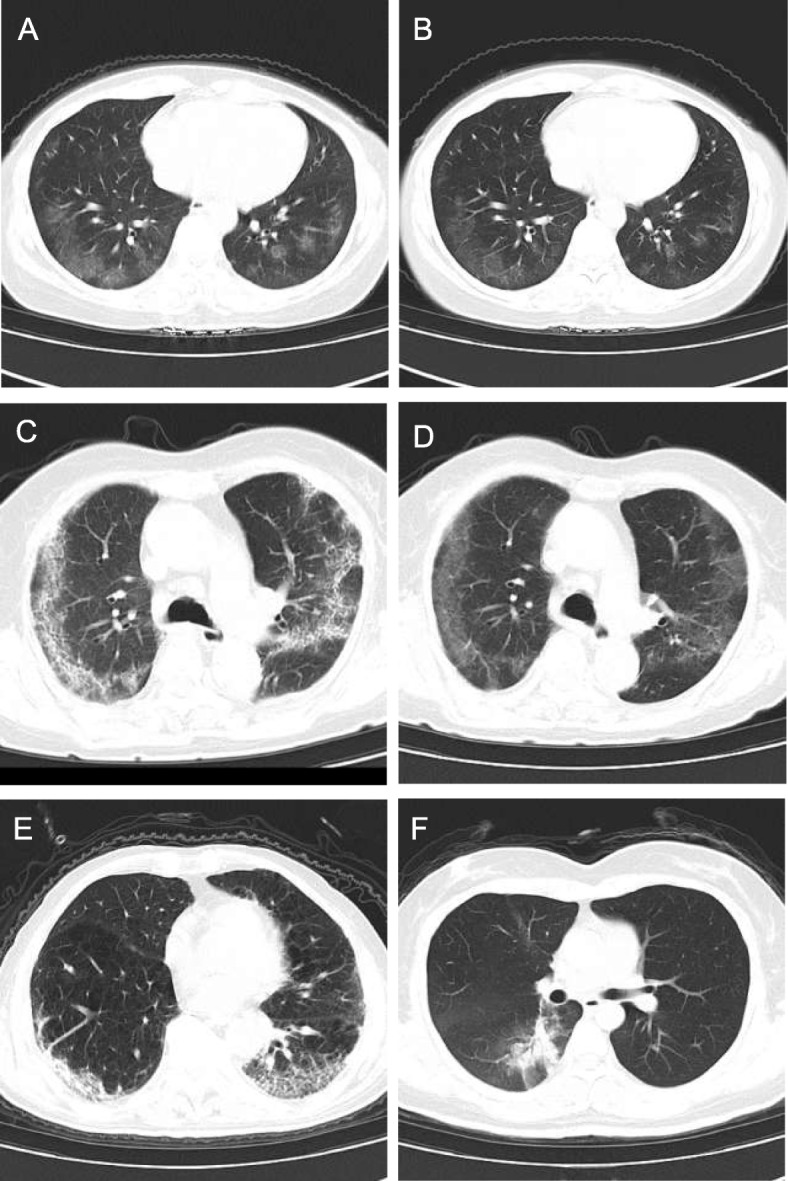
There was no significant difference in the occurrence rates of ground glass opacities, consolidation, crazy-paving pattern, fiber cable shadow and axial interstitial thickening between the study group and control group (p > 0.05). In addition, no significant difference was found for the subjective score of overall image quality and image noise level (SD) between the two groups (p > 0.05). However, significant differences was found in CTDI, DLP, and ED between the study group and the control group (p < 0.05). The effective dose of the study group was reduced by 76% compared to the control group.
CareDose 4D low-dose scanning combined with Karl 3D iterative reconstruction technology can not only greatly reduce the radiation dose, but also provide images that meet the diagnostic criteria of COVID-19, which can be used as a routine method for the follow-up of COVID-19 patients.
新型冠状病毒引发的 2019 年冠状病毒病(COVID-19)是一种高度传染性疾病。既往研究表明,胸部 CT 检查在 COVID-19 的诊断和监测中发挥着重要作用。然而,部分 COVID-19 患者存在白细胞计数降低和淋巴细胞比值减少的情况。多次 CT 检查可能会造成辐射损伤,增加外周血淋巴细胞凋亡。为避免常规 CT 加重病情,应开发新的低剂量 CT 方法。
60 例患者被随机分为研究组(n=30)和对照组(n=30)。研究组采用卡尔三维迭代技术重建肺窗。由 2 位资深胸部组诊断医师采用 5 分制双盲法对图像质量进行主观评估。采用 CT 测量值及其标准差(SD)作为客观评价标准。对比分析两组 CT 剂量指数(CTDI)、剂量长度乘积(DLP)和有效剂量(ED)值。
研究组和对照组的磨玻璃影、实变、铺路石征、纤维条索影和轴位间质增厚的发生率比较,差异均无统计学意义(p>0.05)。两组的整体图像质量主观评分和图像噪声水平(SD)比较,差异均无统计学意义(p>0.05)。但研究组的 CTDI、DLP 和 ED 与对照组比较,差异均有统计学意义(p<0.05)。与对照组相比,研究组的有效剂量降低了 76%。
CareDose 4D 低剂量扫描联合卡尔三维迭代重建技术不仅能大幅降低辐射剂量,还能提供满足 COVID-19 诊断标准的图像,可作为 COVID-19 患者随访的常规方法。