Biozentrum, University of Basel, CH-4056, Basel, Switzerland.
BMC Microbiol. 2020 May 24;20(1):129. doi: 10.1186/s12866-020-01819-2.
Gene editing is key for elucidating gene function. Traditional methods, such as consecutive single-crossovers, have been widely used to modify bacterial genomes. However, cumbersome cloning and limited efficiency of negative selection often make this method slower than other methods such as recombineering.
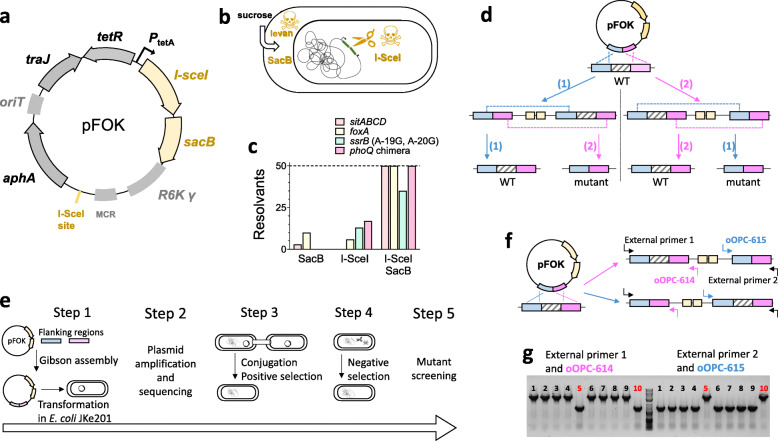
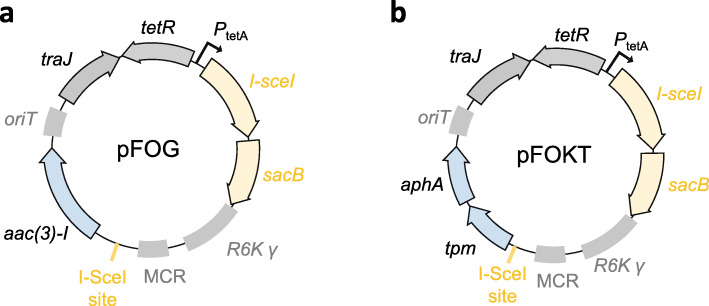
Here, we established a time-effective variant of consecutive single-crossovers. This method exploits rapid plasmid construction using Gibson assembly, a convenient E. coli donor strain, and efficient dual-negative selection for improved suicide vector resolution. We used this method to generate in-frame deletions, insertions and point mutations in Salmonella enterica with limited hands-on time. Adapted versions enabled efficient gene editing also in Pseudomonas aeruginosa and multi-drug resistant (MDR) Escherichia coli clinical isolates.
Our method is time-effective and allows facile manipulation of multiple bacterial species including MDR clinical isolates. We anticipate that this method might be broadly applicable to additional bacterial species, including those for which recombineering has been difficult to implement.
基因编辑是阐明基因功能的关键。传统方法,如连续单交换,已被广泛用于修饰细菌基因组。然而,繁琐的克隆和有限的负选择效率往往使这种方法比其他方法(如重组)慢。
在这里,我们建立了一种时间有效的连续单交换变体。该方法利用 Gibson 组装快速构建质粒,利用方便的大肠杆菌供体菌株,以及高效的双重负选择来提高自杀载体的分辨率。我们使用这种方法在沙门氏菌中生成了有限的实验时间内的框内缺失、插入和点突变。适应版本还能有效地编辑铜绿假单胞菌和多药耐药(MDR)大肠杆菌临床分离株中的基因。
我们的方法是有效的,并且可以方便地操纵多种细菌,包括 MDR 临床分离株。我们预计这种方法可能广泛适用于其他细菌,包括那些难以实施重组的细菌。