INSERM U1109, Fédération Hospitalo-Universitaire (FHU) OMICARE, Fédération de Médecine Translationnelle de Strasbourg (FMTS), Université de Strasbourg, Strasbourg, France.
Faculty of Pharmacy, PHENIKAA University, Yen Nghia, Ha Dong, Hanoi 12116, Viet Nam; PHENIKAA Research and Technology Institute (PRATI), A&A Green Phoenix Group JSC, No.167 Hoang Ngan, Trung Hoa, Cau Giay, Hanoi 11313, Viet Nam.
Life Sci. 2020 Aug 15;255:117836. doi: 10.1016/j.lfs.2020.117836. Epub 2020 May 22.
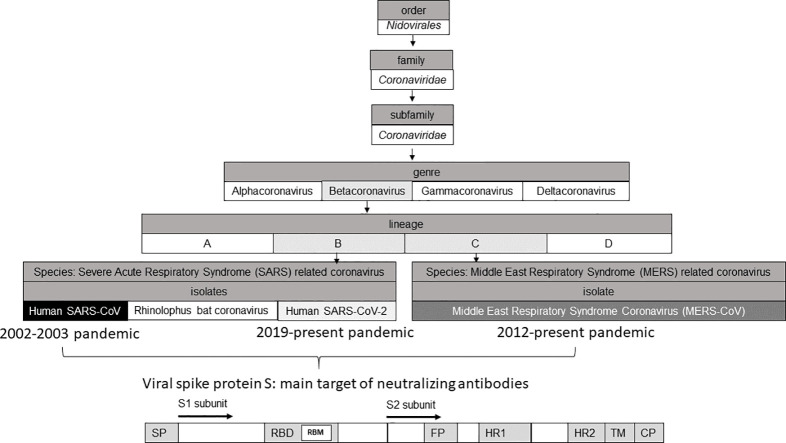
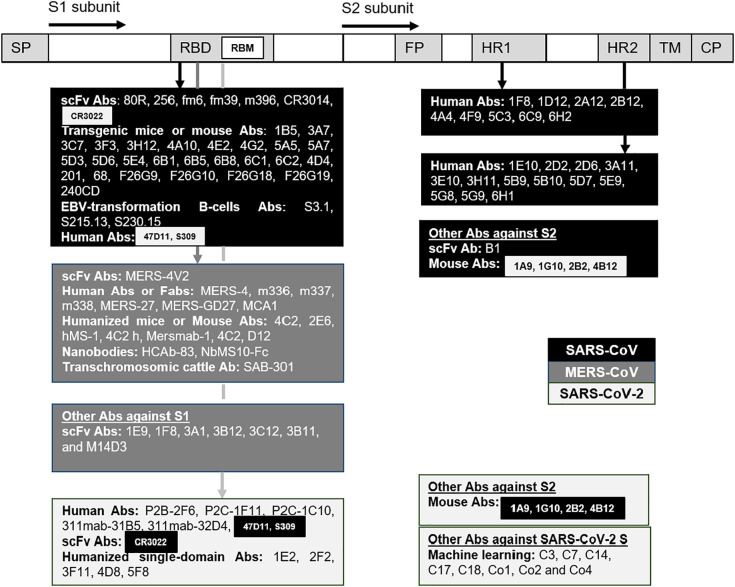
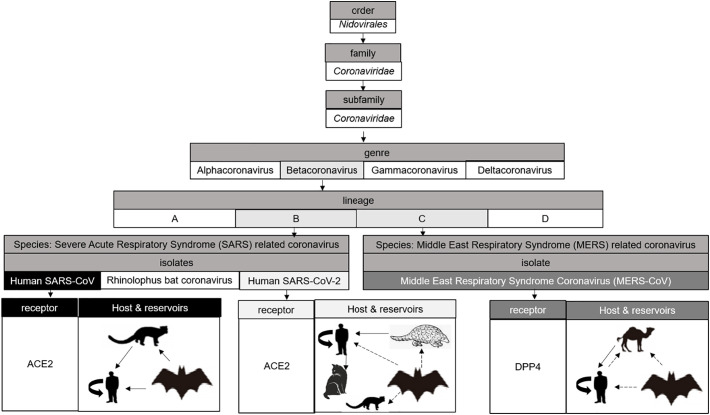
For the first time in Homo sapiens history, possibly, most of human activities is stopped by coronavirus disease 2019 (COVID-19). Nearly eight billion people of this world are facing a great challenge, maybe not "to be or not to be" yet, but unpredictable. What happens to other major pandemics in the past, and how human beings went through these hurdles? The human body is equipped with the immune system that can recognize, respond and fight against pathogens such as viruses. Following the innate response, immune system processes the adaptive response by which each pathogen is encoded and recorded in memory system. The humoral reaction containing cytokines and antibodies is expected to activate when the pathogens come back. Exploiting this nature of body protection, neutralizing antibodies have been investigated. Learning from past, in parallel to SARS-CoV-2, other coronaviruses SARS-CoV and MERS-CoV who caused previous pandemics, are recalled in this review. We here propose insights of origin and characteristics and perspective for the future of antibodies development.
有史以来第一次,可能是由于 2019 年冠状病毒病(COVID-19),大多数人类活动都已停止。这个世界上近 80 亿人正面临着巨大的挑战,也许还没有到“生存还是毁灭”的地步,但却难以预测。过去的其他大流行情况如何,人类是如何度过这些难关的?人体配备了免疫系统,可以识别、应对和对抗病毒等病原体。在先天反应之后,免疫系统通过适应性反应对每个病原体进行编码并记录在记忆系统中。当病原体再次出现时,预计会激活体液反应,其中包含细胞因子和抗体。利用身体保护的这种特性,已经研究了中和抗体。从过去的经验中学习,本文同时回顾了导致以前大流行的 SARS-CoV 和 MERS-CoV 等其他冠状病毒 SARS-CoV-2。在这里,我们提出了抗体开发的起源、特征和未来的观点。