Laboratory of Gene Expression Regulation in Development, Institute of Gene Biology, Russian Academy of Sciences, Moscow, Russia.
I.M. Sechenov First Moscow State Medical University, Ministry of Health of the Russian Federation, Moscow, Russia.
Mol Med. 2020 May 25;26(1):51. doi: 10.1186/s10020-020-00180-4.
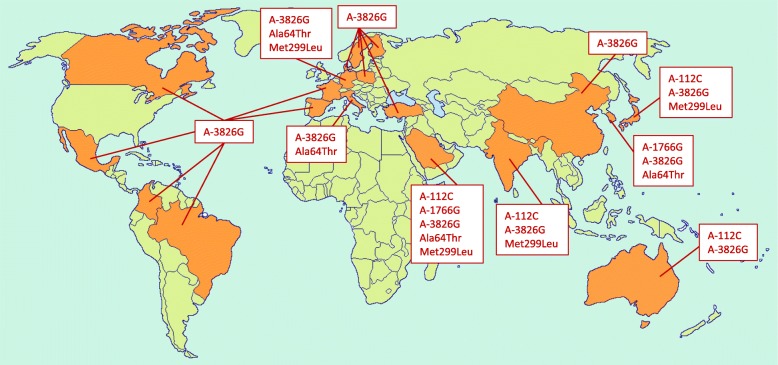
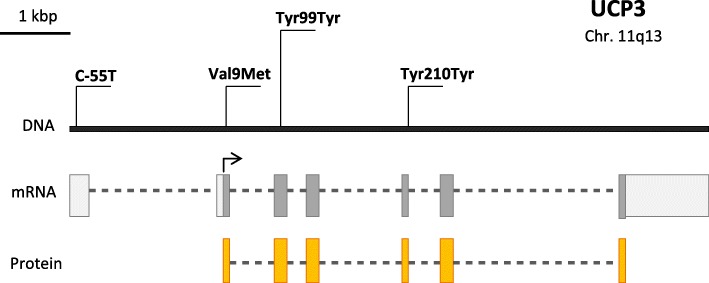
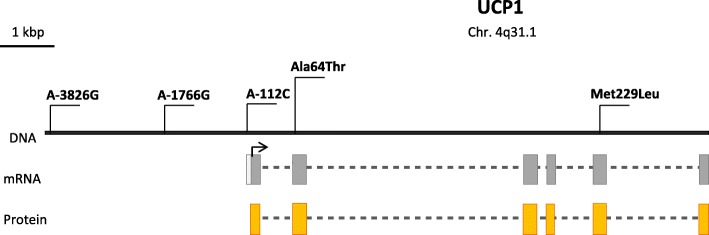
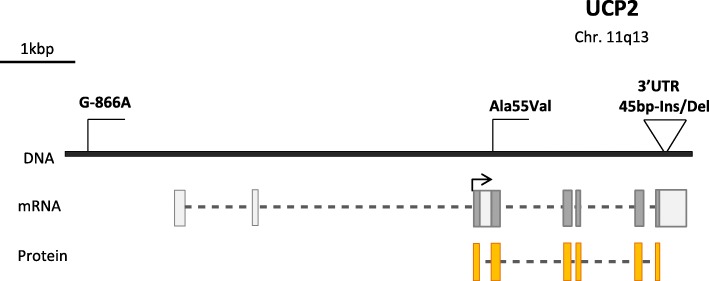
The hereditary aspect of obesity is a major focus of modern medical genetics. The genetic background is known to determine a higher-than-average prevalence of obesity in certain regions, like Oceania. There is evidence that dysfunction of brown adipose tissue (BAT) may be a risk factor for obesity and type 2 diabetes (T2D). A significant number of studies in the field focus on the UCP family. The Ucp genes code for electron transport carriers. UCP1 (thermogenin) is the most abundant protein of the UCP superfamily and is expressed in BAT, contributing to its capability of generating heat. Single nucleotide polymorphisms (SNPs) of Ucp1-Ucp3 were recently associated with risk of cardiometabolic diseases. This review covers the main Ucp SNPs A-3826G, A-1766G, A-112C, Met229Leu, Ala64Thr (Ucp1), Ala55Val, G-866A (Ucp2), and C-55 T (Ucp3), which may be associated with the development of obesity, disturbance in lipid metabolism, T2D, and cardiovascular diseases.
肥胖的遗传因素是现代医学遗传学的一个主要关注点。遗传背景被认为是某些地区(如大洋洲)肥胖症高发的一个重要决定因素。有证据表明,棕色脂肪组织(BAT)功能障碍可能是肥胖和 2 型糖尿病(T2D)的一个风险因素。该领域的大量研究集中在 UCP 家族。UCP 基因编码电子传递载体。UCP1(解偶联蛋白 1)是 UCP 超家族中最丰富的蛋白质,在 BAT 中表达,有助于其产生热量的能力。Ucp1-Ucp3 的单核苷酸多态性(SNP)最近与心血管代谢疾病的风险相关。这篇综述涵盖了主要的 Ucp SNPs A-3826G、A-1766G、A-112C、Met229Leu、Ala64Thr(Ucp1)、Ala55Val、G-866A(Ucp2)和 C-55T(Ucp3),它们可能与肥胖症的发展、脂质代谢紊乱、T2D 和心血管疾病有关。