Medical Research Division, Korea Institute of Oriental Medicine, 1672 Yuseongdae-ro, Yuseong-gu, Daejeon, 305-811, Republic of Korea.
BMC Complement Altern Med. 2012 Oct 9;12:180. doi: 10.1186/1472-6882-12-180.
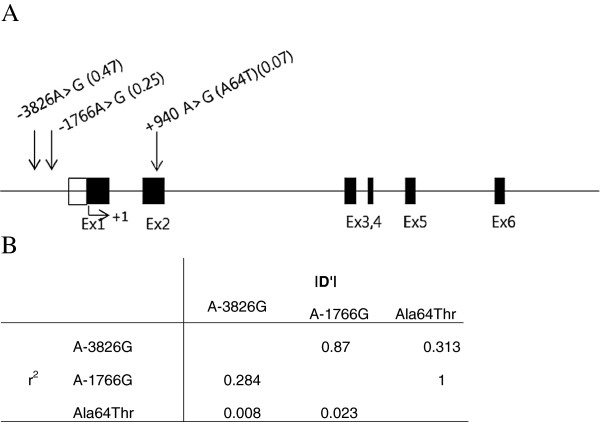
Patients with stroke have various syndromes and symptoms. Through pattern identification (PI), traditional Korean medicine (TKM) classifies the several syndromes and symptoms of stroke patients into five categories: Fire-heat (FH), Dampness-phlegm (DP), Yin-deficiency (YD), Qi-deficiency (QD) and Blood-stasis (BS). DP has been associated with obesity and hyperlipidemia. Uncoupling protein-1 (UCP-1), which plays a major role in thermogenesis and energy expenditure can increase the risk of obesity and can be related metabolic disorders. In this study, we elucidated the association of three polymorphisms located in the UCP-1 promoter and coding region with DP among Korean stroke patients.
1,593 patients with cerebral infarction (583/DP, 1,010/non-DP) and 587 normal subjects were enrolled. The genotypes A-3826G, G-1766A and Ala64Thr (G+1068A) for each subject were determined by polymerase chain reaction with TaqMan probes and five percent of subjects were re-genotyped by sequencing method to confirm the accuracy of genotyping. The results were analyzed using a multiple logistic regression model to evaluate the genetic associations: the UCP-1polymorphisms of normal versus those of DP subjects and those of normal versus those of non-DP subjects.
A significantly higher percentage of subjects in the DP group possessed the A-3826G G allele than the A allele (OR=1.508, p=0.006). Furthermore, the number of subjects with the GG type of A-1766G was significantly lower in the non-DP group than the normal group in the recessive model (OR=0.606, p=0.042). In addition, an analysis of the relationship among 2 SNPs of UCP-1 and lipid serum concentration showed that the serum level of HDL cholesterol was significantly higher in subjects with the A-3826G G allele in the normal group (p=0.032). Serum triglyceride and HDL cholesterol were also associated with the A-1766G variant in the recessive model (p=0.002, p=0.046).
These results suggest that that the A-3826G and A-1766G UCP-1 polymorphisms, which are related to obesity, might be candidate genetic markers for the DP pattern in the TKM diagnosis system.
中风患者有各种综合征和症状。通过模式识别(PI),传统的韩国医学(TKM)将中风患者的几种综合征和症状分为五类:火热(FH)、湿痰(DP)、阴虚(YD)、气虚(QD)和血瘀(BS)。DP 与肥胖和高血脂有关。解偶联蛋白-1(UCP-1)在产热和能量消耗中起主要作用,它可以增加肥胖的风险,并可能与代谢紊乱有关。在这项研究中,我们阐明了位于 UCP-1 启动子和编码区的三个多态性与韩国中风患者 DP 之间的关系。
纳入了 1593 名脑梗死患者(583/DP,1010/非 DP)和 587 名正常对照者。采用聚合酶链反应 TaqMan 探针法测定每位受试者的 A-3826G、G-1766A 和 Ala64Thr(G+1068A)基因型,5%的受试者采用测序法重新进行基因分型,以确认基因分型的准确性。采用多因素 logistic 回归模型分析遗传相关性:正常受试者与 DP 受试者的 UCP-1 多态性和正常受试者与非 DP 受试者的 UCP-1 多态性。
DP 组的 A-3826G G 等位基因的受试者比例明显高于 A 等位基因(OR=1.508,p=0.006)。此外,在隐性模型中,非 DP 组的 A-1766G GG 型受试者数量明显低于正常组(OR=0.606,p=0.042)。此外,对 UCP-1 的 2 个 SNP 与血清脂质浓度之间的关系进行分析显示,正常组 A-3826G G 等位基因的受试者血清高密度脂蛋白胆固醇水平明显升高(p=0.032)。血清甘油三酯和高密度脂蛋白胆固醇也与隐性模型中的 A-1766G 变异相关(p=0.002,p=0.046)。
这些结果表明,与肥胖有关的 UCP-1 的 A-3826G 和 A-1766G 多态性可能是 TKM 诊断系统中 DP 模式的候选遗传标志物。