Department of Neurology, Longhua Hospital, Shanghai University of Traditional Chinese Medicine, Shanghai, 200032, China.
Institute of Traditional Chinese Medicine in Oncology, Department of Oncology, Longhua Hospital, Shanghai University of Traditional Chinese Medicine, Shanghai, 200032, China.
BMC Complement Med Ther. 2020 May 25;20(1):157. doi: 10.1186/s12906-020-02951-2.
Shanzhuyu (the dried mature sarcocarp of Cornus officinalis Sieb. et Zucc., DMSCO) is a Chinese herb that can be used for the treatment of Alzheimer's disease (AD), but its mechanism remains unknown. The present study aimed to investigate the active ingredients and effective mechanisms of DMSCO for the treatment of AD based on a network pharmacology approach.
The active components of DMSCO were collected from the TCMSP and ETCM databases and the target proteins of these compounds were predicted using TCMSP, SwissTargetPrediction and the STITCH database. The AD-related target proteins were identified from the OMIM, DisGeNet, GEO and GeneCards databases. The network interaction model of the compound-target-disease was established and was used to obtain the key targets of DMSCO on AD through network topology analysis. Subsequently, gene enrichment in Gene Ontology (GO) and KEGG pathways were conducted using the David 6.8 online tool.
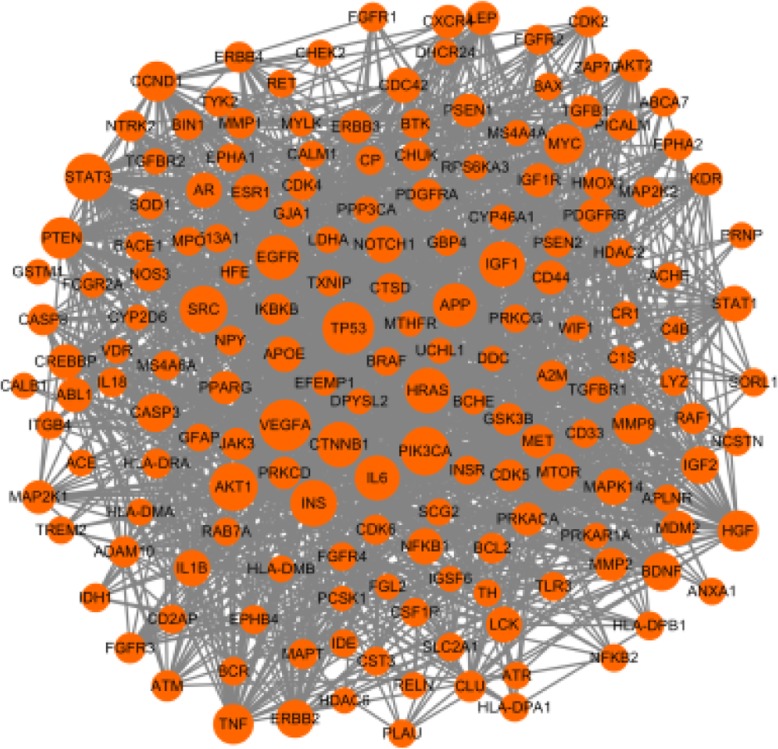
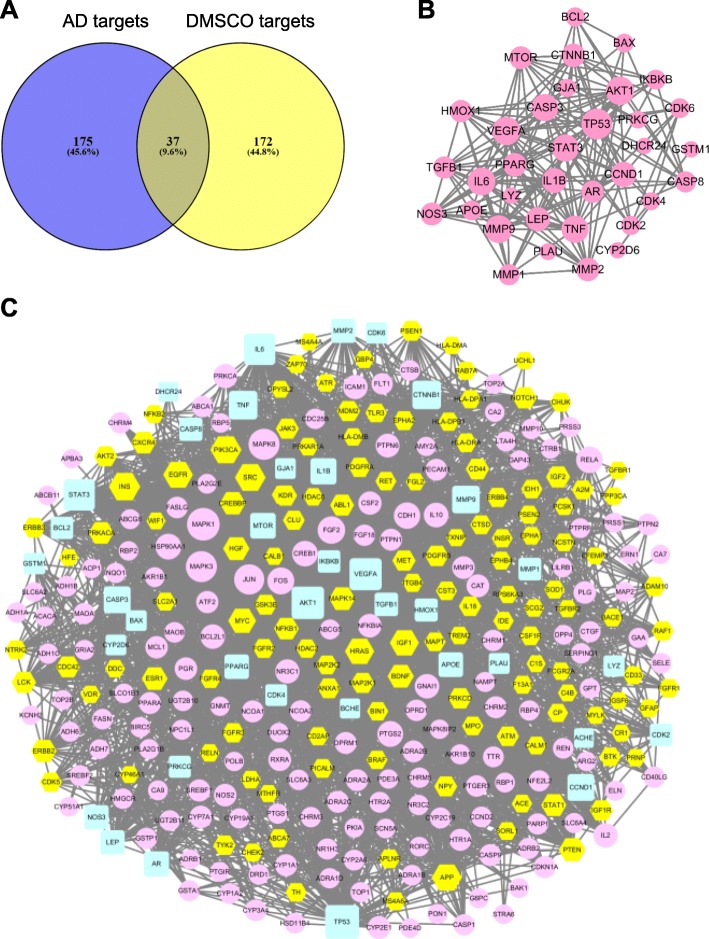
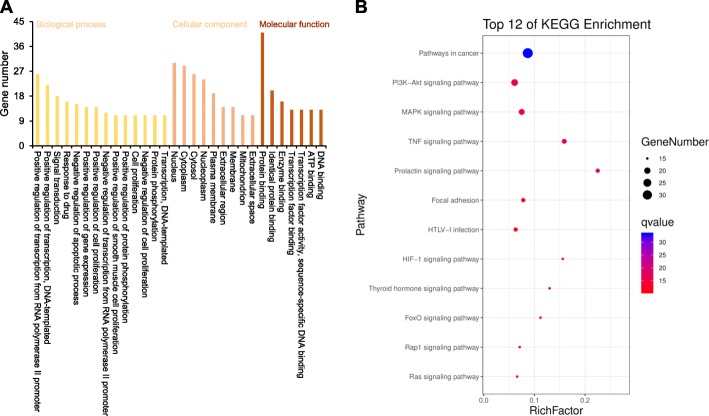
A total of 30 DMSCO effective compounds and 209 effective drug targets were obtained. A total of 172 AD-related genes and 37 shared targets of DMSCO and AD were identified. A total of 43 key targets for the treatment of AD were obtained from the topological analysis of the DMSCO-AD target network. These key targets were involved in a variety of biological processes, including amyloid deposition, apoptosis, autophagy, inflammatory response and oxidative stress and pathways, such as the PI3K-AKT, MAPK and TNF pathways. Three key compounds, namely ursolic acid, anethole and β-sitosterol were obtained from the analysis of the key targets.
Ursolic acid, anethole and β-sitosterol may be the main active components of DMSCO in the treatment of AD. DMSCO can treat AD by regulating amyloid deposition, apoptosis, autophagy, inflammatory response and oxidative stress via the PI3K-AKT, MAPK and other signaling pathways.
山茱萸(山茱萸科山茱萸的干燥成熟果肉,DMSCO)是一种中药,可用于治疗阿尔茨海默病(AD),但其机制尚不清楚。本研究旨在采用网络药理学方法探讨 DMSCO 治疗 AD 的活性成分及作用机制。
从 TCMSP 和 ETCM 数据库中收集 DMSCO 的活性成分,并用 TCMSP、SwissTargetPrediction 和 STITCH 数据库预测这些化合物的靶蛋白。从 OMIM、DisGeNet、GEO 和 GeneCards 数据库中确定 AD 相关靶蛋白。建立化合物-靶标-疾病的网络互作模型,通过网络拓扑分析获得 DMSCO 治疗 AD 的关键靶标。然后,使用 David 6.8 在线工具进行基因本体论(GO)和京都基因与基因组百科全书(KEGG)通路富集分析。
共获得 30 种 DMSCO 有效化合物和 209 个有效药物靶标。共获得 172 个 AD 相关基因和 DMSCO 与 AD 的 37 个共享靶标。通过 DMSCO-AD 靶标网络的拓扑分析,共获得 43 个治疗 AD 的关键靶标。这些关键靶标参与了多种生物学过程,包括淀粉样蛋白沉积、细胞凋亡、自噬、炎症反应和氧化应激以及 PI3K-AKT、MAPK 和 TNF 等信号通路。从关键靶标分析中得到 3 种关键化合物,即熊果酸、茴香脑和 β-谷甾醇。
熊果酸、茴香脑和 β-谷甾醇可能是 DMSCO 治疗 AD 的主要活性成分。DMSCO 通过调节 PI3K-AKT、MAPK 等信号通路,可治疗 AD 引起的淀粉样蛋白沉积、细胞凋亡、自噬、炎症反应和氧化应激。