Key Laboratory of Interventional Pulmonology of Zhejiang Province, Department of Pulmonary and Critical Care Medicine, The First Affiliated Hospital of Wenzhou Medical University, Wenzhou 325035, China.
Cardio-Pulmonary Institute, Institute of Lung Health and Department of Pulmonary and Critical Care Medicine and Infectious Diseases, Universities of Giessen and Marburg Lung Center (UGMLC), Member of the German Center for Lung Research (DZL), Justus-Liebig University Giessen, 35392 Giessen, Germany.
Cells. 2020 May 21;9(5):1274. doi: 10.3390/cells9051274.
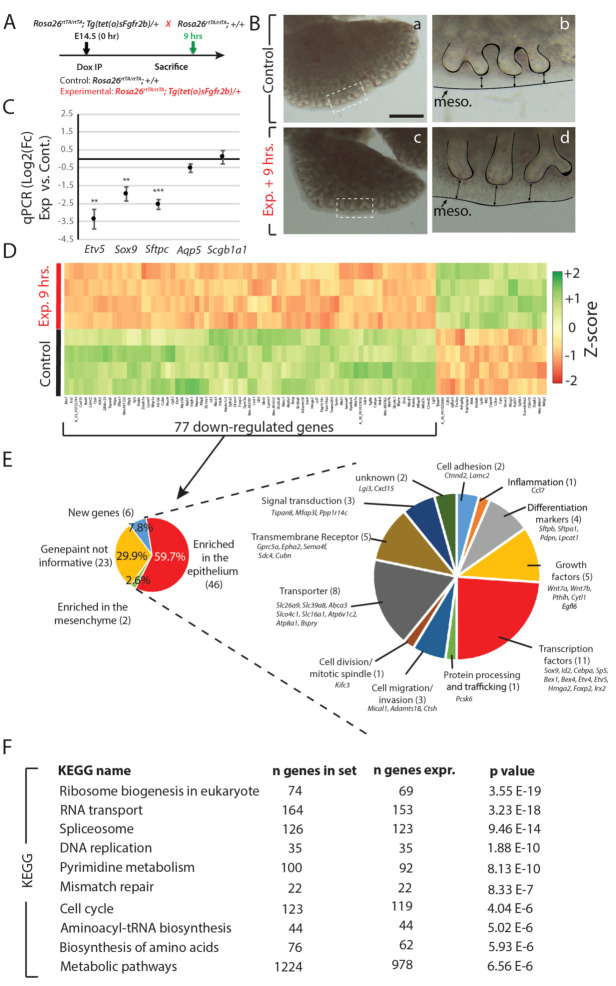
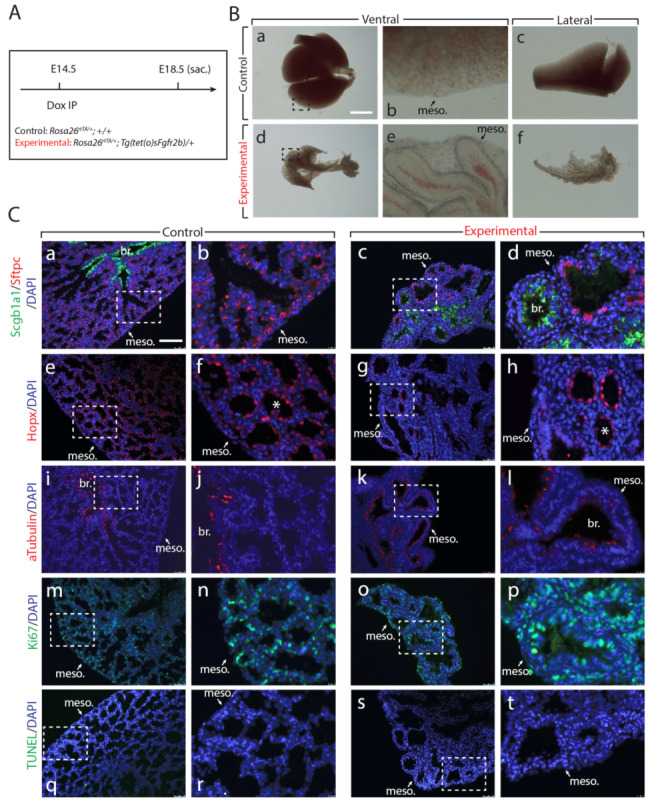
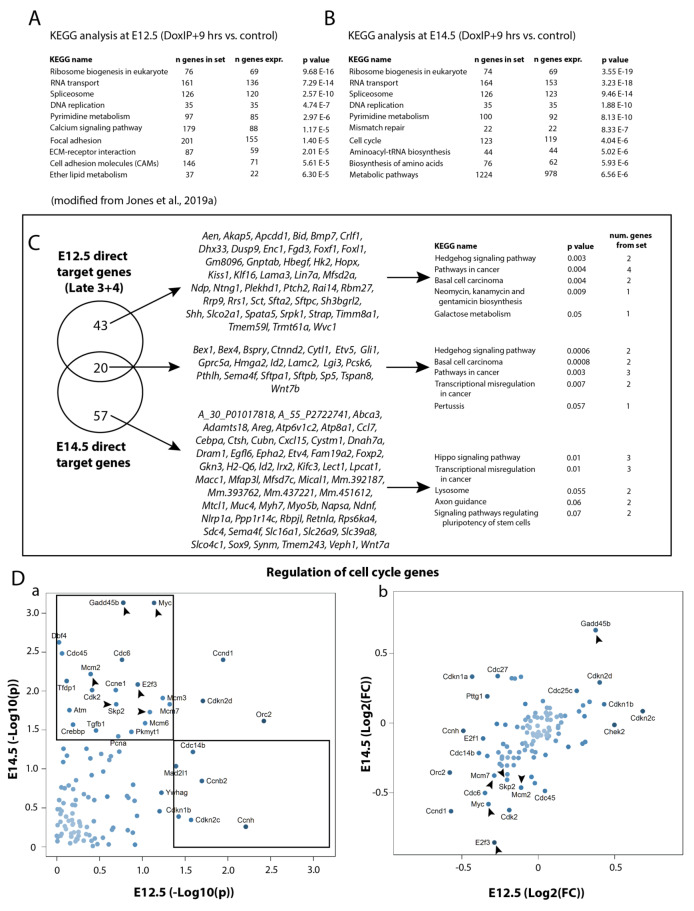
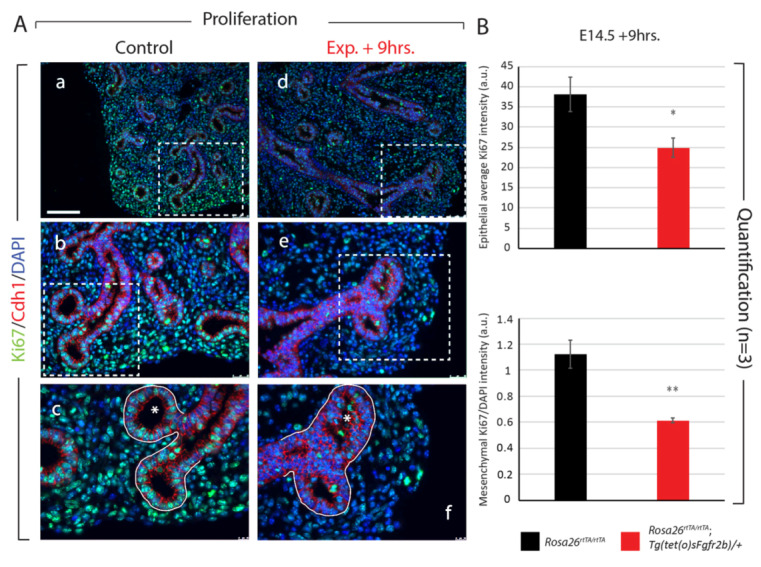
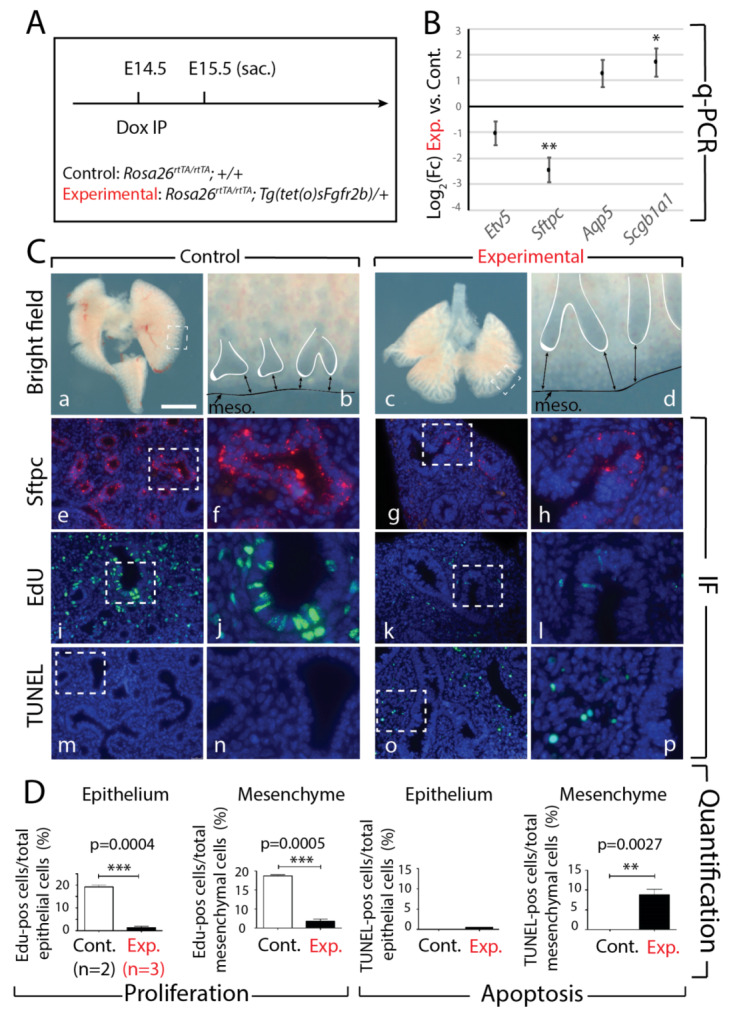
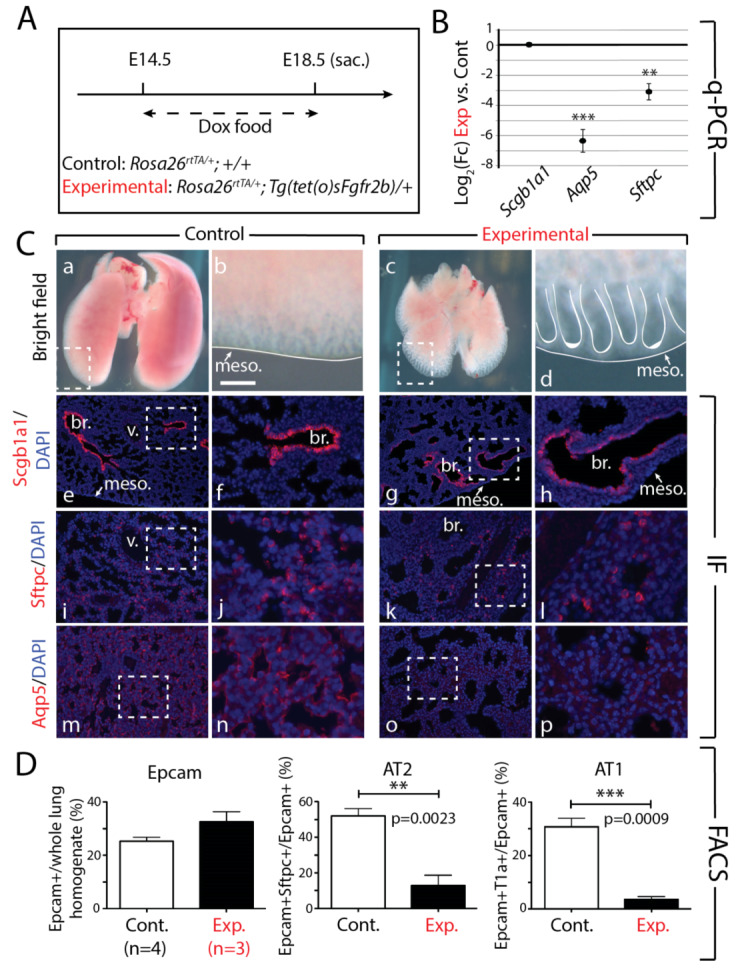
Branching morphogenesis is the basic developmental mode common to organs such as the lungs that undergo a process of ramification from a rudimentary tree. However, the precise molecular and cellular bases underlying the formation of branching organs are still unclear. As inactivation of fibroblast growth factor receptor 2b (Fgfr2b) signaling during early development leads to lung agenesis, thereby preventing the analysis of this pathway at later developmental stages, we used transgenic mice to induce expression of a soluble form of Fgfr2b to inactivate Fgfr2b ligands at embryonic day (E) 14.5, corresponding to the mid-pseudoglandular stage of lung development. We identified an Fgfr2b signaling signature comprised of 46 genes enriched in the epithelium, some of which were common to, but most of them distinct from, the previously identified Fgfr2b signaling signature at E12.5. Our results indicate that Fgfr2b signaling at E14.5 controls mostly proliferation and alveolar type 2 cell (AT2) differentiation. In addition, inhibition of Fgfr2b signaling at E14.5 leads to morphological and cellular impairment at E18.5, with defective alveolar lineage formation. Further studies will have to be conducted to elucidate the role of Fgfr2b signaling at successive stages (canalicular/saccular/alveolar) of lung development as well as during homeostasis and regeneration and repair after injury.
分支形态发生是一种基本的发育模式,常见于肺部等器官,这些器官经历了从原始树状结构分支的过程。然而,形成分支器官的确切分子和细胞基础仍不清楚。由于早期发育过程中纤维母细胞生长因子受体 2b(Fgfr2b)信号的失活导致肺发育不全,从而阻止了在后期发育阶段对该途径的分析,我们使用转基因小鼠在胚胎期(E)14.5 诱导表达一种可溶性形式的 Fgfr2b,以失活 Fgfr2b 配体,相当于肺发育的中假腺期。我们确定了一个由 46 个基因组成的 Fgfr2b 信号特征,这些基因在肺上皮细胞中富集,其中一些与 E12.5 时鉴定的 Fgfr2b 信号特征相同,但大多数与该特征不同。我们的结果表明,E14.5 时的 Fgfr2b 信号主要控制增殖和肺泡 II 型细胞(AT2)分化。此外,E14.5 时 Fgfr2b 信号的抑制导致 E18.5 时的形态和细胞损伤,肺泡谱系形成缺陷。需要进一步的研究来阐明 Fgfr2b 信号在肺发育的连续阶段(小管/囊泡/肺泡)以及在稳态和损伤后的再生和修复中的作用。