School of Dentistry, College of Dental Medicine, Kaohsiung Medical University, No.100, Shiquan 1st Rd., Sanmin Dist., Kaohsiung City, 807, Taiwan.
Division of Pulmonary and Critical Care Medicine, Department of Internal Medicine, E-DA Cancer Hospital, No. 21, Yida Rd., Yanchao Dist., Kaohsiung City, 824, Taiwan.
BMC Infect Dis. 2020 May 27;20(1):374. doi: 10.1186/s12879-020-05061-z.
Elevated Staphylococcus aureus and oral bacterial concentrations are known to correlate with pneumonia hospitalization in nursing home residents. However, the effects of a professional oral care intervention on these factors remain unclear. The aims of this quasi-experimental study were to compare bacterial concentrations in saliva and sputum, oral health status, distribution of Staphylococcus aureus, and pneumonia status before and after a professional oral care intervention.
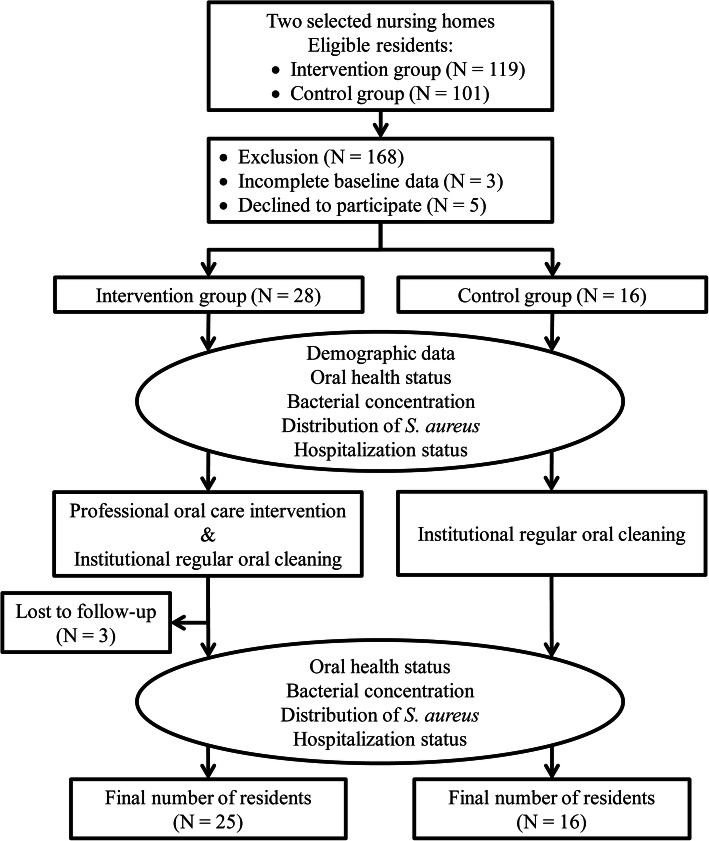
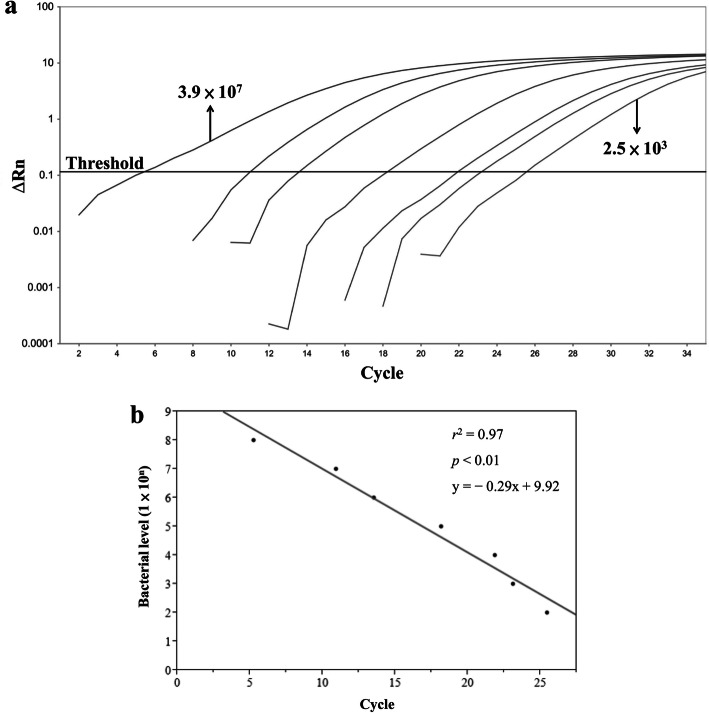
A purposive sample of residents from two nursing homes was divided into an intervention group that received a weekly professional oral care intervention and a control group. Oral bacterial concentration was determined by real-time polymerase chain reaction. The Staphylococcus aureus distribution was determined by bacterial culture and matrix-assisted laser desorption/ionization-time of flight mass spectrometry. After data collection, a statistical analysis was performed to evaluate the effect of the intervention.
Most residents were unconscious (80%), and most had a history of pneumonia (76%). Baseline demographic data did not significantly differ between the two groups. After the intervention, the intervention group had significant improvements in plaque index (1.66 ± 0.78 vs. 0.94 ± 0.64, p < 0.01), gingival index (2.36 ± 0.76 vs. 1.65 ± 0.83, p < 0.01), tongue coating index (0.96 ± 1.10 vs. 0.16 ± 0.47, p < 0.01), distribution of Staphylococcus aureus in salivary samples (11.11 ± 14.47% vs. 1.74 ± 3.75%, p = 0.02), and salivary bacterial concentration ([4.27 ± 3.65] × 10 vs. [0.75 ± 1.20] × 10, p < 0.01). Sputum bacterial concentration did not significantly differ. The intervention group also had a significantly lower annual prevalence of pneumonia hospitalization (1.24 ± 1.51 vs. 0.48 ± 0.59, p = 0.01), especially in residents whose salivary bacterial concentration exceeded the median. However, the duration of pneumonia hospitalization did not significantly differ between the two groups.
A professional oral care intervention in nursing home residents can improve oral health, reduce levels of salivary bacteria and Staphylococcus aureus, and decrease the annual prevalence of pneumonia hospitalization.
Trial registration: ClinicalTrials.gov, NCT03874962. Registered 12 March 2019 - Retrospectively registered.
已知金黄色葡萄球菌和口腔细菌浓度升高与养老院居民的肺炎住院有关。然而,专业口腔护理干预对这些因素的影响尚不清楚。本准实验研究的目的是比较专业口腔护理干预前后唾液和痰中的细菌浓度、口腔健康状况、金黄色葡萄球菌分布以及肺炎状况。
从两家养老院中抽取有目的的居民样本,分为接受每周专业口腔护理干预的干预组和对照组。通过实时聚合酶链反应确定口腔细菌浓度。金黄色葡萄球菌分布通过细菌培养和基质辅助激光解吸/电离飞行时间质谱法确定。数据收集后,进行统计分析以评估干预效果。
大多数居民处于无意识状态(80%),且大多数有肺炎病史(76%)。两组之间的基线人口统计学数据无显著差异。干预后,干预组菌斑指数(1.66±0.78 对 0.94±0.64,p<0.01)、牙龈指数(2.36±0.76 对 1.65±0.83,p<0.01)、舌苔指数(0.96±1.10 对 0.16±0.47,p<0.01)、唾液中金黄色葡萄球菌分布(11.11±14.47%对 1.74±3.75%,p=0.02)和唾液细菌浓度[4.27±3.65]×10对[0.75±1.20]×10(p<0.01)均有显著改善。痰细菌浓度无显著差异。干预组肺炎住院年患病率也显著降低(1.24±1.51 对 0.48±0.59,p=0.01),特别是唾液细菌浓度超过中位数的居民。然而,两组间肺炎住院时间无显著差异。
对养老院居民进行专业口腔护理干预可以改善口腔健康,降低唾液细菌和金黄色葡萄球菌水平,并降低肺炎住院年患病率。
临床试验.gov,NCT03874962。2019 年 3 月 12 日注册-回顾性注册。