Thompson Amy J, Topping Annie E, Jones Laura L
College of Medical and Dental Sciences, University of Birmingham, Birmingham, UK.
Institute of Clinical Sciences, University of Birmingham, Birmingham, UK.
BMJ Open. 2020 May 26;10(5):e035199. doi: 10.1136/bmjopen-2019-035199.
To explore women's experiences of breastfeeding beyond infancy (>1 year). Understanding these experiences, including the motivators, enablers and barriers faced, may help inform future strategies to support and facilitate mothers to breastfeed for an optimal duration.
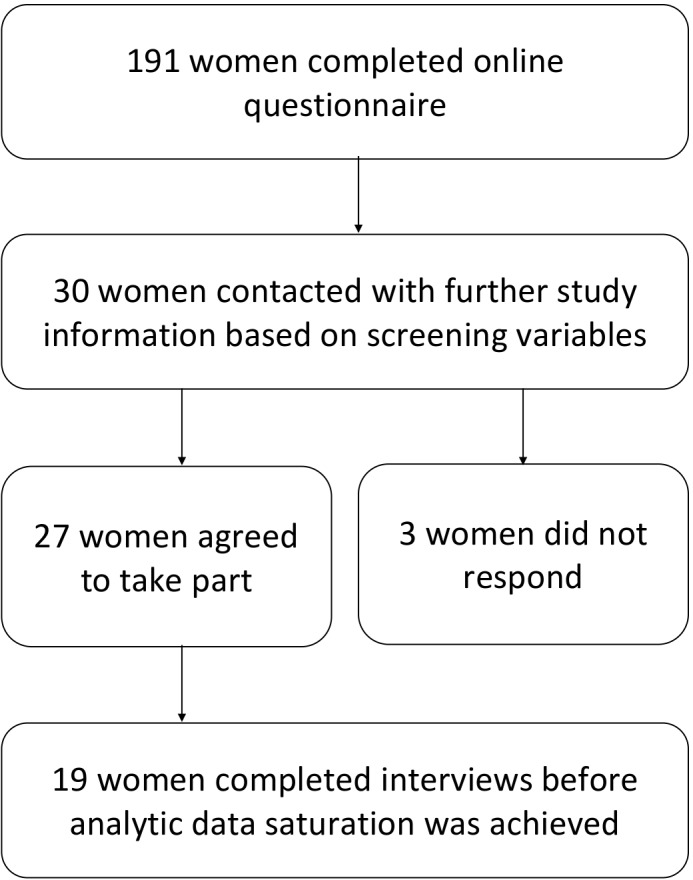
An exploratory qualitative study using an interpretive approach. Nineteen semistructured interviews were conducted (in person, via phone or Skype), transcribed and thematically analysed using the framework method.
Participants drawn from across the UK through online breastfeeding support groups.
Maximum variation sample of women currently breastfeeding a child older than 1 year, or who had done so in the previous 5 years. Participants were included if over 18, able to speak English at conversational level and resident in the UK.
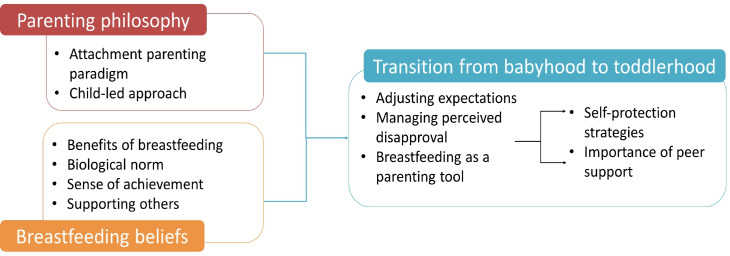
The findings offer insights into the challenges faced by women breastfeeding older children, including perceived social and cultural barriers. Three core themes were interpreted: (1) parenting philosophy; (2) breastfeeding beliefs; (3) transition from babyhood to toddlerhood. Women had not intended to breastfeed beyond infancy prior to delivery, but developed a 'child-led' approach to parenting and internalised strong beliefs that breastfeeding is the biological norm. Women perceived a negative shift in approval for continued breastfeeding as their child transitioned from 'baby' to 'toddler'. This compelled woman to conceal breastfeeding and fostered a reluctance to seek advice from healthcare professionals. Mothers reported feeling pressured to breastfeed when their babies were young, but discouraged as children grew. They identified best with the term 'natural-term breastfeeding'.
This study suggests that providing antenatal education regarding biological weaning ages and promotion of guidelines for optimum breastfeeding duration may encourage more women to breastfeed for longer. Promoting the concept of natural-term breastfeeding to mothers, and healthcare professionals, employers and the public is necessary to normalise and encourage acceptance of breastfeeding beyond infancy.
探讨女性在婴儿期之后(超过1岁)进行母乳喂养的经历。了解这些经历,包括所面临的动机、促进因素和障碍,可能有助于为未来支持和促进母亲进行最佳时长母乳喂养的策略提供信息。
采用解释性方法的探索性定性研究。进行了19次半结构式访谈(面对面、通过电话或Skype),转录后使用框架法进行主题分析。
通过在线母乳喂养支持小组从英国各地招募参与者。
目前正在为1岁以上儿童进行母乳喂养或在过去5年内曾进行过母乳喂养的女性的最大差异样本。参与者需年满18岁,能进行日常英语交流且居住在英国。
研究结果揭示了大龄儿童母亲在母乳喂养时所面临的挑战,包括感知到的社会和文化障碍。解读出三个核心主题:(1)育儿理念;(2)母乳喂养观念;(3)从婴儿期到幼儿期的过渡。女性在分娩前并未打算在婴儿期之后继续母乳喂养,但形成了一种“以孩子为主导”的育儿方式,并内化了母乳喂养是生物常态的坚定信念。随着孩子从“婴儿”过渡到“幼儿”,女性感觉到对继续母乳喂养的认可出现了负面转变。这迫使女性隐瞒母乳喂养行为,并使其不愿向医疗保健专业人员寻求建议。母亲们表示,孩子小时候她们在母乳喂养时感到有压力,但随着孩子长大则受到阻碍。她们最认同“自然期限母乳喂养”这一说法。
本研究表明,提供关于生理性断奶年龄的产前教育以及推广最佳母乳喂养时长指南,可能会鼓励更多女性延长母乳喂养时间。向母亲、医疗保健专业人员、雇主和公众推广自然期限母乳喂养的概念,对于使婴儿期之后的母乳喂养常态化并鼓励人们接受这一行为而言是必要的。