Roden Vanessa Julie, Zuschin Martin, Nützel Alexander, Hausmann Imelda M, Kiessling Wolfgang
GeoZentrum Nordbayern, Section Paleobiology, Friedrich-Alexander University Erlangen-Nürnberg, Erlangen, Germany.
Department of Palaeontology, University of Vienna, Vienna, Austria.
PeerJ. 2020 May 14;8:e9139. doi: 10.7717/peerj.9139. eCollection 2020.
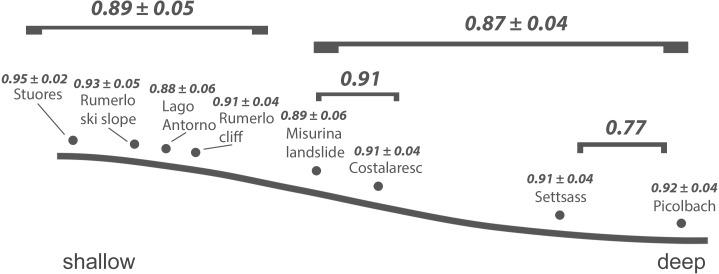
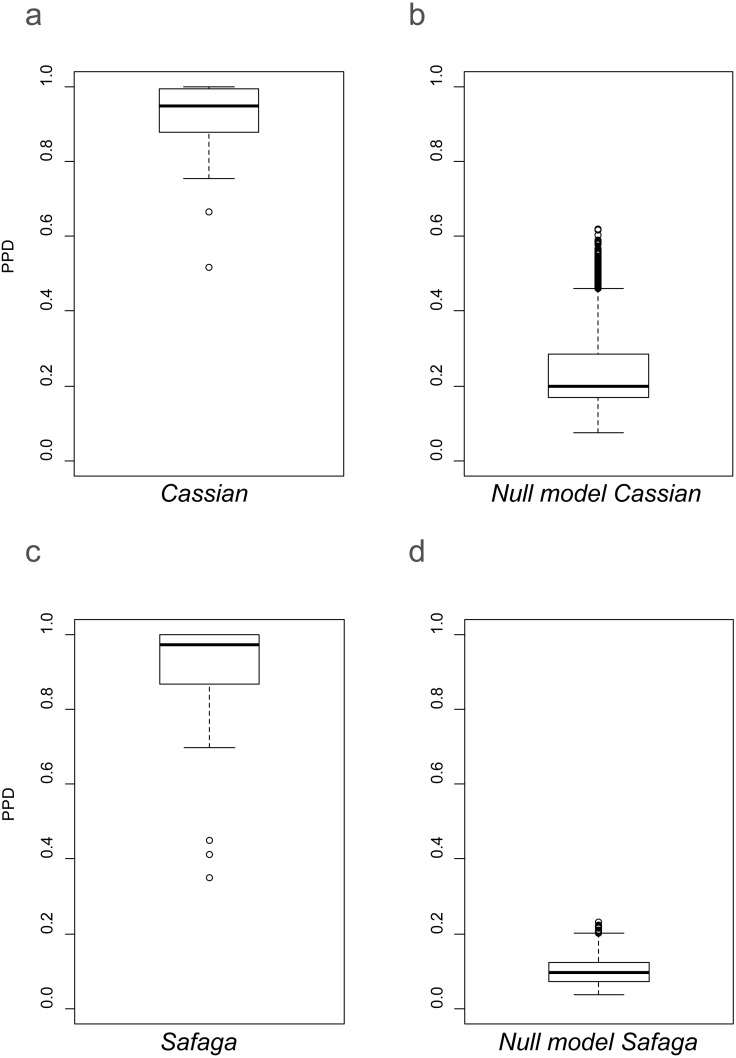
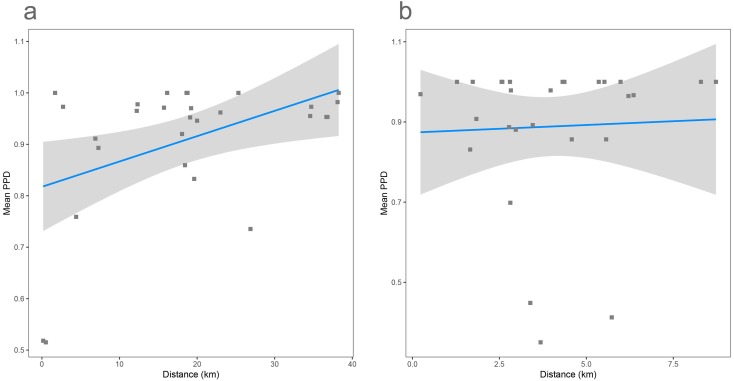
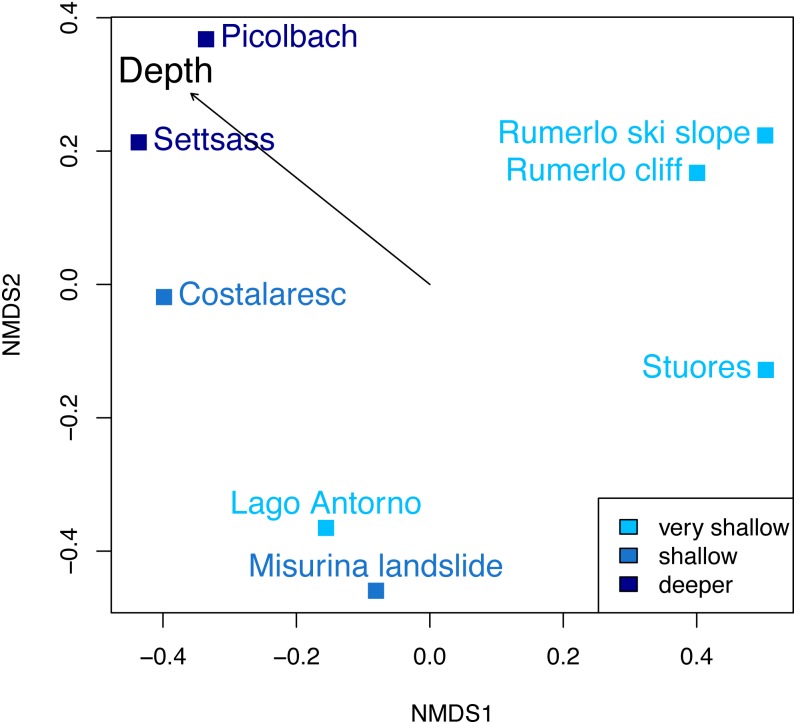
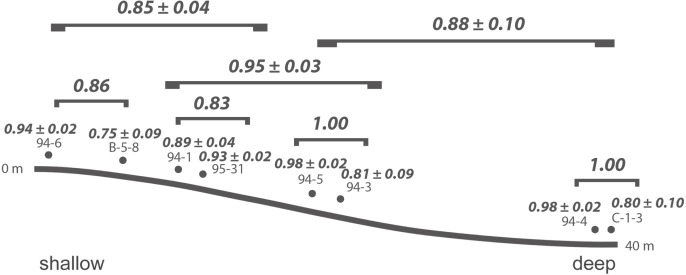
Beta diversity, the compositional variation among communities, is often associated with environmental gradients. Other drivers of beta diversity include stochastic processes, priority effects, predation, or competitive exclusion. Temporal turnover may also explain differences in faunal composition between fossil assemblages. To assess the drivers of beta diversity in reef-associated soft-bottom environments, we investigate community patterns in a Middle to Late Triassic reef basin assemblage from the Cassian Formation in the Dolomites, Northern Italy, and compare results with a Recent reef basin assemblage from the Northern Bay of Safaga, Red Sea, Egypt. We evaluate beta diversity with regard to age, water depth, and spatial distance, and compare the results with a null model to evaluate the stochasticity of these differences. Using pairwise proportional dissimilarity, we find very high beta diversity for the Cassian Formation (0.91 ± 0.02) and slightly lower beta diversity for the Bay of Safaga (0.89 ± 0.04). Null models show that stochasticity only plays a minor role in determining faunal differences. Spatial distance is also irrelevant. Contrary to expectations, there is no tendency of beta diversity to decrease with water depth. Although water depth has frequently been found to be a key factor in determining beta diversity, we find that it is not the major driver in these reef-associated soft-bottom environments. We postulate that priority effects and the biotic structuring of the sediment may be key determinants of beta diversity.
β多样性,即群落间的组成差异,通常与环境梯度相关。β多样性的其他驱动因素包括随机过程、优先效应、捕食或竞争排斥。时间更替也可能解释化石组合中动物群组成的差异。为了评估礁相关软底环境中β多样性的驱动因素,我们研究了意大利北部多洛米蒂山脉卡西安组中三叠世至晚三叠世礁盆组合的群落模式,并将结果与埃及红海萨法加湾北部的现代礁盆组合进行比较。我们根据年龄、水深和空间距离评估β多样性,并将结果与零模型进行比较,以评估这些差异的随机性。使用成对比例差异法,我们发现卡西安组的β多样性非常高(0.91±0.02),而萨法加湾的β多样性略低(0.89±0.04)。零模型表明,随机性在决定动物群差异方面只起次要作用。空间距离也无关紧要。与预期相反,β多样性没有随水深降低的趋势。尽管经常发现水深是决定β多样性的关键因素,但我们发现它不是这些礁相关软底环境中的主要驱动因素。我们推测优先效应和沉积物的生物结构可能是β多样性的关键决定因素。