School of BioSciences, The University of Melbourne, Melbourne, VIC 3010, Australia.
CSIRO Agriculture & Food, GPO Box 1700, Canberra, ACT 2601, Australia.
Cells. 2020 May 25;9(5):1309. doi: 10.3390/cells9051309.
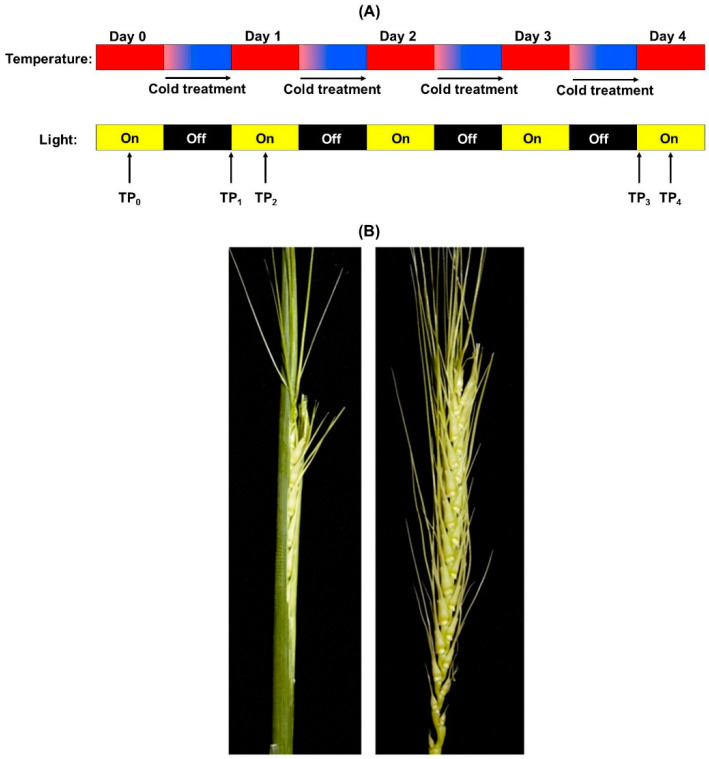
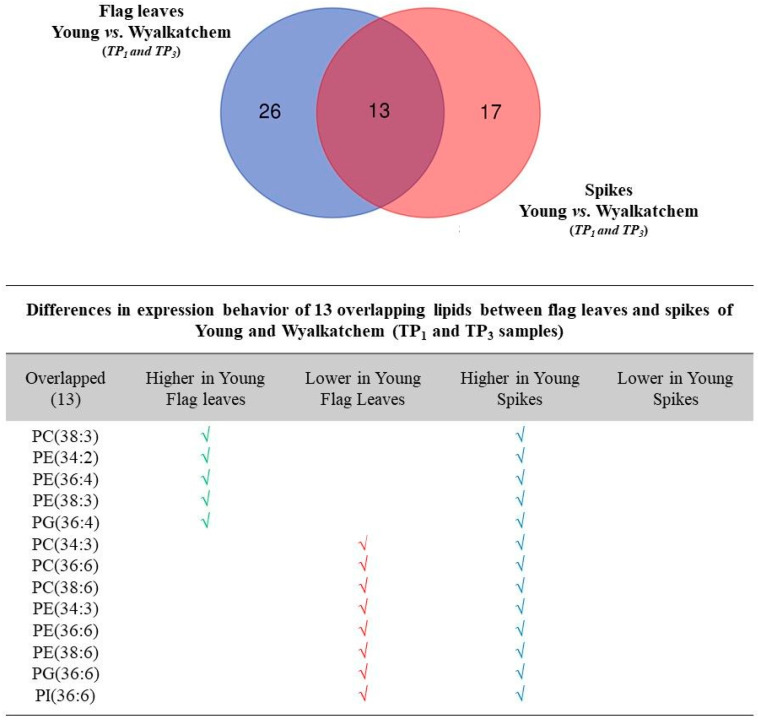
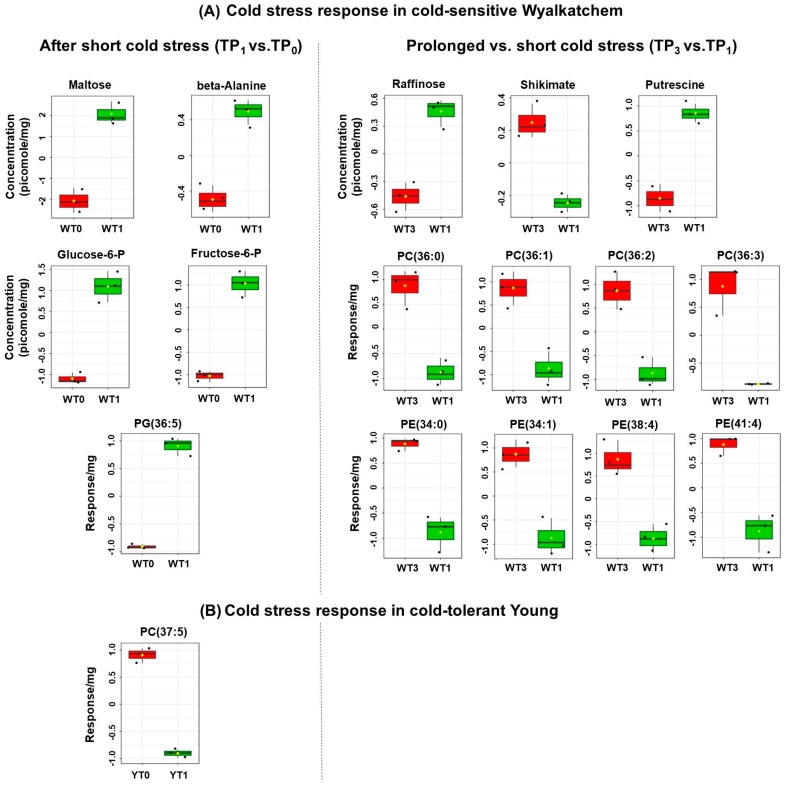
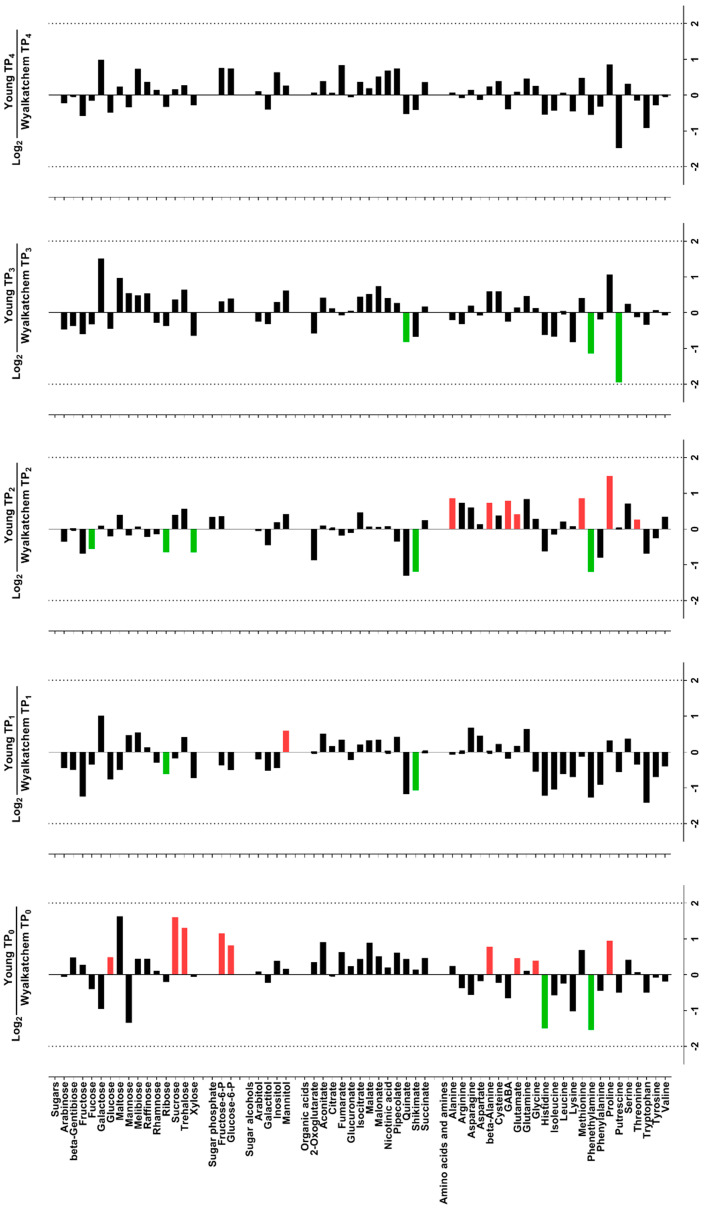
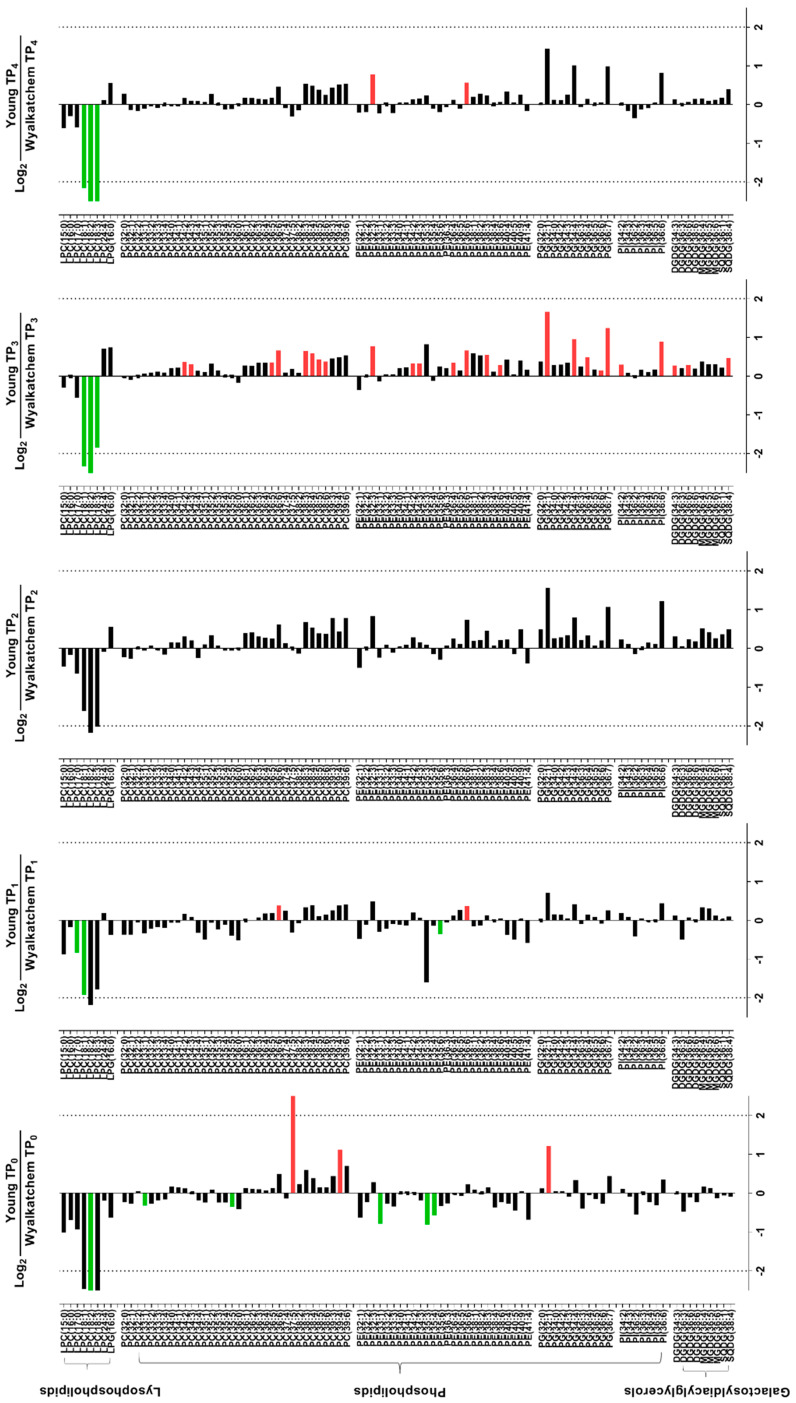
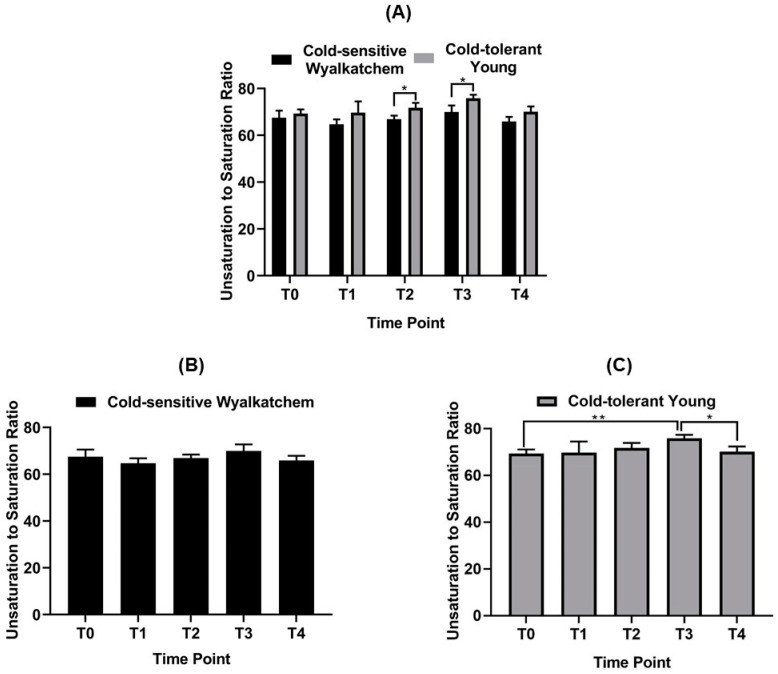
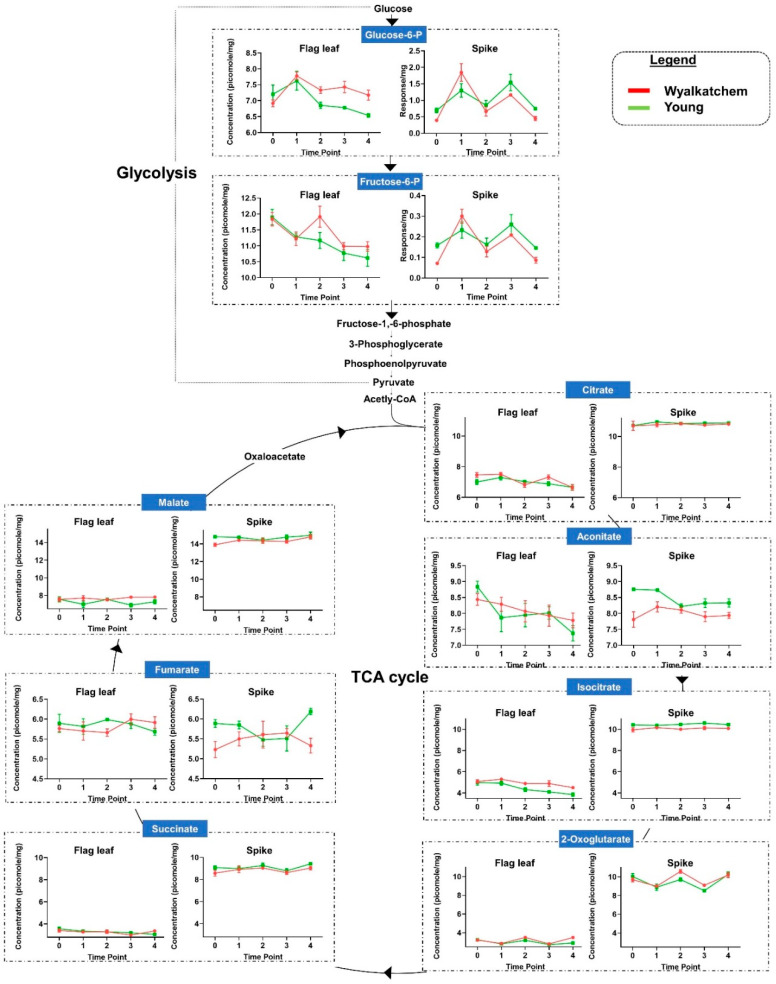
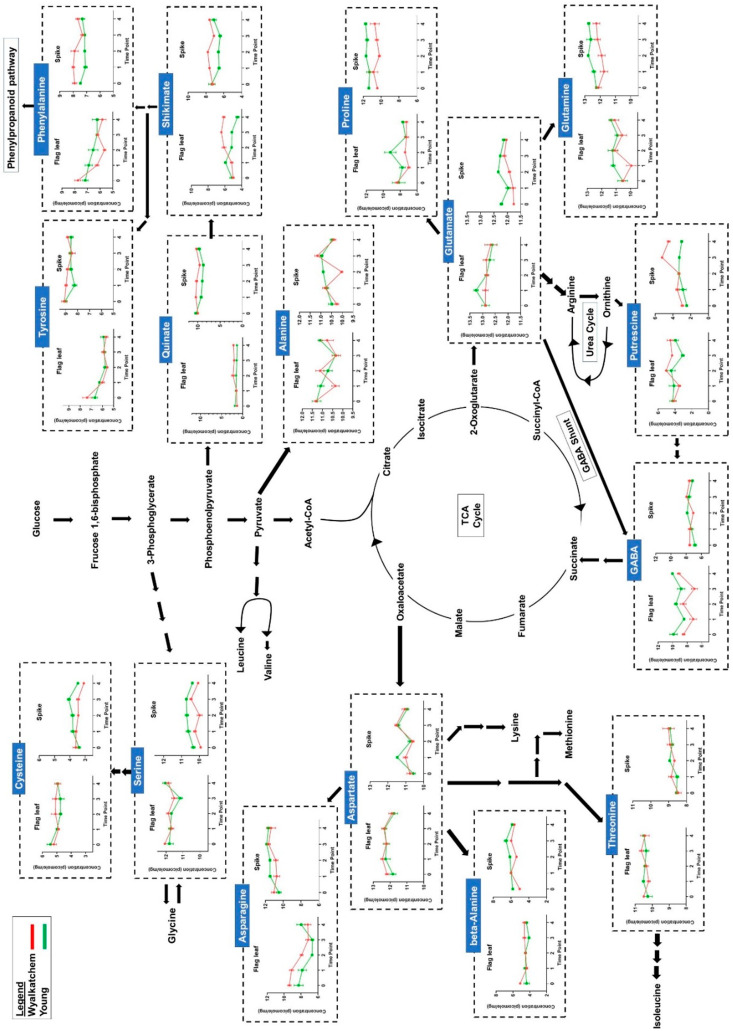
Chilling and frost conditions impose major yield restraints to wheat crops in Australia and other temperate climate regions. Unpredictability and variability of field frost events are major impediments for cold tolerance breeding. Metabolome and lipidome profiling were used to compare the cold response in spikes of cold-tolerant Young and sensitive variety Wyalkatchem at the young microspore (YM) stage of pollen development. We aimed to identify metabolite markers that can reliably distinguish cold-tolerant and sensitive wheat varieties for future cold-tolerance phenotyping applications. We scored changes in spike metabolites and lipids for both varieties during cold acclimation after initial and prolonged exposure to combined chilling and freezing cycles (1 and 4 days, respectively) using controlled environment conditions. The two contrasting wheat varieties showed qualitative and quantitative differences in primary metabolites involved in osmoprotection, but differences in lipid accumulation most distinctively separated the cold response of the two wheat lines. These results resemble what we previously observed in flag leaves of the same two wheat varieties. The fact that this response occurs in tissue types with very different functions indicates that chilling and freezing tolerance in these wheat lines is associated with re-modelling of membrane lipid composition to maintain membrane fluidity.
寒冷和霜冻条件对澳大利亚和其他温带气候地区的小麦作物造成了重大的产量限制。田间霜冻事件的不可预测性和可变性是耐寒性育种的主要障碍。代谢组学和脂质组学分析用于比较在花粉发育的年轻小孢子 (YM) 阶段耐寒的 Young 和敏感品种 Wyalkatchem 穗部的冷响应。我们旨在鉴定能够可靠地区分耐寒和敏感小麦品种的代谢物标记物,用于未来的耐寒性表型应用。我们在受控环境条件下,对两个品种在经历初始和延长的冷胁迫(分别为 1 天和 4 天)后的冷驯化过程中穗部代谢物和脂质的变化进行评分。这两个对比鲜明的小麦品种在参与渗透保护的初级代谢物中表现出定性和定量的差异,但脂质积累的差异最能区分这两个小麦品系的冷响应。这些结果与我们之前在同一两个小麦品种的旗叶中观察到的结果相似。这种反应发生在具有非常不同功能的组织类型中,这表明这些小麦品系的抗冷性和抗冻性与膜脂组成的重新构建有关,以维持膜的流动性。