Lebrón José Antonio, Ostos Francisco José, López-López Manuel, Moyá María Luisa, Sales Carlos, García Encarnación, García-Calderón Clara Beatriz, García-Calderón Margarita, Peña-Gómez María José, Rosado Iván V, Balestra Fernando R, Huertas Pablo, López-Cornejo Pilar
Department of Physical Chemistry, Faculty of Chemistry, University of Seville, c/Prof. García González nº 1, 41012 Seville, Spain.
Department of Chemical Engineering, Physical Chemistry and Materials Science, Faculty of Experimental Sciences, Campus de El Carmen, Avda. de las Fuerzas Armadas s/n, 21071 Huelva, Spain.
Pharmaceutics. 2020 May 25;12(5):482. doi: 10.3390/pharmaceutics12050482.
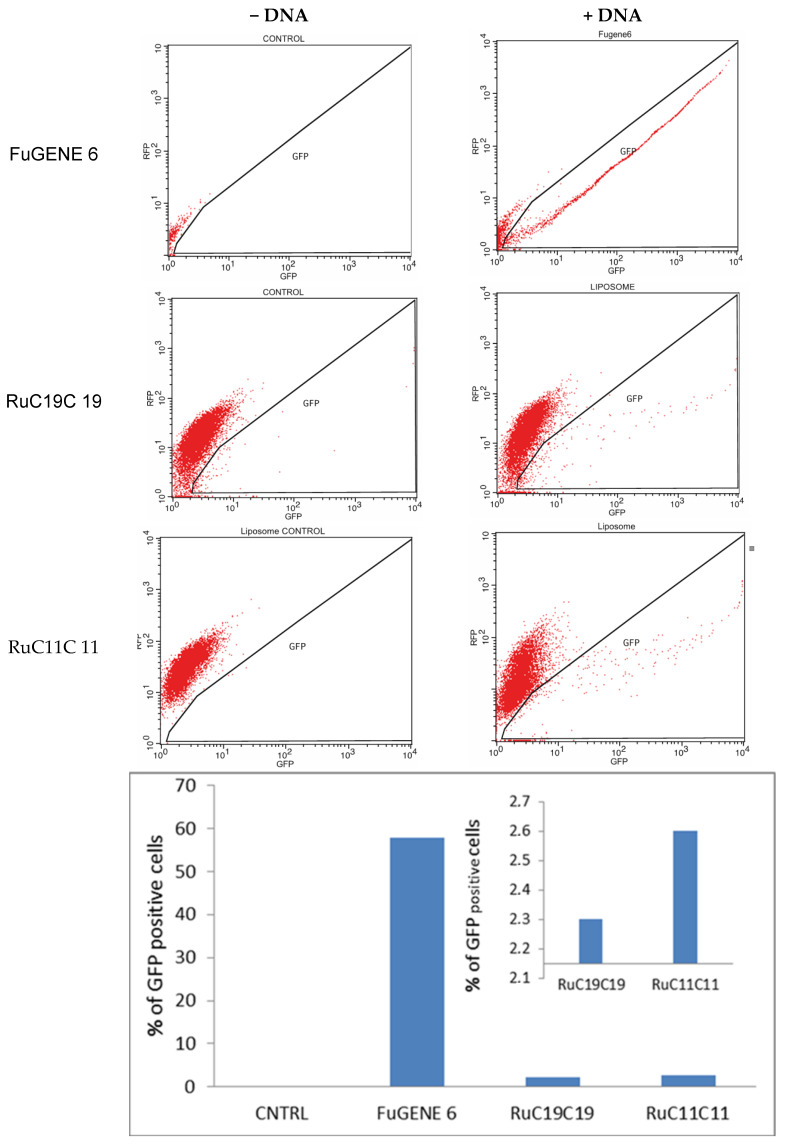
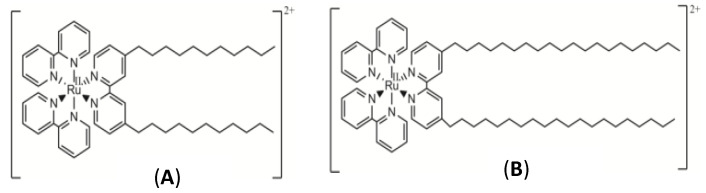
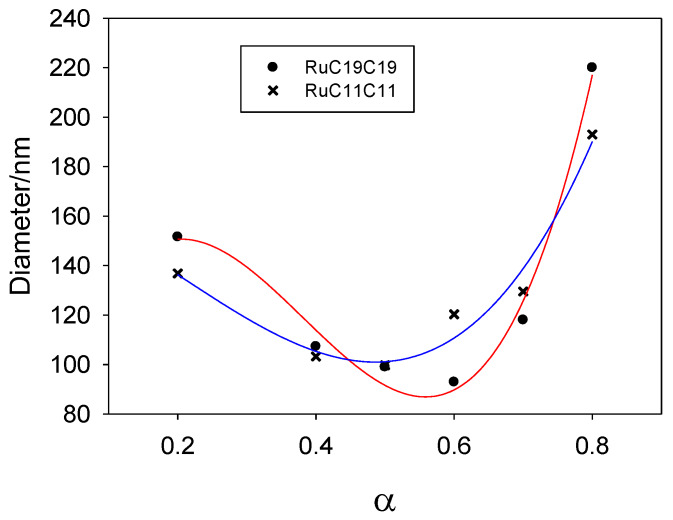
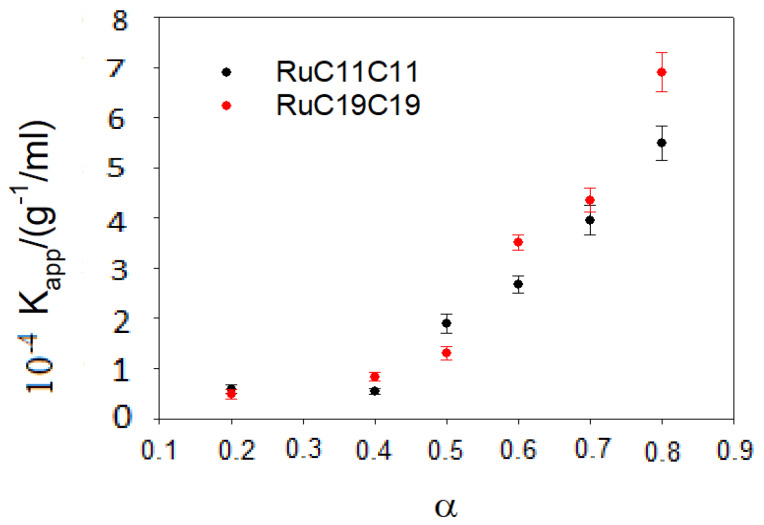
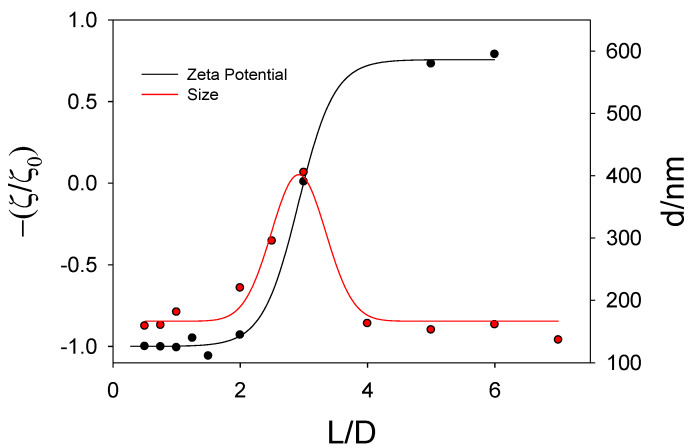
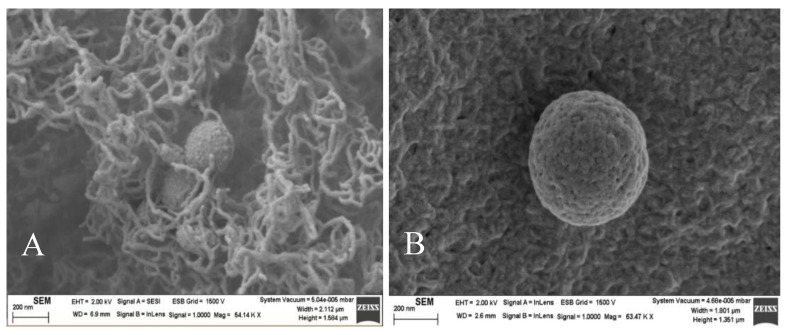
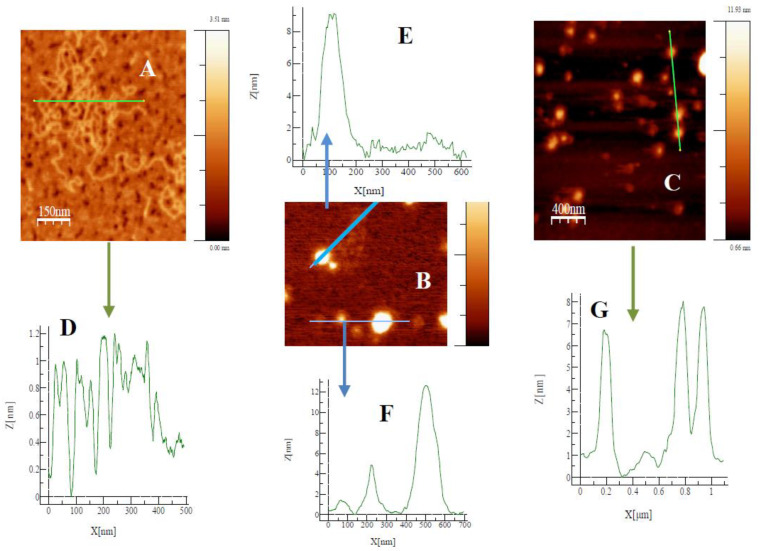
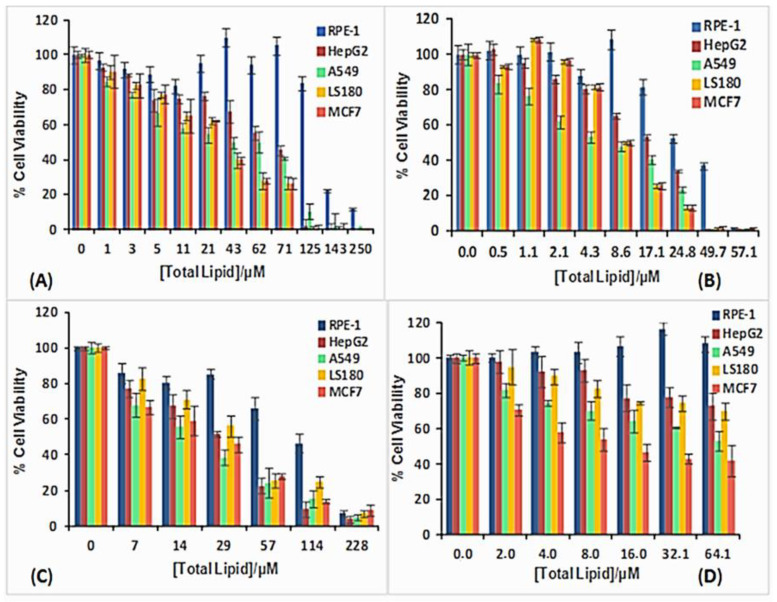
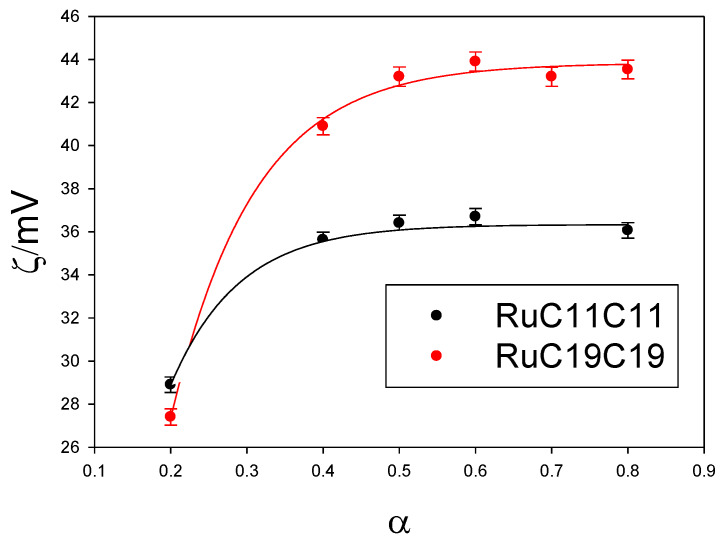
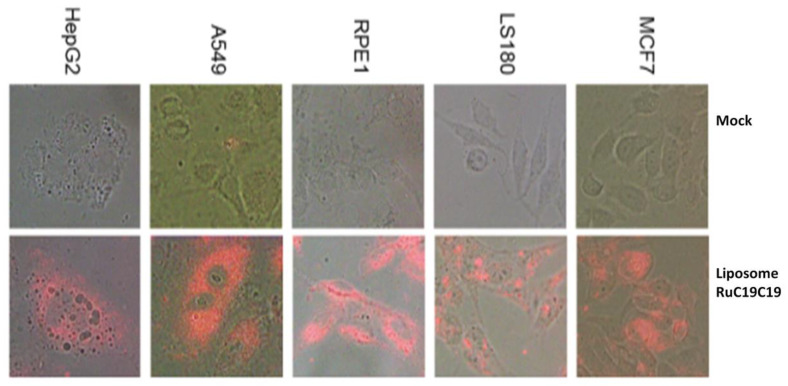
Gene therapy is a therapeutic process consisting of the transport of genetic material into cells. The design and preparation of novel carriers to transport DNA is an important research line in the medical field. Hybrid compounds such as metallo-liposomes, containing a mixture of lipids, were prepared and characterized. Cationic metal lipids derived from the [Ru(bpy)] complex, RuC11C11 or RuC19C19, both with different hydrophobic/lipophilic ratios, were mixed with the phospholipid DOPE. A relation between the size and the molar fraction α was found and a multidisciplinary study about the interaction between the metallo-liposomes and DNA was performed. The metallo-liposomes/DNA association was quantified and a relationship between K and α was obtained. Techniques such as AFM, SEM, zeta potential, dynamic light scattering and agarose gel electrophoresis demonstrated the formation of lipoplexes and showed the structure of the liposomes. L/D values corresponding to the polynucleotide's condensation were estimated. In vitro assays proved the low cell toxicity of the metallo-liposomes, lower for normal cells than for cancer cell lines, and a good internalization into cells. The latter as well as the transfection measurements carried out with plasmid DNA pEGFP-C1 have demonstrated a good availability of the Ru(II)-based liposomes for being used as non-toxic nanovectors in gene therapy.
基因治疗是一个将遗传物质导入细胞的治疗过程。设计和制备用于运输DNA的新型载体是医学领域的一个重要研究方向。制备并表征了诸如金属脂质体等含有脂质混合物的杂化化合物。源自[Ru(bpy)]配合物的阳离子金属脂质RuC11C11或RuC19C19,二者具有不同的疏水/亲脂比,与磷脂DOPE混合。发现了尺寸与摩尔分数α之间的关系,并对金属脂质体与DNA之间的相互作用进行了多学科研究。对金属脂质体/DNA的结合进行了定量,并获得了K与α之间的关系。原子力显微镜(AFM)、扫描电子显微镜(SEM)、zeta电位、动态光散射和琼脂糖凝胶电泳等技术证明了脂质复合物的形成,并展示了脂质体的结构。估算了与多核苷酸凝聚对应的L/D值。体外试验证明金属脂质体的细胞毒性较低,对正常细胞的毒性低于癌细胞系,并且能够很好地内化进入细胞。后者以及用质粒DNA pEGFP-C1进行的转染测量表明,基于Ru(II)的脂质体作为基因治疗中的无毒纳米载体具有良好的可用性。