Kim Kyoung Soo, Doss Hari Madhuri, Kim Hee-Jin, Yang Hyung-In
Department of Clinical Pharmacology and Therapeutics, Kyung Hee University School of Medicine, Seoul 02447, Korea.
East-West Bone & Joint Disease Research Institute, Kyung Hee University Hospital at Gangdong, Gandong-gu, Seoul 05278, Korea.
Foods. 2020 May 26;9(6):688. doi: 10.3390/foods9060688.
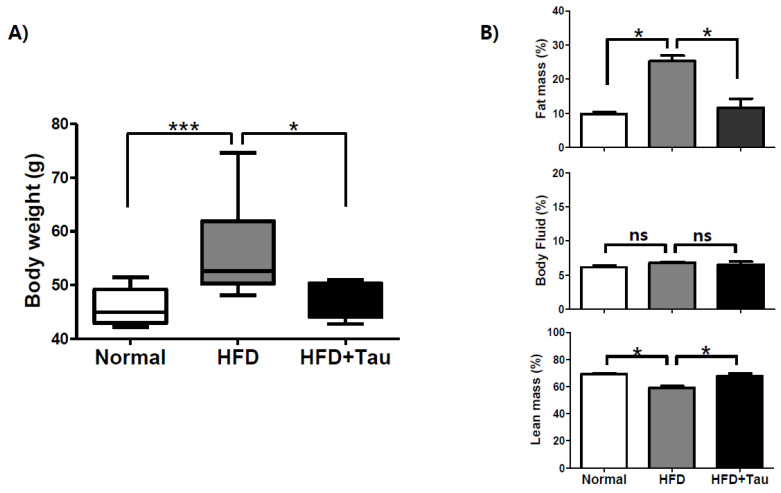
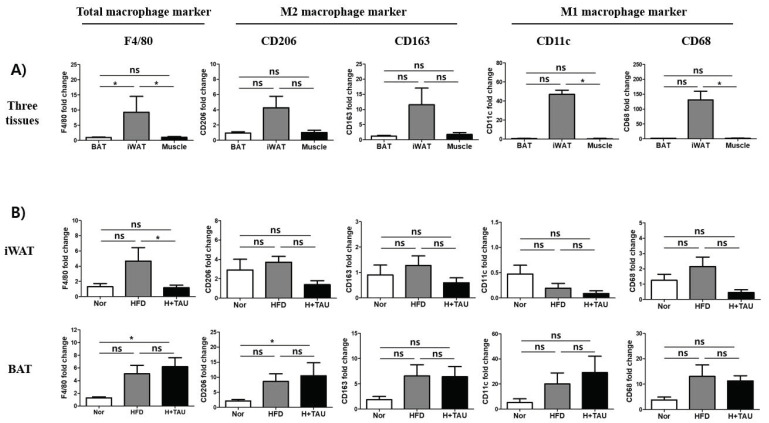
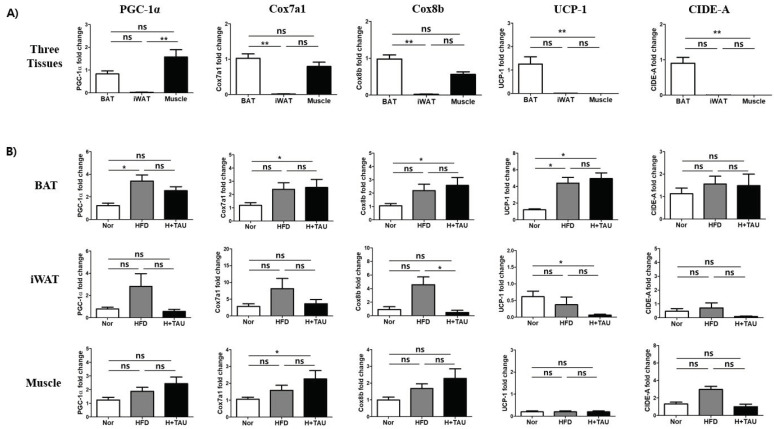
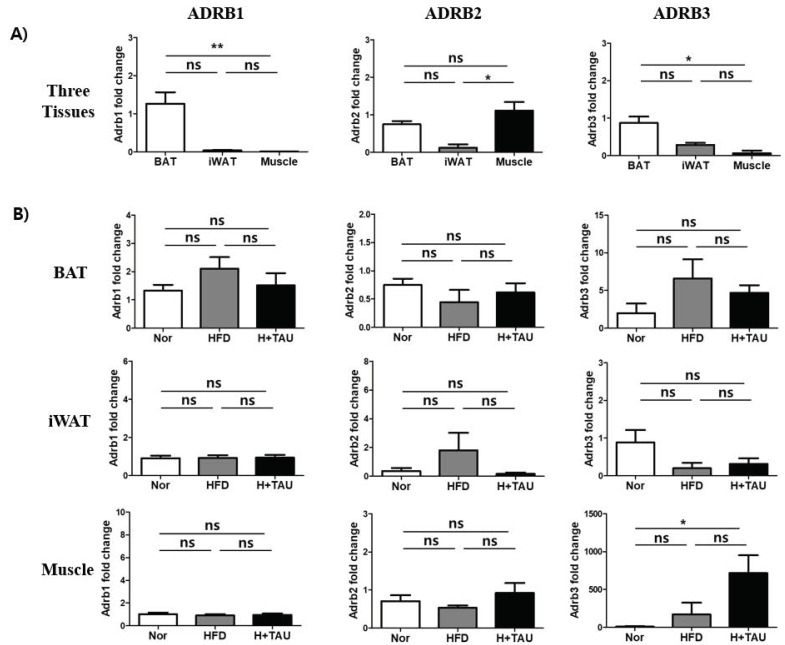
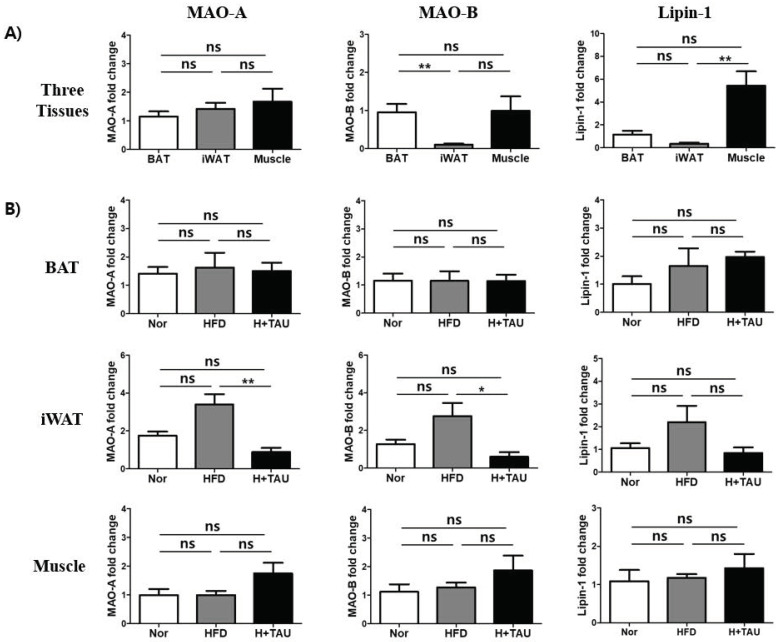
This study was conducted to investigate if taurine supplementation stimulates the induction of thermogenic genes in fat tissues and muscles and decipher the mechanism by which taurine exerts its anti-obesity effect in a mildly obese ICR (CD-1®) mouse model. Three groups of ICR mice were fed a normal chow diet, a high-fat diet (HFD), or HFD supplemented with 2% taurine in drinking water for 28 weeks. The expression profiles of various genes were analyzed by real time PCR in interscapular brown adipose tissue (BAT), inguinal white adipose tissue (iWAT), and the quadriceps muscles of the experimental groups. Genes that are known to regulate thermogenesis like PGC-1α, UCP-1, Cox7a1, Cox8b, CIDE-A, and β-, β-, and β-adrenergic receptors (β-ARs) were found to be differentially expressed in the three tissues. These genes were expressed at a very low level in iWAT as compared to BAT and muscle. Whereas, HFD increased the expression of these genes. Taurine supplementation stimulated the expression of UCP-1, Cox7a1, and Cox8b in BAT and only Cox7a1 in muscle, while there was a decrease in iWAT. In contrast, fat deposition-related genes, monoamine oxidases (MAO)-A, and -B, and lipin-1, were decreased by taurine supplementation only in iWAT and not in BAT or muscle. In conclusion, the potential anti-obesity effects of taurine may be partly due to upregulated thermogenesis in BAT, energy metabolism of muscle, and downregulated fat deposition in iWAT.
本研究旨在调查补充牛磺酸是否能刺激脂肪组织和肌肉中产热基因的诱导,并阐明牛磺酸在轻度肥胖的ICR(CD-1®)小鼠模型中发挥抗肥胖作用的机制。将三组ICR小鼠分别喂食正常饲料、高脂饮食(HFD)或在饮用水中补充2%牛磺酸的HFD,持续28周。通过实时PCR分析实验组肩胛间棕色脂肪组织(BAT)、腹股沟白色脂肪组织(iWAT)和股四头肌中各种基因的表达谱。发现已知调节产热的基因如PGC-1α、UCP-1、Cox7a1、Cox8b、CIDE-A以及β-、β-和β-肾上腺素能受体(β-ARs)在这三种组织中差异表达。与BAT和肌肉相比,这些基因在iWAT中的表达水平非常低。而HFD增加了这些基因的表达。补充牛磺酸刺激了BAT中UCP-1、Cox7a1和Cox8b的表达,以及肌肉中仅Cox7a1的表达,而iWAT中的表达则下降。相反,补充牛磺酸仅使iWAT中与脂肪沉积相关的基因、单胺氧化酶(MAO)-A和-B以及脂素-1减少,而BAT或肌肉中未减少。总之,牛磺酸潜在的抗肥胖作用可能部分归因于BAT中产热的上调、肌肉的能量代谢以及iWAT中脂肪沉积的下调。