Pavel Mahmud Arif, Petersen E Nicholas, Wang Hao, Lerner Richard A, Hansen Scott B
Department of Molecular Medicine, The Scripps Research Institute, Jupiter, FL 33458.
Department of Neuroscience, The Scripps Research Institute, Jupiter, FL 33458.
Proc Natl Acad Sci U S A. 2020 Jun 16;117(24):13757-13766. doi: 10.1073/pnas.2004259117. Epub 2020 May 28.
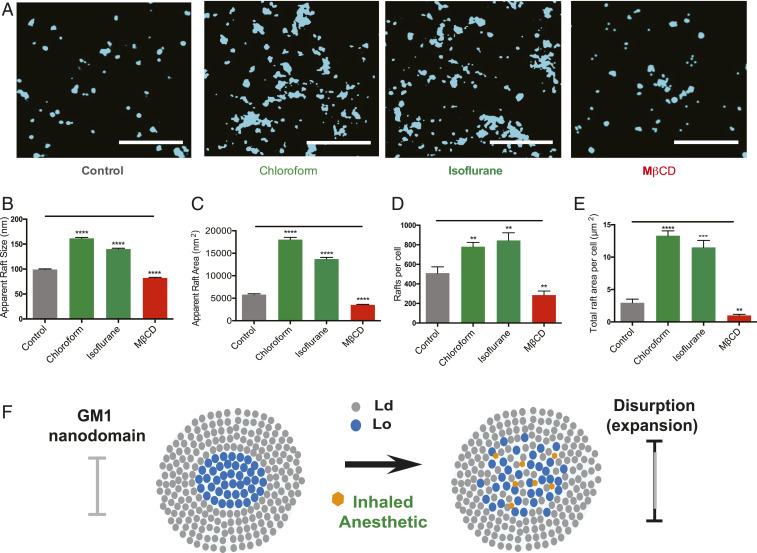
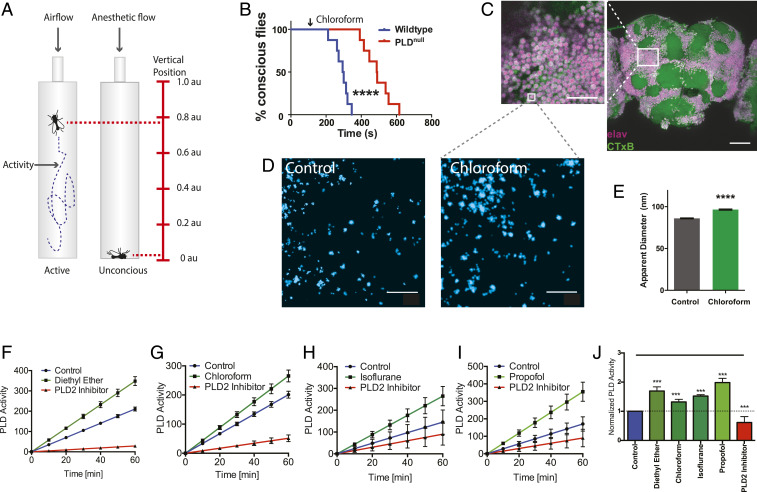
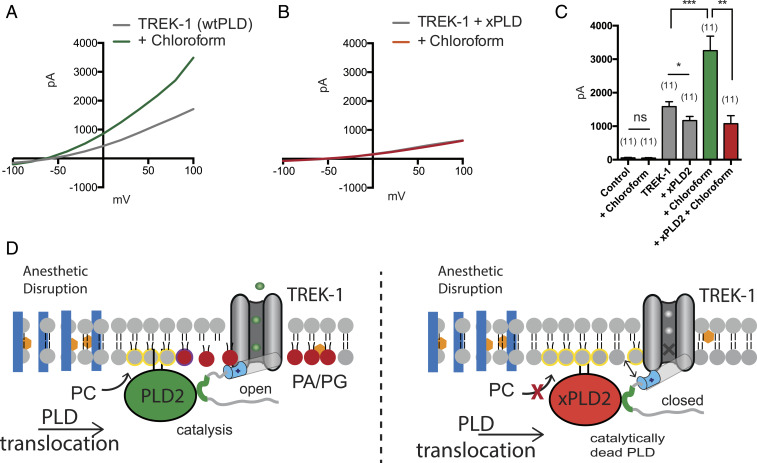
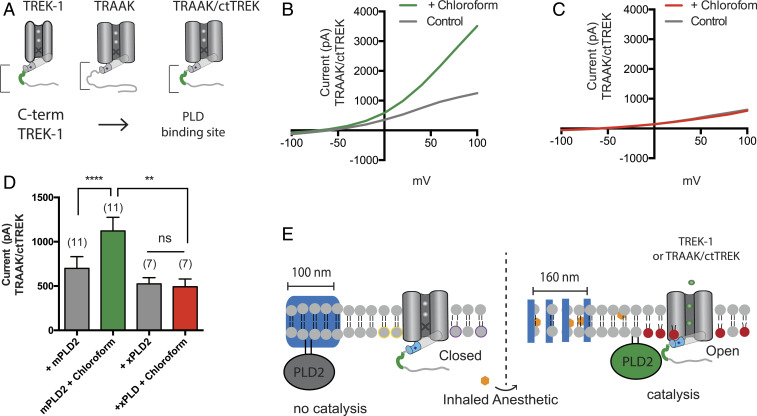
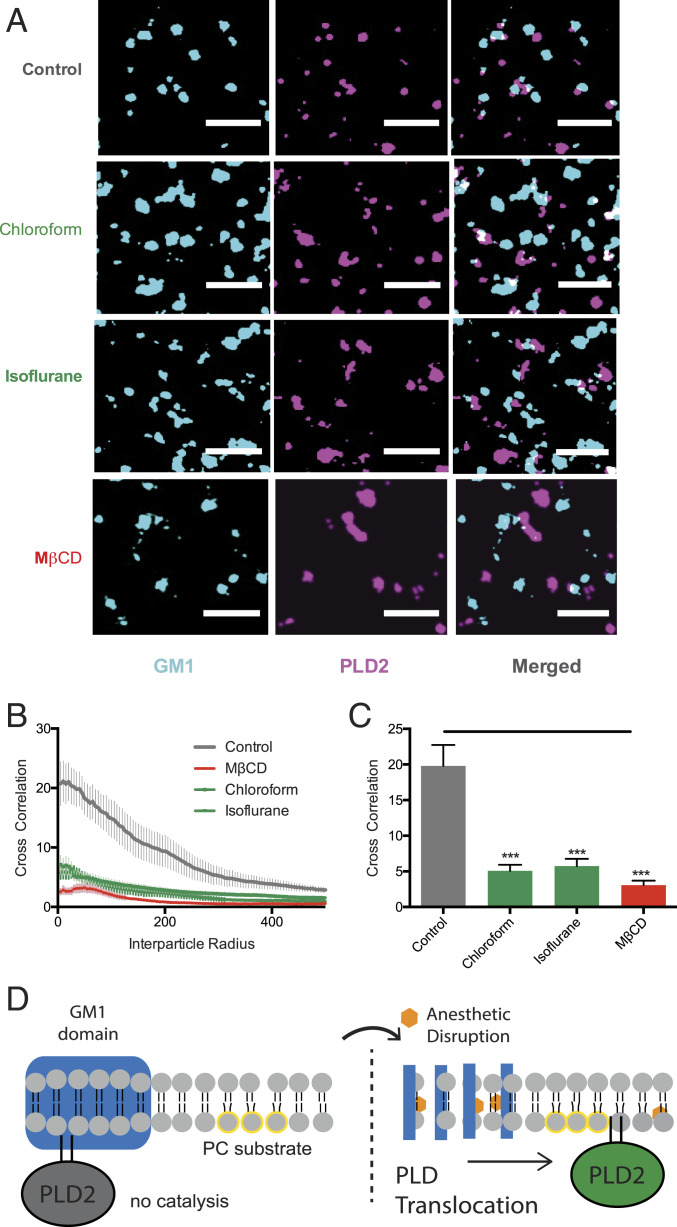
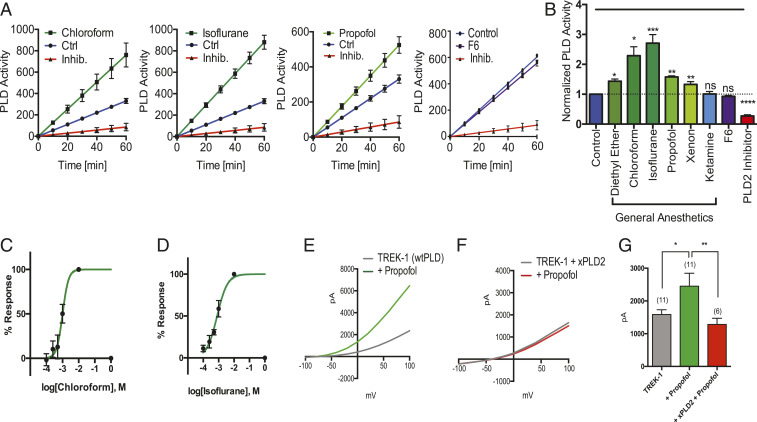
Inhaled anesthetics are a chemically diverse collection of hydrophobic molecules that robustly activate TWIK-related K channels (TREK-1) and reversibly induce loss of consciousness. For 100 y, anesthetics were speculated to target cellular membranes, yet no plausible mechanism emerged to explain a membrane effect on ion channels. Here we show that inhaled anesthetics (chloroform and isoflurane) activate TREK-1 through disruption of phospholipase D2 (PLD2) localization to lipid rafts and subsequent production of signaling lipid phosphatidic acid (PA). Catalytically dead PLD2 robustly blocks anesthetic TREK-1 currents in whole-cell patch-clamp recordings. Localization of PLD2 renders the TRAAK channel sensitive, a channel that is otherwise anesthetic insensitive. General anesthetics, such as chloroform, isoflurane, diethyl ether, xenon, and propofol, disrupt lipid rafts and activate PLD2. In the whole brain of flies, anesthesia disrupts rafts and PLD flies resist anesthesia. Our results establish a membrane-mediated target of inhaled anesthesia and suggest PA helps set thresholds of anesthetic sensitivity in vivo.
吸入性麻醉剂是一类化学性质多样的疏水分子,能强力激活TWIK相关钾通道(TREK - 1)并可逆性地导致意识丧失。在长达100年的时间里,人们推测麻醉剂作用于细胞膜,但一直没有出现合理的机制来解释其对离子通道的膜效应。在此我们表明,吸入性麻醉剂(氯仿和异氟烷)通过破坏磷脂酶D2(PLD2)在脂筏中的定位以及随后产生信号脂质磷脂酸(PA)来激活TREK - 1。在全细胞膜片钳记录中,催化失活的PLD2能强力阻断麻醉剂诱导的TREK - 1电流。PLD2的定位使TRAAK通道变得敏感,而该通道在其他情况下对麻醉剂不敏感。全身麻醉剂,如氯仿、异氟烷、乙醚、氙气和丙泊酚,会破坏脂筏并激活PLD2。在果蝇的整个大脑中,麻醉会破坏脂筏,而PLD缺陷型果蝇对麻醉有抗性。我们的结果确立了吸入性麻醉的一种膜介导靶点,并表明PA有助于设定体内麻醉敏感性的阈值。