Department of Biomolecular Systems, Max-Planck-Institute of Colloids and Interfaces, Am Mühlenberg 1, 14476 Potsdam, Germany.
Department of Chemistry and Biochemistry, Freie Universität Berlin, Arnimallee 22, 14195 Berlin, Germany.
J Am Chem Soc. 2020 Jun 24;142(25):11042-11049. doi: 10.1021/jacs.0c02848. Epub 2020 Jun 11.
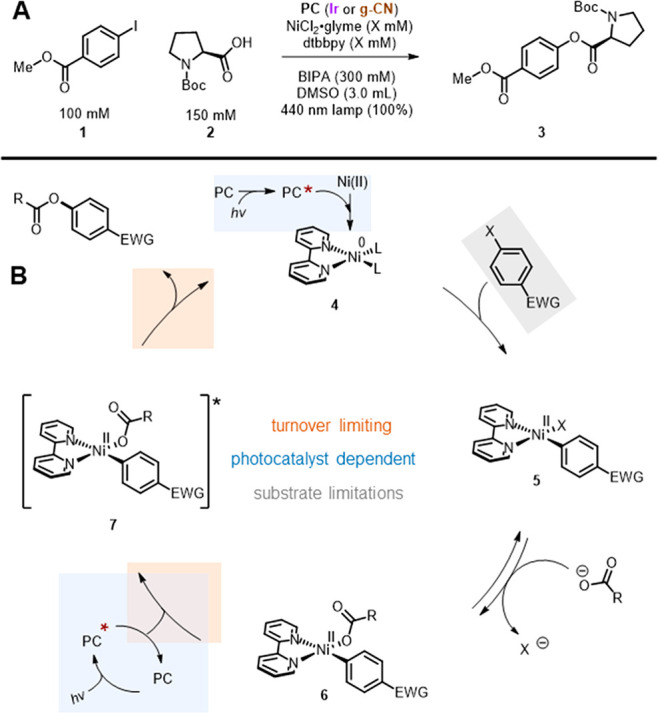
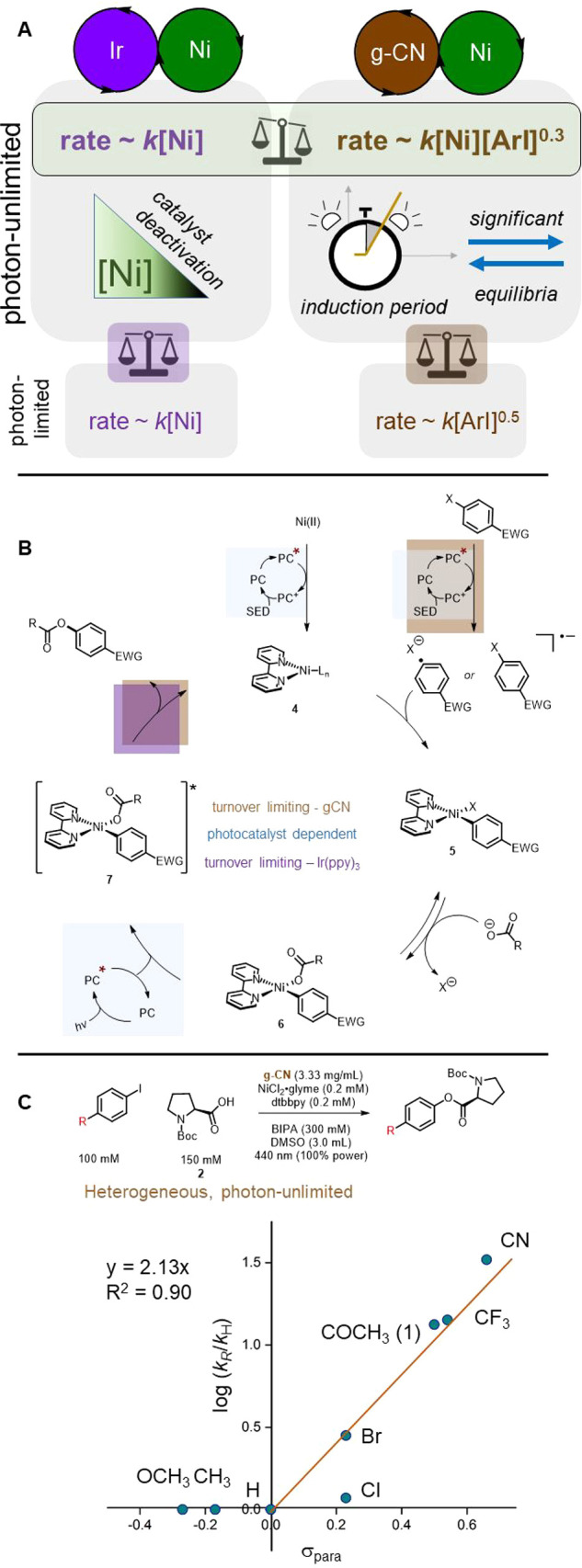
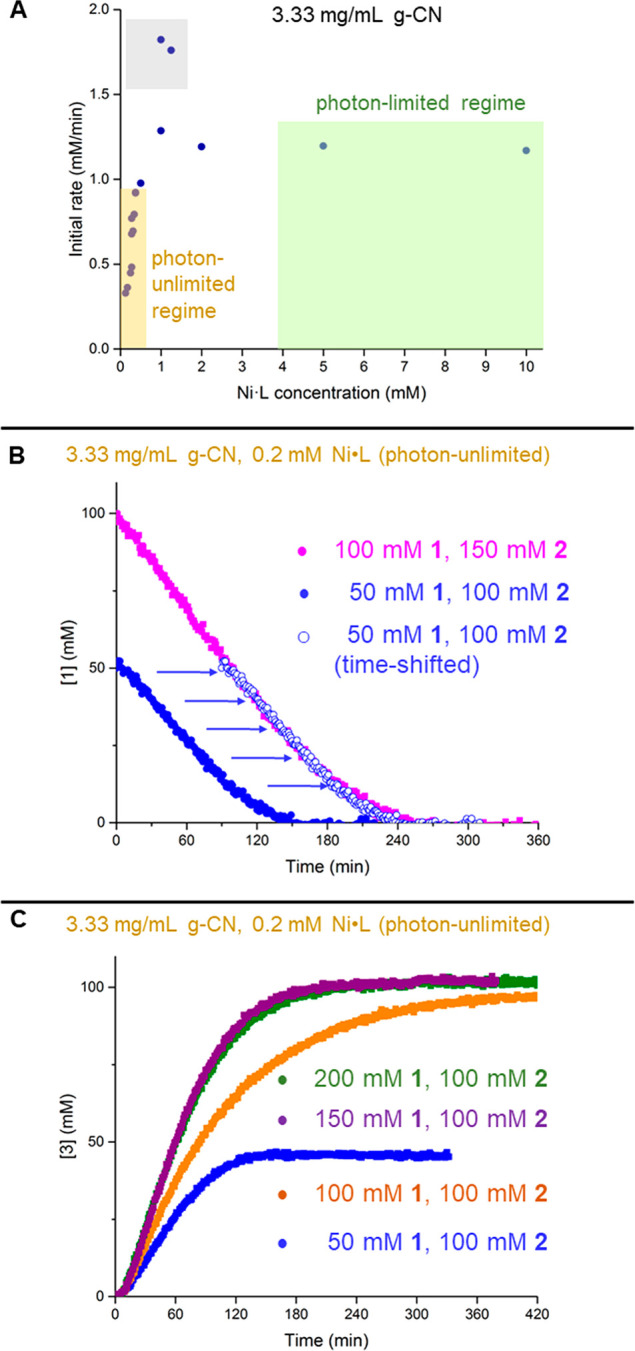
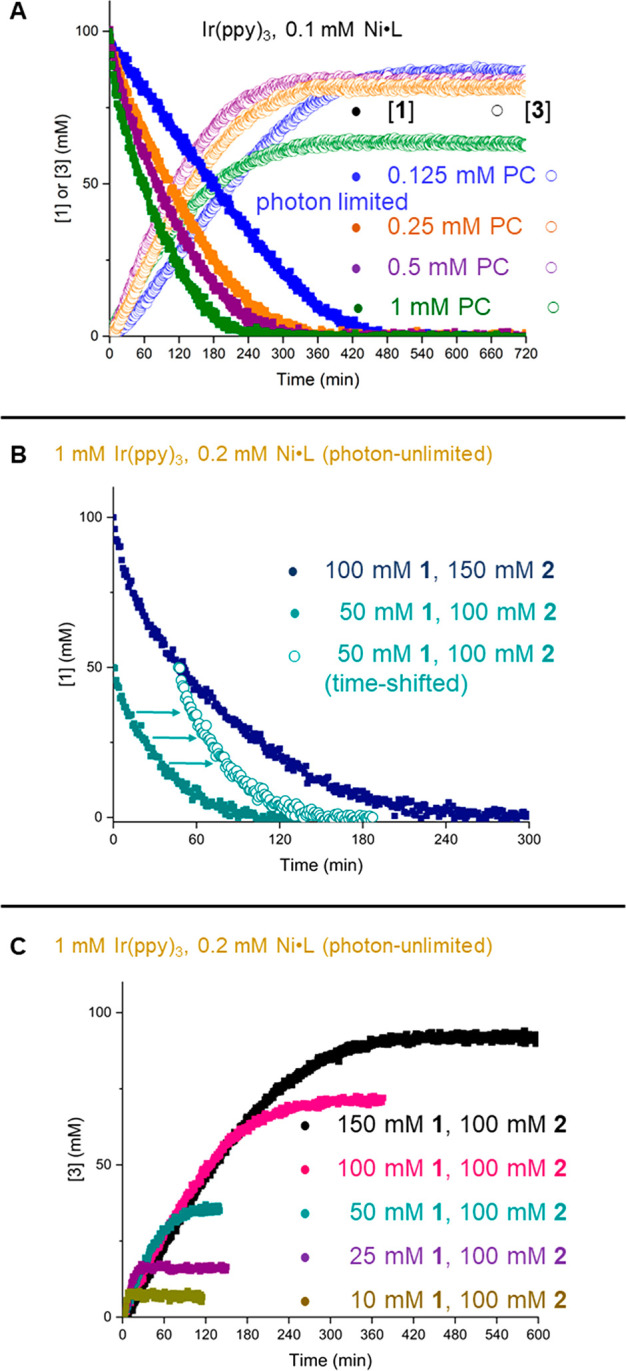
Dual photocatalysis and nickel catalysis can effect cross-coupling under mild conditions, but little is known about the kinetics of this class of reactions. We report a comprehensive kinetic examination of a model carboxylate -arylation, comparing a state-of-the-art homogeneous photocatalyst (Ir(ppy)) with a competitive heterogeneous photocatalyst (graphitic carbon nitride). Experimental conditions were adjusted such that the nickel catalytic cycle is saturated with excited photocatalyst. This approach was designed to remove the role of the photocatalyst, by which only the intrinsic behaviors of the nickel catalytic cycles are observed. The two reactions did not display identical kinetics. Ir(ppy) deactivates the nickel catalytic cycle and creates more dehalogenated side product. Kinetic data for the reaction using Ir(ppy) supports a turnover-limiting reductive elimination. Graphitic carbon nitride gave higher selectivity, even at high photocatalyst-to-nickel ratios. The heterogeneous reaction also showed a rate dependence on aryl halide, indicating that oxidative addition plays a role in rate determination. The results argue against the current mechanistic hypothesis, which states that the photocatalyst is only involved to trigger reductive elimination.
双光催化和镍催化可以在温和条件下实现交叉偶联,但这类反应的动力学研究还很少。我们报告了一种模型羧酸芳基化的综合动力学研究,比较了一种最先进的均相光催化剂(Ir(ppy))和一种有竞争力的多相光催化剂(石墨相氮化碳)。实验条件进行了调整,以使镍催化循环与激发态光催化剂饱和。这种方法旨在消除光催化剂的作用,从而只观察到镍催化循环的固有行为。这两个反应没有表现出相同的动力学。Ir(ppy)使镍催化循环失活,并产生更多脱卤副产物。使用 Ir(ppy)的反应动力学数据支持周转限制的还原消除。即使在高光催化剂与镍的比例下,石墨相氮化碳也表现出更高的选择性。多相反应也表现出对芳基卤化物的速率依赖性,表明氧化加成在速率决定中起作用。结果与目前的反应机理假设相矛盾,该假设认为光催化剂仅参与触发还原消除。