Department of Biopharmacy, Medical University of Lublin, Chodzki 4a, 20-093 Lublin, Poland.
Department of Industrial and Environmental Microbiology, Institute of Biological Sciences, Maria Curie-Skłodowska University, Akademicka 19, 20-033 Lublin, Poland.
Int J Mol Sci. 2020 May 27;21(11):3811. doi: 10.3390/ijms21113811.
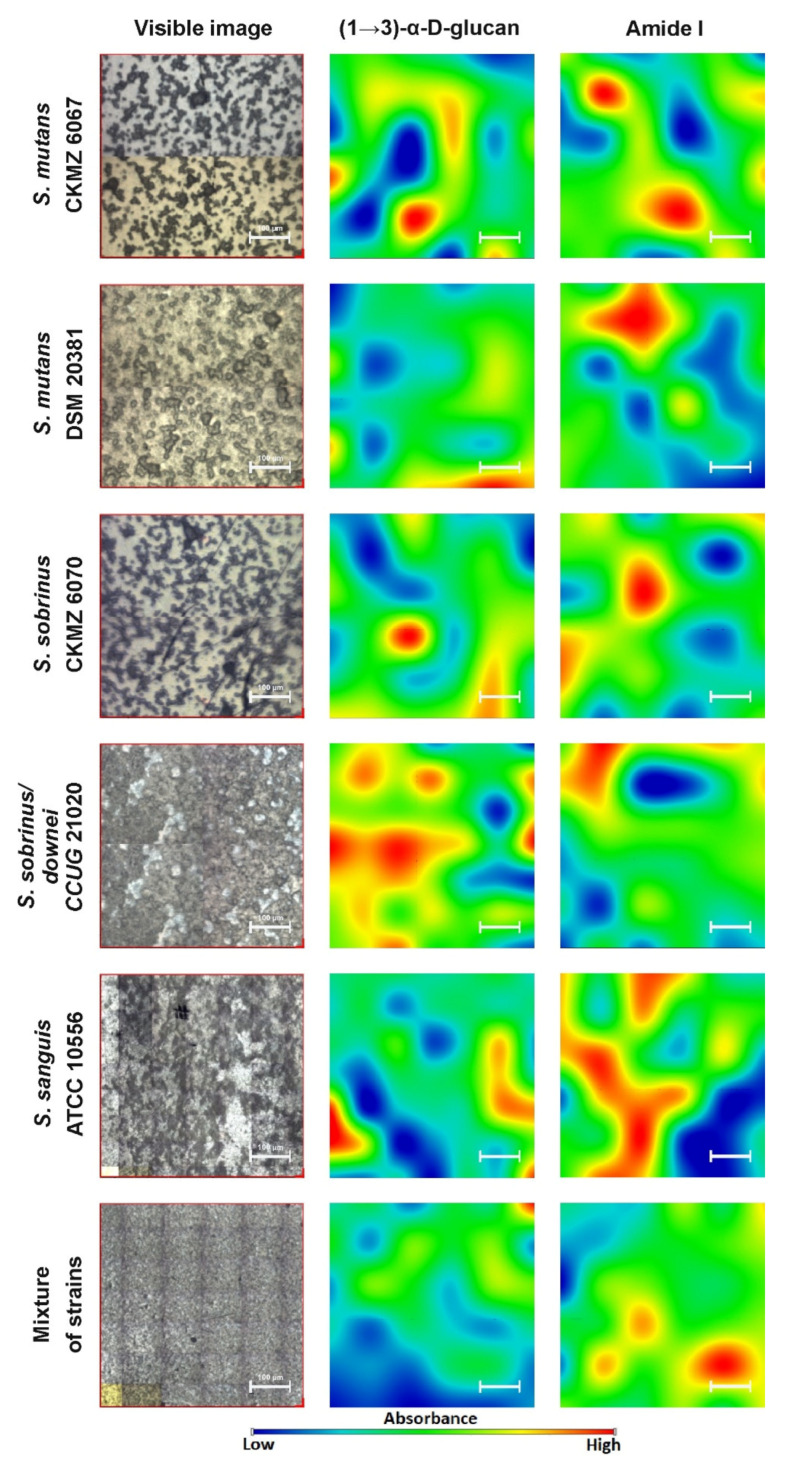
Fourier transform infrared (FT-IR) and Raman spectroscopy and mapping were applied to the analysis of biofilms produced by bacteria of the genus Streptococcus. Bacterial biofilm, also called dental plaque, is the main cause of periodontal disease and tooth decay. It consists of a complex microbial community embedded in an extracellular matrix composed of highly hydrated extracellular polymeric substances and is a combination of salivary and bacterial proteins, lipids, polysaccharides, nucleic acids, and inorganic ions. This study confirms the value of Raman and FT-IR spectroscopies in biology, medicine, and pharmacy as effective tools for bacterial product characterization.
傅里叶变换红外(FT-IR)和拉曼光谱及映射技术被应用于分析链球菌属细菌产生的生物膜。细菌生物膜,也称为牙菌斑,是牙周病和龋齿的主要原因。它由一个复杂的微生物群落组成,嵌入在一个由高度水合的细胞外聚合物物质组成的细胞外基质中,是唾液和细菌蛋白质、脂质、多糖、核酸和无机离子的组合。本研究证实了拉曼和 FT-IR 光谱学在生物学、医学和药学领域的价值,它们是细菌产物特征描述的有效工具。