Khatoon Zohra, McTiernan Christopher D, Suuronen Erik J, Mah Thien-Fah, Alarcon Emilio I
Division of Cardiac Surgery, University of Ottawa Heart Institute, Ottawa, Ontario, K1Y 4W7, Canada.
Department of Biochemistry, Microbiology, and Immunology, University of Ottawa, Ottawa, Ontario, Canada.
Heliyon. 2018 Dec 28;4(12):e01067. doi: 10.1016/j.heliyon.2018.e01067. eCollection 2018 Dec.
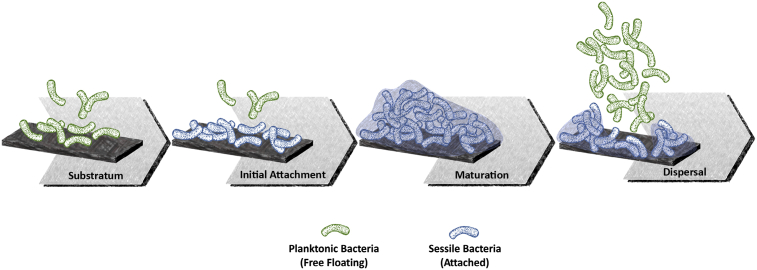
In living organisms, biofilms are defined as complex communities of bacteria residing within an exopolysaccharide matrix that adheres to a surface. In the clinic, they are typically the cause of chronic, nosocomial, and medical device-related infections. Due to the antibiotic-resistant nature of biofilms, the use of antibiotics alone is ineffective for treating biofilm-related infections. In this review, we present a brief overview of concepts of bacterial biofilm formation, and current state-of-the-art therapeutic approaches for preventing and treating biofilms. Also, we have reviewed the prevalence of such infections on medical devices and discussed the future challenges that need to be overcome in order to successfully treat biofilms using the novel technologies being developed.
在活的生物体中,生物膜被定义为存在于附着于表面的胞外多糖基质内的细菌复杂群落。在临床上,它们通常是慢性、医院获得性和与医疗设备相关感染的病因。由于生物膜具有抗抗生素的特性,单独使用抗生素治疗与生物膜相关的感染是无效的。在本综述中,我们简要概述了细菌生物膜形成的概念以及预防和治疗生物膜的当前最先进的治疗方法。此外,我们还回顾了此类感染在医疗设备上的流行情况,并讨论了为利用正在开发的新技术成功治疗生物膜而需要克服的未来挑战。