Department of Pathobiology, Ontario Veterinary College, University of Guelph, Guelph, ON, N1G 2W1, Canada.
Global Therapeutics Research, Veterinary Medicine Research and Development, Zoetis Inc., Kalamazoo, MI, USA.
BMC Vet Res. 2020 May 29;16(1):168. doi: 10.1186/s12917-020-02383-7.
Constitutive and inducible defenses protect the respiratory tract from bacterial infection. The objective of this study was to characterize the response to an aerosolized lysate of killed bacteria, as a basis for studying the regulation and in vivo effects of these inducible innate immune responses.
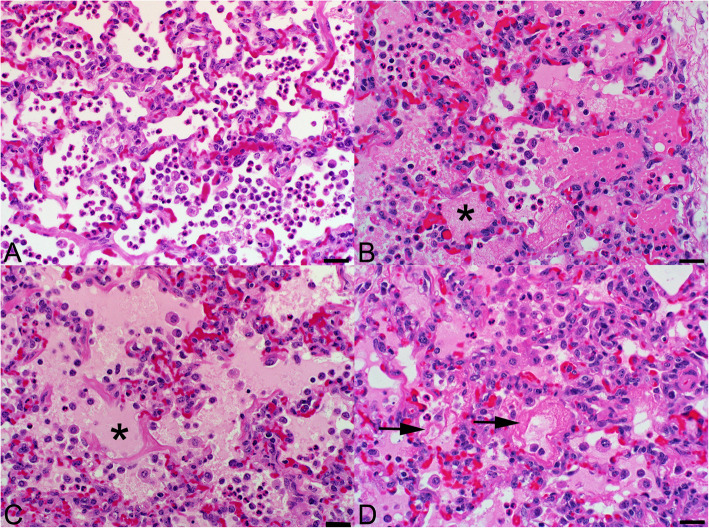
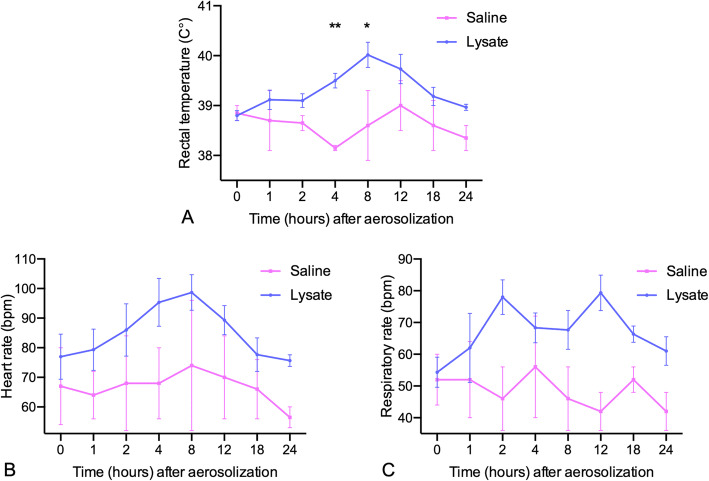
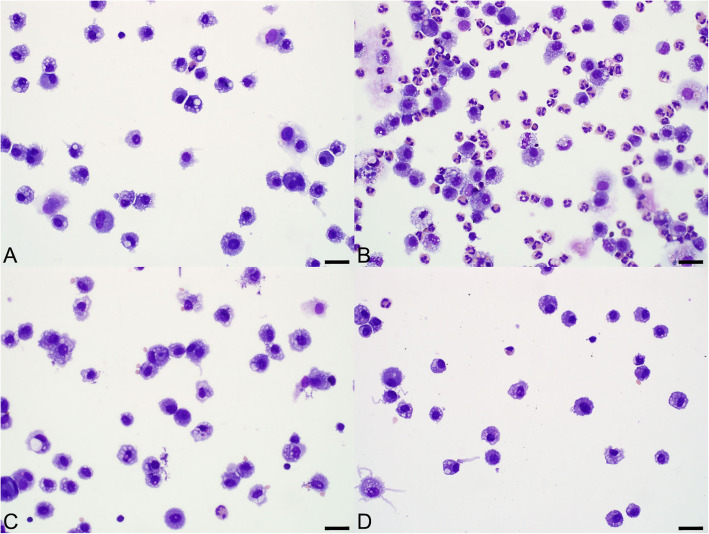
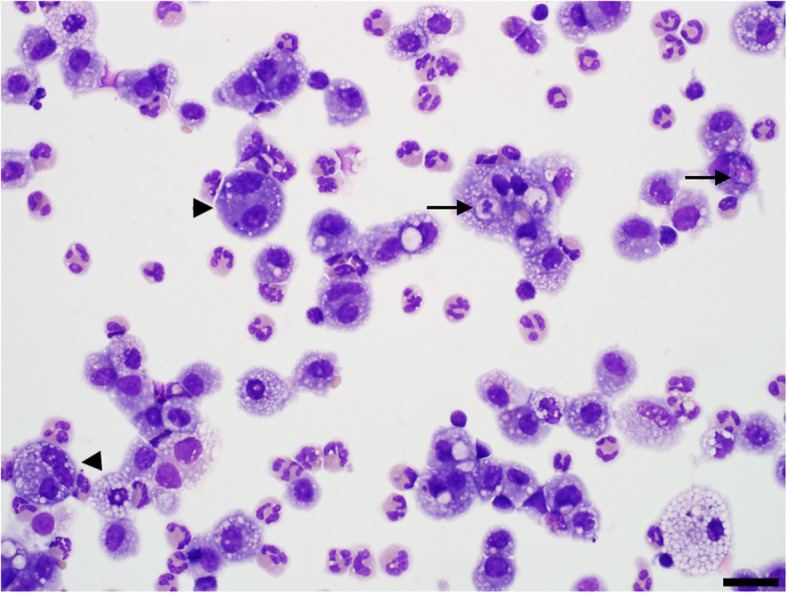
Bacterial lysate consisting of heat-killed and sonicated Staphylococcus aureus and Escherichia coli was aerosolized to 6 calves and systemic and pulmonary innate immune and inflammatory responses were measured in the first 24 h relative to baseline. Evaluated parameters included clinical parameters (body temperature and heart and respiratory rates), blood acute phase proteins and leukocyte counts, and leukocytes and proteins in bronchoalveolar lavage fluid. Mild clinical signs with increased heart rates and rectal temperatures developed following administration of the lysate, with resolution by 24 h. Serum haptoglobin and plasma fibrinogen concentrations were elevated at 24 h relative to baseline. Bronchoalveolar lavage fluid (BALF) had increased cellularity and increased proportion of neutrophils, as well as higher concentrations of interleukin (IL)-8, IL-10 and total protein at 24 h relative to baseline. Mass spectrometry identified 965 unique proteins in BALF: 19 proteins were increased and 26 proteins were decreased relative to baseline. The upregulated proteins included those involved in innate immunity including activation of complement, neutrophils and platelets. At postmortem examination, calves receiving higher doses of lysate had areas of lobular consolidation and interlobular edema. Histologically, neutrophils were present within bronchioles and to a lesser extent within alveoli. Calves receiving highest doses of lysate had patchy areas of neutrophils, hemorrhage and hyaline membranes within alveoli.
Aerosolization of bacterial lysate stimulated an innate immune response in lungs and airways, with alveolar damage observed at higher doses. Such a stimulus could be of value for investigating the effects of inducible innate immune responses on occurrence of disease, or for evaluating how stress, drugs or genetics affect these dynamic responses of the respiratory tract.
组成性和诱导性防御可保护呼吸道免受细菌感染。本研究的目的是描述雾化细菌裂解物后的反应,以此作为研究这些诱导固有免疫反应的调节和体内效应的基础。
将热灭活和超声处理的金黄色葡萄球菌和大肠杆菌细菌裂解物雾化到 6 头小牛中,并在与基线相比的前 24 小时内测量全身和肺固有免疫和炎症反应。评估的参数包括临床参数(体温、心率和呼吸频率)、血液急性期蛋白和白细胞计数以及支气管肺泡灌洗液中的白细胞和蛋白质。在给予裂解物后,小牛出现轻度临床症状,伴有心率和直肠温度升高,24 小时后缓解。与基线相比,血清触珠蛋白和血浆纤维蛋白原浓度在 24 小时时升高。与基线相比,支气管肺泡灌洗液(BALF)中的细胞数增加,中性粒细胞比例增加,IL-8、IL-10 和总蛋白浓度也增加。与基线相比,BALF 中有 965 种独特的蛋白质:19 种蛋白质增加,26 种蛋白质减少。上调的蛋白质包括参与固有免疫的蛋白质,包括补体、中性粒细胞和血小板的激活。在尸检时,接受更高剂量裂解物的小牛有小叶性实变和小叶间水肿区域。组织学上,支气管内存在中性粒细胞,在肺泡内较少见。接受最高剂量裂解物的小牛在肺泡内有散在的中性粒细胞、出血和透明膜。
雾化细菌裂解物刺激肺部和气道固有免疫反应,在较高剂量下观察到肺泡损伤。这种刺激可能对研究诱导固有免疫反应对疾病发生的影响,或评估应激、药物或遗传如何影响呼吸道的这些动态反应具有价值。