MTA-ELTE Laboratory of Molecular and Systems Neurobiology, Department of Physiology and Neurobiology, Eötvös Loránd University and the Hungarian Academy of Sciences, Budapest, Hungary.
Department of Physiology and Neurobiology, Institute of Biology, Eötvös Loránd University, Budapest, Hungary.
Arch Toxicol. 2020 Sep;94(9):3297-3313. doi: 10.1007/s00204-020-02791-6. Epub 2020 May 29.
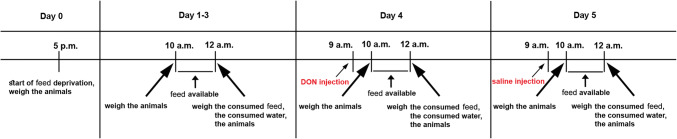
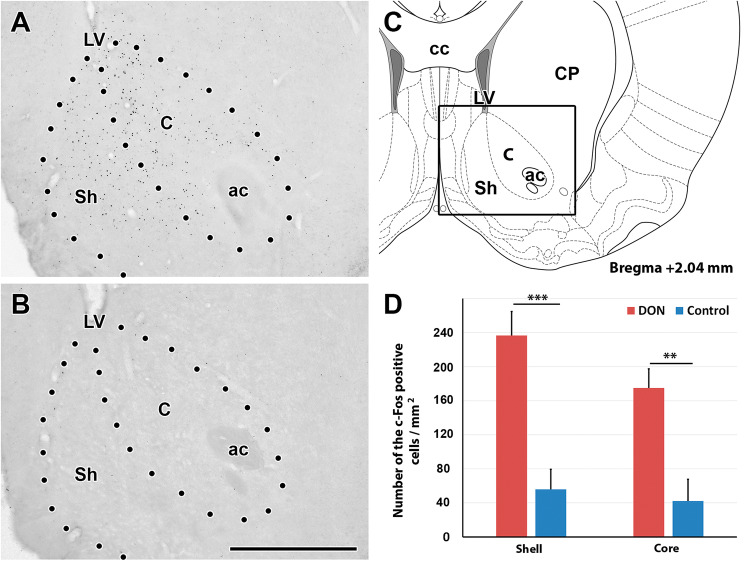
Deoxynivalenol (DON) or vomitoxin, is a trichothecene mycotoxin produced mainly by Fusarium graminearum and culmorum. Mycotoxins or secondary metabolic products of mold fungi are micro-pollutants, which may affect human and animal health. The neuronal and behavioural actions of DON were analysed in the present study. To address, which neurons can be affected by DON, the neuronal activation pattern following intraperitoneal injection of DON (1 mg/kg) was investigated in adult male rats and the results were confirmed in mice, too. DON-induced neuronal activation was assessed by c-Fos immunohistochemistry. DON injection resulted in profound c-Fos activation in only the elements of the reward system, such as the accumbens nucleus, the medial prefrontal cortex, and the ventral tegmental area. Further double labelling studies suggested that GABAergic neurons were activated by DON treatment. To study the behavioural relevance of this activation, we examined the effect of DON on feed intake as an example of reward-driven behaviours. Following DON injection, feed consumption was markedly reduced but returned to normal the following day suggesting an inhibitory action of DON on feed intake without forming taste-aversion. To further test how general the effect of DON on goal-directed behaviours is, its actions on maternal behaviour was also examined. Pup retrieval latencies were markedly increased by DON administration, and DON-treated mother rats spent less time with nursing suggesting reduced maternal motivation. In a supplementary control experiment, DON did not induce conditioned place preference arguing against its addictive or aversive actions. The results imply that acute uptake of the mycotoxin DON can influence the reward circuit of the brain and exert inhibitory actions on goal-directed, reward-driven behaviours. In addition, the results also suggest that DON exposure of mothers may have specific implications.
脱氧雪腐镰刀菌烯醇(DON),又称呕吐毒素,是主要由禾谷镰刀菌和串珠镰刀菌产生的一种单端孢霉烯族毒素。霉菌毒素或霉菌次级代谢产物是一种微污染物,可能会影响人类和动物的健康。本研究分析了 DON 的神经毒性和行为学作用。为了确定 DON 可以影响哪些神经元,本研究通过腹腔注射 DON(1mg/kg),检测成年雄性大鼠的神经元激活模式,并在小鼠中进行了验证。DON 诱导的神经元激活通过 c-Fos 免疫组织化学法进行评估。DON 注射仅导致奖赏系统的部分神经元(如伏隔核、内侧前额叶皮层和腹侧被盖区)出现明显的 c-Fos 激活。进一步的双标研究表明,GABA 能神经元被 DON 处理激活。为了研究这种激活的行为学相关性,我们以摄食行为(奖赏驱动行为的一个例子)为例,研究了 DON 对摄食的影响。DON 注射后,摄食量明显减少,但第二天恢复正常,表明 DON 对摄食具有抑制作用,而不会形成味觉厌恶。为了进一步测试 DON 对目标导向行为的影响有多普遍,还研究了 DON 对母性行为的影响。DON 给药后,幼鼠的取食潜伏期明显延长,而接受 DON 处理的母鼠与幼鼠的哺乳时间减少,表明母鼠的哺乳动机降低。在一项补充对照实验中,DON 没有诱导出条件性位置偏好,这表明它没有成瘾或厌恶作用。结果表明,急性摄入真菌毒素 DON 会影响大脑的奖赏回路,并对目标导向的奖赏驱动行为产生抑制作用。此外,这些结果还表明,母体暴露于 DON 可能具有特定的影响。