Department of Neurology and Neurophysiology, Liverpool Hospital, Sydney, New South Wales, Australia; Stroke and Neurology Research Group, Ingham Institute for Applied Medical Research, Sydney, New South Wales, Australia.
Brain and Mind Centre, Central Clinical School, the University of Sydney, Sydney, Australia.
EBioMedicine. 2020 Jun;56:102799. doi: 10.1016/j.ebiom.2020.102799. Epub 2020 May 28.
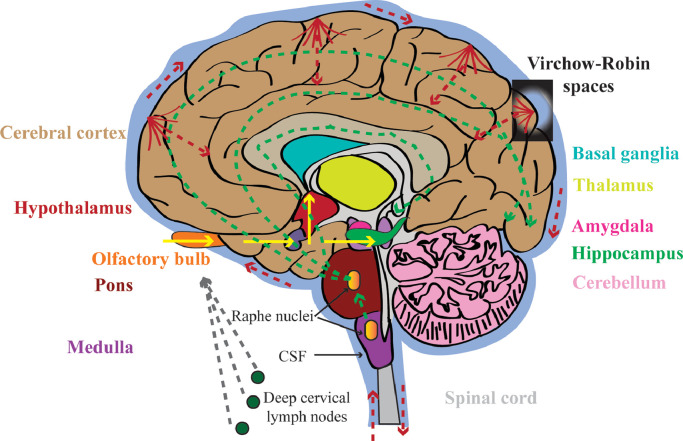
A new strain of human coronaviruses (hCoVs), Severe Acute Respiratory Syndrome Coronavirus-2 (SARS-CoV-2), has been identified to be responsible for the current outbreak of the coronavirus disease 2019 (COVID-19). Though major symptoms are primarily generated from the respiratory system, neurological symptoms are being reported in some of the confirmed cases, raising concerns of its potential for intracranial invasion and neurological manifestations, both in the acute phase and in the long-term. At present, it remains unclear the extent to which SARS-CoV-2 is present in the brain, and if so, its pathogenic role in the central nervous system (CNS). Evidence for neuroinvasion and neurovirulence of hCoVs has been recognised in animal and human studies. Given that SARS-CoV-2 belongs to the same family and shares characteristics in terms of receptor binding properties, it is worthwhile exploring its potential CNS manifestations. This review summarises previous findings from hCoVs in relation to the CNS, and compares these with the new strain, aiming to provide a better understanding of the effects of SARS-CoV-2 on the CNS.
一种新型人类冠状病毒(hCoVs),即严重急性呼吸综合征冠状病毒 2(SARS-CoV-2),已被确定为导致当前 2019 年冠状病毒病(COVID-19)爆发的罪魁祸首。尽管主要症状主要来自呼吸系统,但一些确诊病例中出现了神经系统症状,这引起了人们对其潜在颅内入侵和神经系统表现的关注,包括在急性期和长期。目前,尚不清楚 SARS-CoV-2 在大脑中的存在程度,如果存在,其在中枢神经系统(CNS)中的致病作用如何。在动物和人类研究中已经认识到 hCoVs 的神经入侵和神经毒力。鉴于 SARS-CoV-2 属于同一科,并且在受体结合特性方面具有相似性,因此值得探索其潜在的 CNS 表现。本综述总结了以前关于 hCoVs 与 CNS 相关的研究结果,并将其与新菌株进行了比较,旨在更好地了解 SARS-CoV-2 对 CNS 的影响。