Krömer Jens O, Ferreira Rafael G, Petrides Demetri, Kohlheb Norbert
Systems Biotechnology, Department of Solar Materials, Helmholtz Centre for Environmental Research - UFZ, Leipzig, Germany.
Intelligen Brazil, São Paulo, Brazil.
Front Bioeng Biotechnol. 2020 May 13;8:403. doi: 10.3389/fbioe.2020.00403. eCollection 2020.
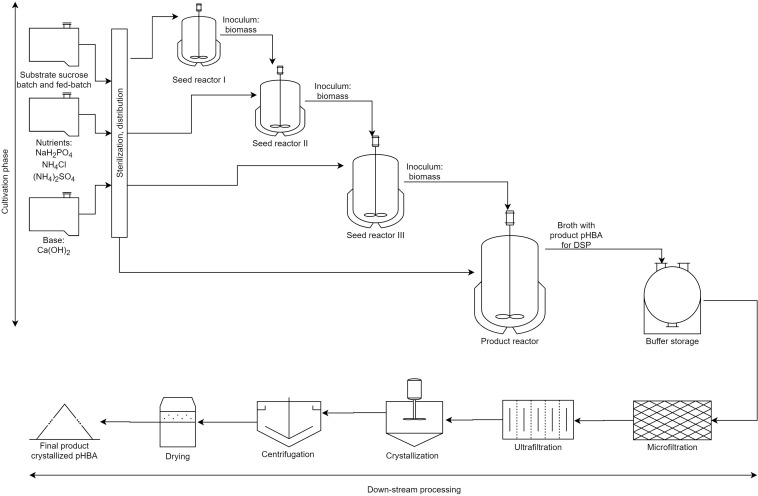
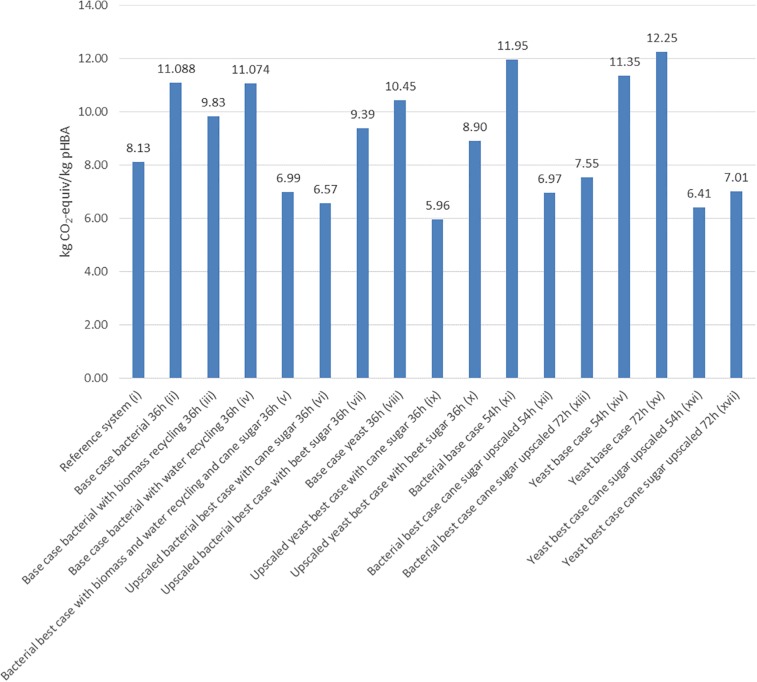
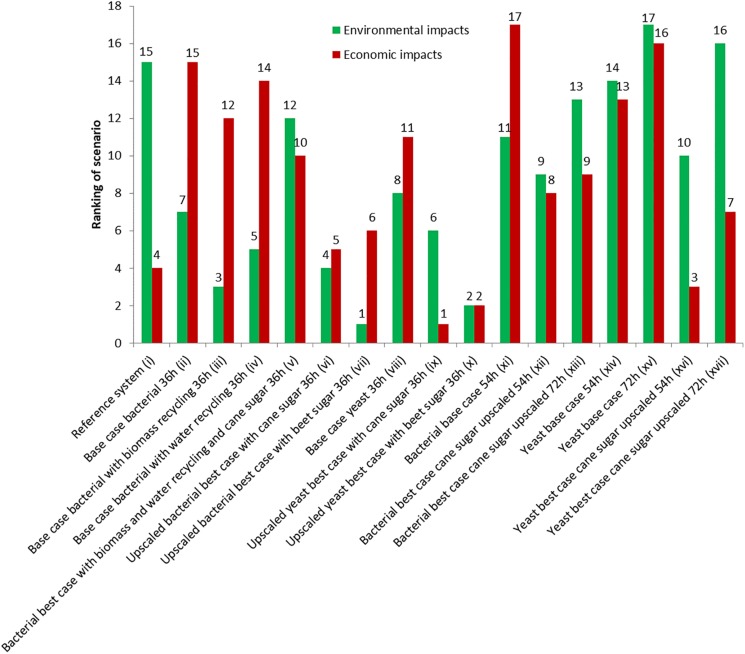
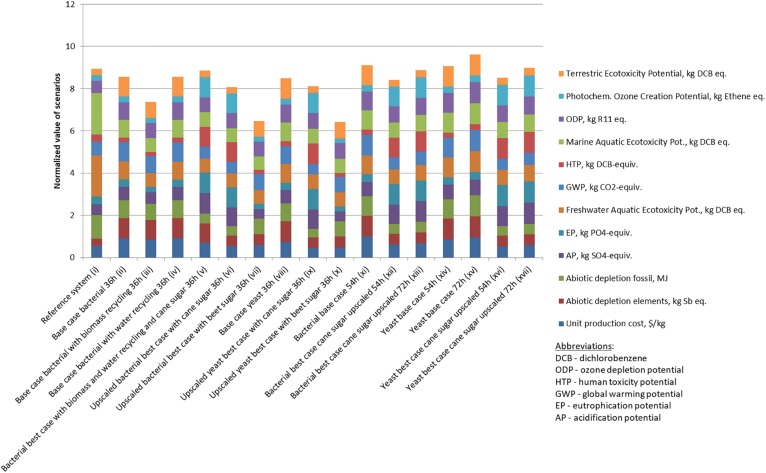
The bio-based production of aromatics is experiencing a renaissance with systems and synthetic biology approaches promising to deliver bio-catalysts that will reach yields, rates, and titers comparable to already existing bulk bio-processes for the production of amino acids for instance. However, aromatic building blocks derived from petrochemical routes have a huge economic advantage, they are cheap, and very cheap in fact. In this article, we are trying to shed light on an important aspect of biocatalyst development that is frequently overlooked when working on strain development: economic and environmental impact of the production process. We estimate the production cost and environmental impact of a microbial fermentation process depending on culture pH, carbon source and process scale. As a model molecule we use -hydroxybenzoic acid (pHBA), but the results are readily transferrable to other shikimate derived aromatics with similar carbon yields and production rates.
基于生物的芳烃生产正在复兴,系统生物学和合成生物学方法有望提供生物催化剂,其产量、反应速率和滴度将达到与现有大规模生物过程(例如生产氨基酸的过程)相当的水平。然而,源自石化路线的芳烃构建块具有巨大的经济优势,它们很便宜,实际上非常便宜。在本文中,我们试图阐明生物催化剂开发的一个重要方面,这在进行菌株开发时经常被忽视:生产过程的经济和环境影响。我们根据培养pH值、碳源和工艺规模估算微生物发酵过程的生产成本和环境影响。作为模型分子,我们使用对羟基苯甲酸(pHBA),但结果很容易推广到其他具有相似碳产量和生产率的莽草酸衍生芳烃。