Goodman Cancer Research Centre, McGill University, Montreal, QC H3A 1A3, Canada.
Department of Physiology, McGill University, Montreal, QC H3G 1Y6, Canada.
Cell Rep Med. 2020 May 19;1(2):100014. doi: 10.1016/j.xcrm.2020.100014.
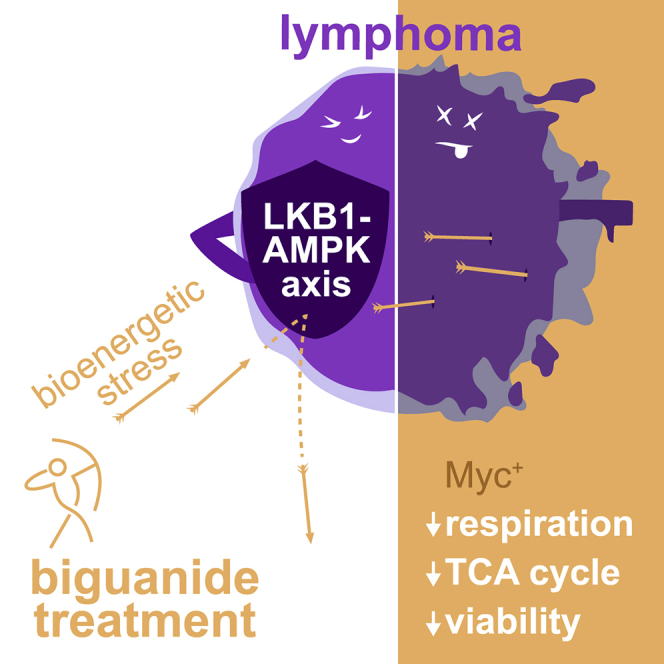
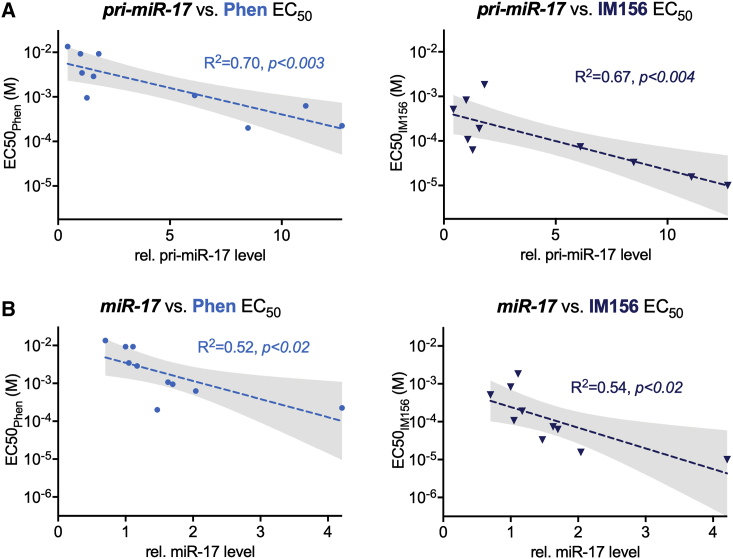
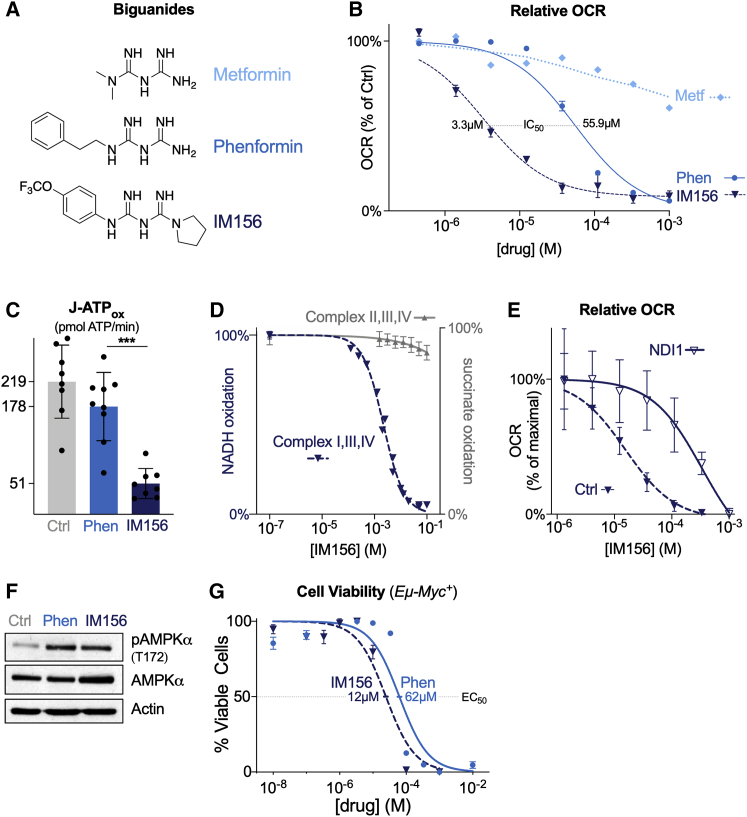
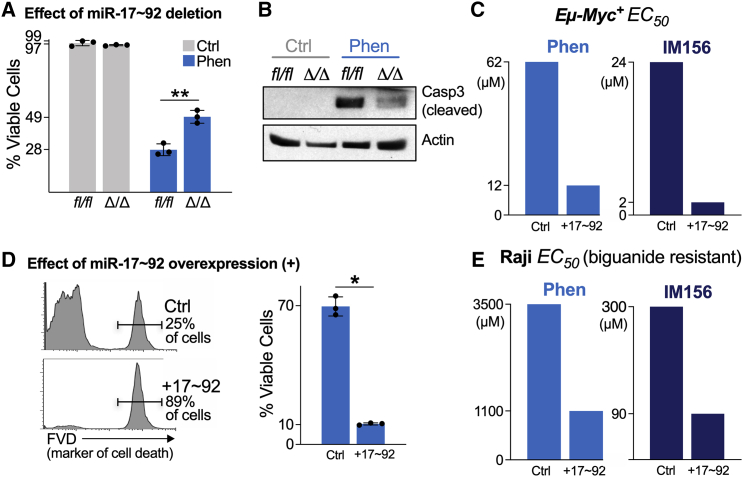
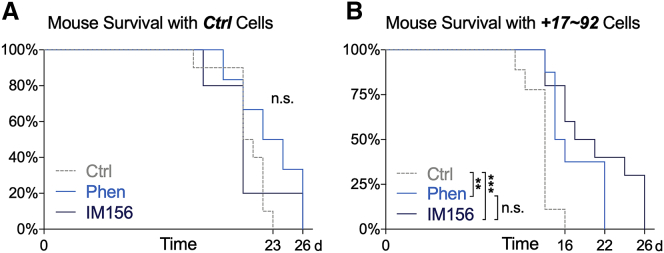
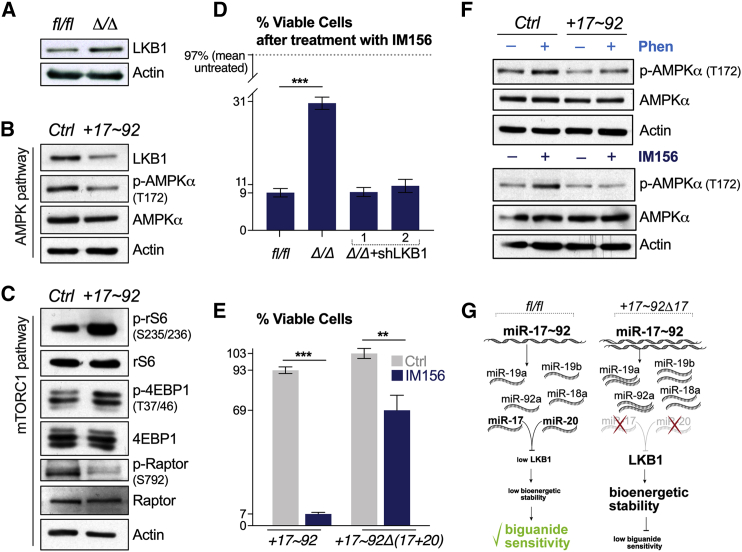
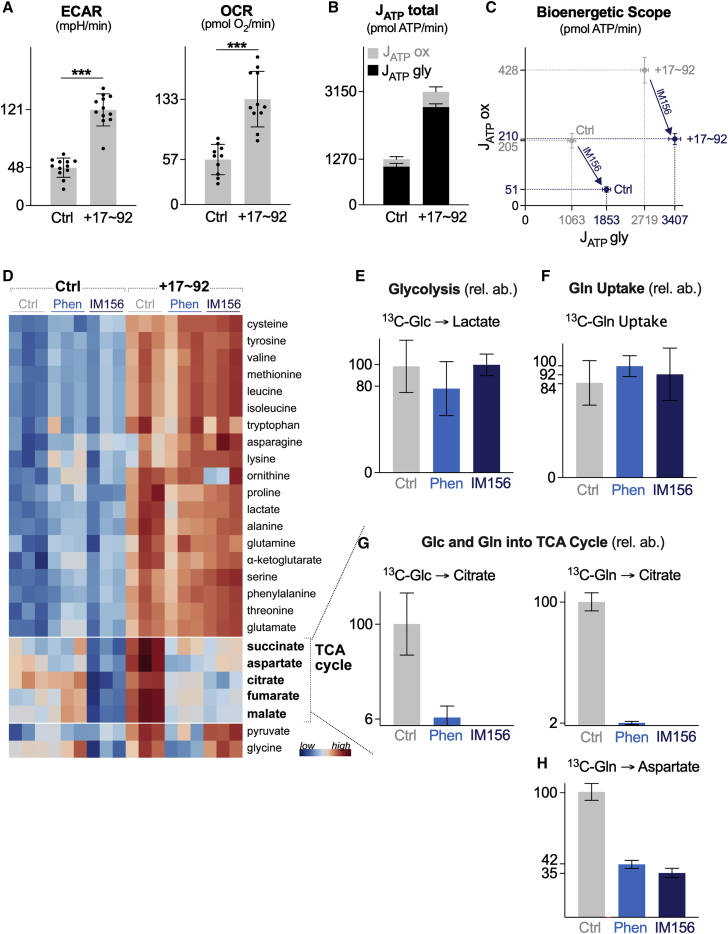
Cancer cells display metabolic plasticity to survive stresses in the tumor microenvironment. Cellular adaptation to energetic stress is coordinated in part by signaling through the liver kinase B1 (LKB1)-AMP-activated protein kinase (AMPK) pathway. Here, we demonstrate that miRNA-mediated silencing of LKB1 confers sensitivity of lymphoma cells to mitochondrial inhibition by biguanides. Using both classic (phenformin) and newly developed (IM156) biguanides, we demonstrate that elevated expression in lymphoma cells promotes increased apoptosis to biguanide treatment and . This effect is driven by the -dependent silencing of LKB1, which reduces AMPK activation in response to complex I inhibition. Mechanistically, biguanide treatment induces metabolic stress in lymphoma cells by inhibiting TCA cycle metabolism and mitochondrial respiration, exposing metabolic vulnerability. Finally, we demonstrate a direct correlation between expression and biguanide sensitivity in human cancer cells. Our results identify expression as a potential biomarker for biguanide sensitivity in malignancies.
癌细胞表现出代谢可塑性,以在肿瘤微环境中存活下来。细胞通过肝激酶 B1(LKB1)-AMP 激活蛋白激酶(AMPK)途径对能量应激的适应在一定程度上受到信号协调。在这里,我们证明 miRNA 介导的 LKB1 沉默使淋巴瘤细胞对双胍类药物抑制线粒体敏感。我们使用经典(二甲双胍)和新开发的(IM156)双胍类药物,证明在淋巴瘤细胞中表达升高促进了对双胍类药物治疗的增加凋亡和 。这种效应是由依赖的 LKB1 沉默驱动的,这减少了对复合物 I 抑制的 AMPK 激活。在机制上,双胍类药物通过抑制 TCA 循环代谢和线粒体呼吸来抑制淋巴瘤细胞中的代谢应激,从而暴露出代谢脆弱性。最后,我们证明了在人类癌细胞中 表达与双胍类药物敏感性之间存在直接相关性。我们的结果确定 表达是恶性肿瘤中双胍类药物敏感性的潜在生物标志物。