Global Health Division, RTI International, Washington, DC, United States of America.
Global Health, Population, and Nutrition, FHI 360, Washington, DC, United States of America.
PLoS Negl Trop Dis. 2020 Jun 1;14(6):e0008301. doi: 10.1371/journal.pntd.0008301. eCollection 2020 Jun.
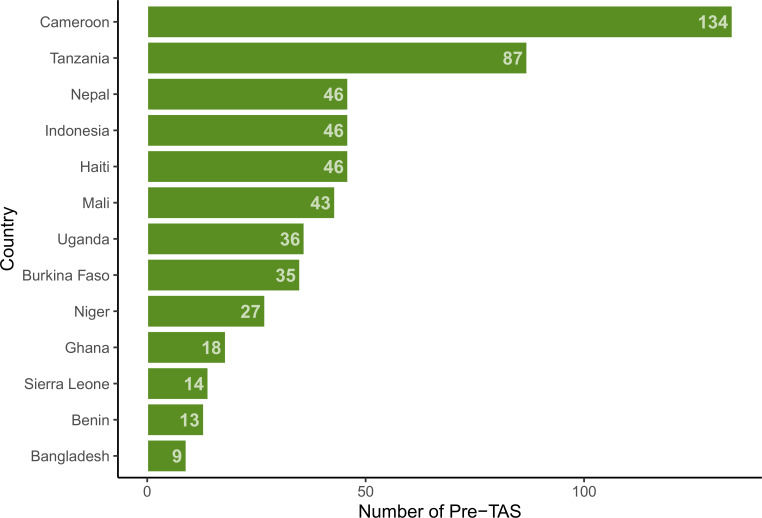
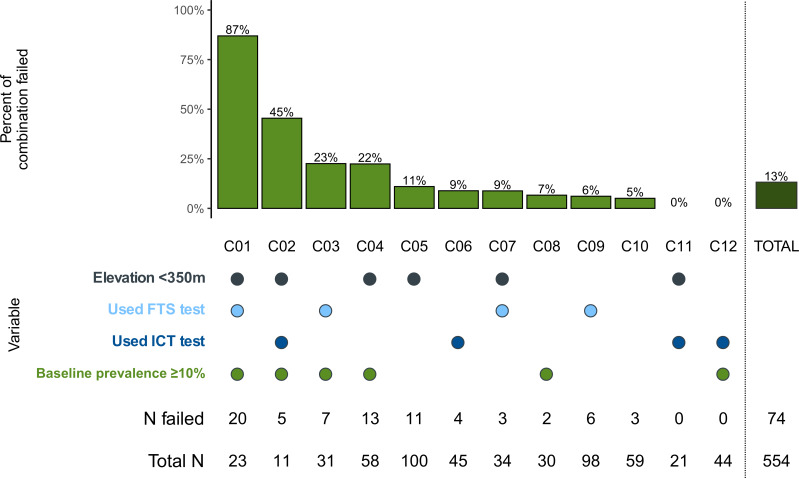
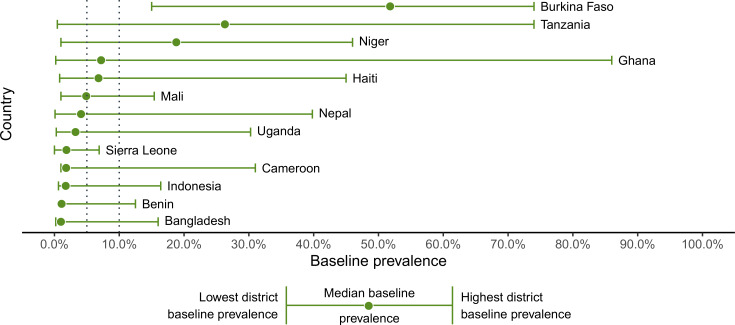
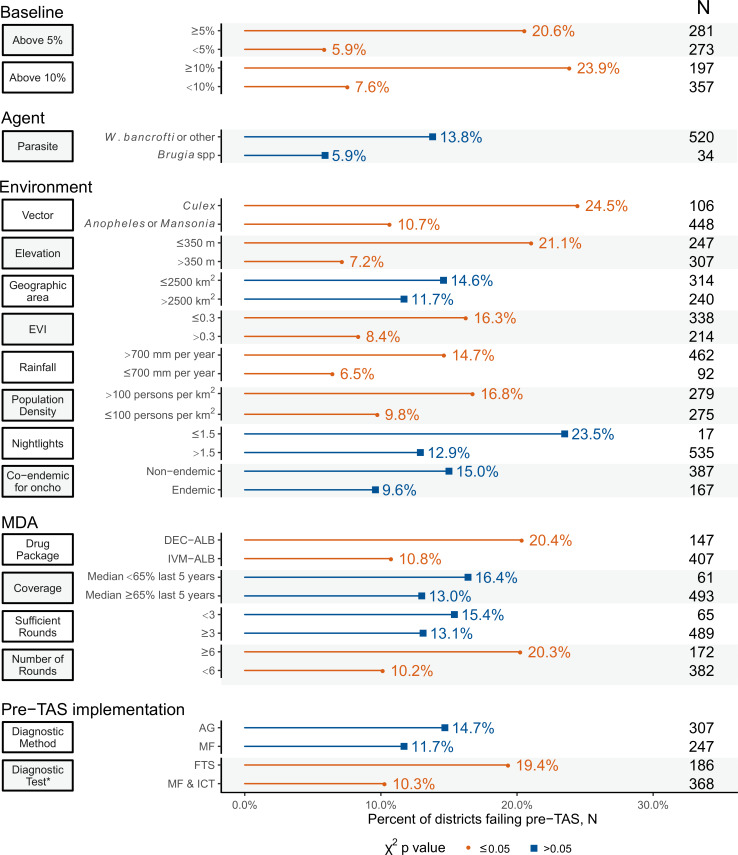
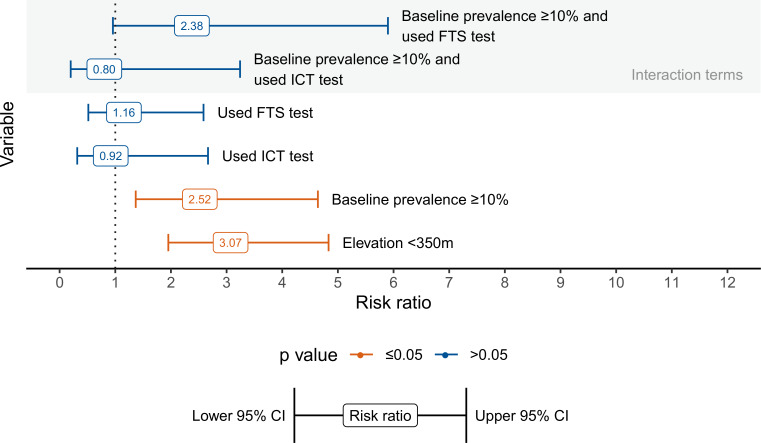
Achieving elimination of lymphatic filariasis (LF) as a public health problem requires a minimum of five effective rounds of mass drug administration (MDA) and demonstrating low prevalence in subsequent assessments. The first assessments recommended by the World Health Organization (WHO) are sentinel and spot-check sites-referred to as pre-transmission assessment surveys (pre-TAS)-in each implementation unit after MDA. If pre-TAS shows that prevalence in each site has been lowered to less than 1% microfilaremia or less than 2% antigenemia, the implementation unit conducts a TAS to determine whether MDA can be stopped. Failure to pass pre-TAS means that further rounds of MDA are required. This study aims to understand factors influencing pre-TAS results using existing programmatic data from 554 implementation units, of which 74 (13%) failed, in 13 countries. Secondary data analysis was completed using existing data from Bangladesh, Benin, Burkina Faso, Cameroon, Ghana, Haiti, Indonesia, Mali, Nepal, Niger, Sierra Leone, Tanzania, and Uganda. Additional covariate data were obtained from spatial raster data sets. Bivariate analysis and multilinear regression were performed to establish potential relationships between variables and the pre-TAS result. Higher baseline prevalence and lower elevation were significant in the regression model. Variables statistically significantly associated with failure (p-value ≤0.05) in the bivariate analyses included baseline prevalence at or above 5% or 10%, use of Filariasis Test Strips (FTS), primary vector of Culex, treatment with diethylcarbamazine-albendazole, higher elevation, higher population density, higher enhanced vegetation index (EVI), higher annual rainfall, and 6 or more rounds of MDA. This paper reports for the first time factors associated with pre-TAS results from a multi-country analysis. This information can help countries more effectively forecast program activities, such as the potential need for more rounds of MDA, and prioritize resources to ensure adequate coverage of all persons in areas at highest risk of failing pre-TAS.
实现将淋巴丝虫病(LF)作为一个公共卫生问题消除的目标,需要进行至少五轮有效的大规模药物治疗(MDA),并在随后的评估中显示出低流行率。世界卫生组织(WHO)推荐的首次评估是在 MDA 后,在每个实施单位的哨点和抽查地点进行,称为传播前评估调查(pre-TAS)。如果 pre-TAS 显示每个地点的流行率已降低至微丝蚴低于 1%或抗原血症低于 2%,则实施单位将进行 TAS 以确定是否可以停止 MDA。如果未能通过 pre-TAS,则意味着需要进行更多轮的 MDA。本研究旨在利用来自 13 个国家的 554 个实施单位的现有规划数据,了解影响 pre-TAS 结果的因素,其中 74 个(13%)单位失败。使用来自孟加拉国、贝宁、布基纳法索、喀麦隆、加纳、海地、印度尼西亚、马里、尼泊尔、尼日尔、塞拉利昂、坦桑尼亚和乌干达的现有数据完成了二次数据分析。其他协变量数据来自空间栅格数据集。进行了双变量分析和多元线性回归,以确定变量与 pre-TAS 结果之间的潜在关系。在回归模型中,基线流行率较高和上升幅度较低具有显著意义。在双变量分析中与失败显著相关的变量(p 值≤0.05)包括流行率为 5%或 10%及以上、使用丝虫病检测条(FTS)、主要媒介为库蚊、用乙胺嗪-阿苯达唑治疗、上升幅度较高、人口密度较高、增强植被指数(EVI)较高、年降雨量较高以及进行了 6 轮或更多轮 MDA。本文首次报告了来自多国分析的与 pre-TAS 结果相关的因素。这些信息可以帮助国家更有效地预测项目活动,例如是否需要进行更多轮 MDA,以及优先考虑资源,以确保在最有可能未能通过 pre-TAS 的高风险地区覆盖所有人员。