Environmental Research and Innovation (ERIN) Department, Luxembourg Institute of Science and Technology, 5, rue Bommel, Z.A.E. Robert Steichen, L-4940 Hautcharage, Luxembourg.
Department of Life Sciences, University of Siena, via P.A. Mattioli 4, I-53100 Siena, Italy.
Int J Mol Sci. 2020 May 28;21(11):3853. doi: 10.3390/ijms21113853.
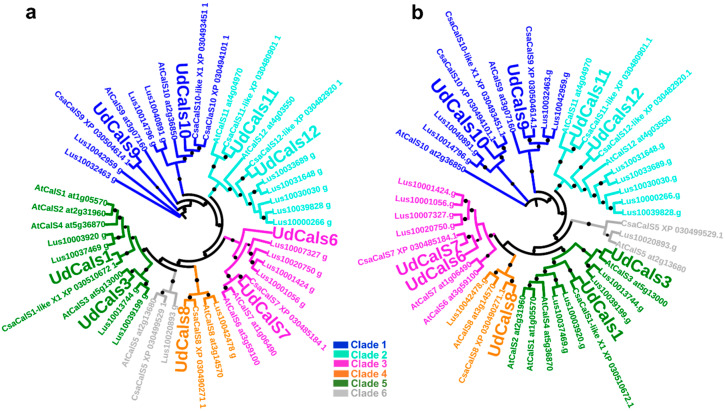
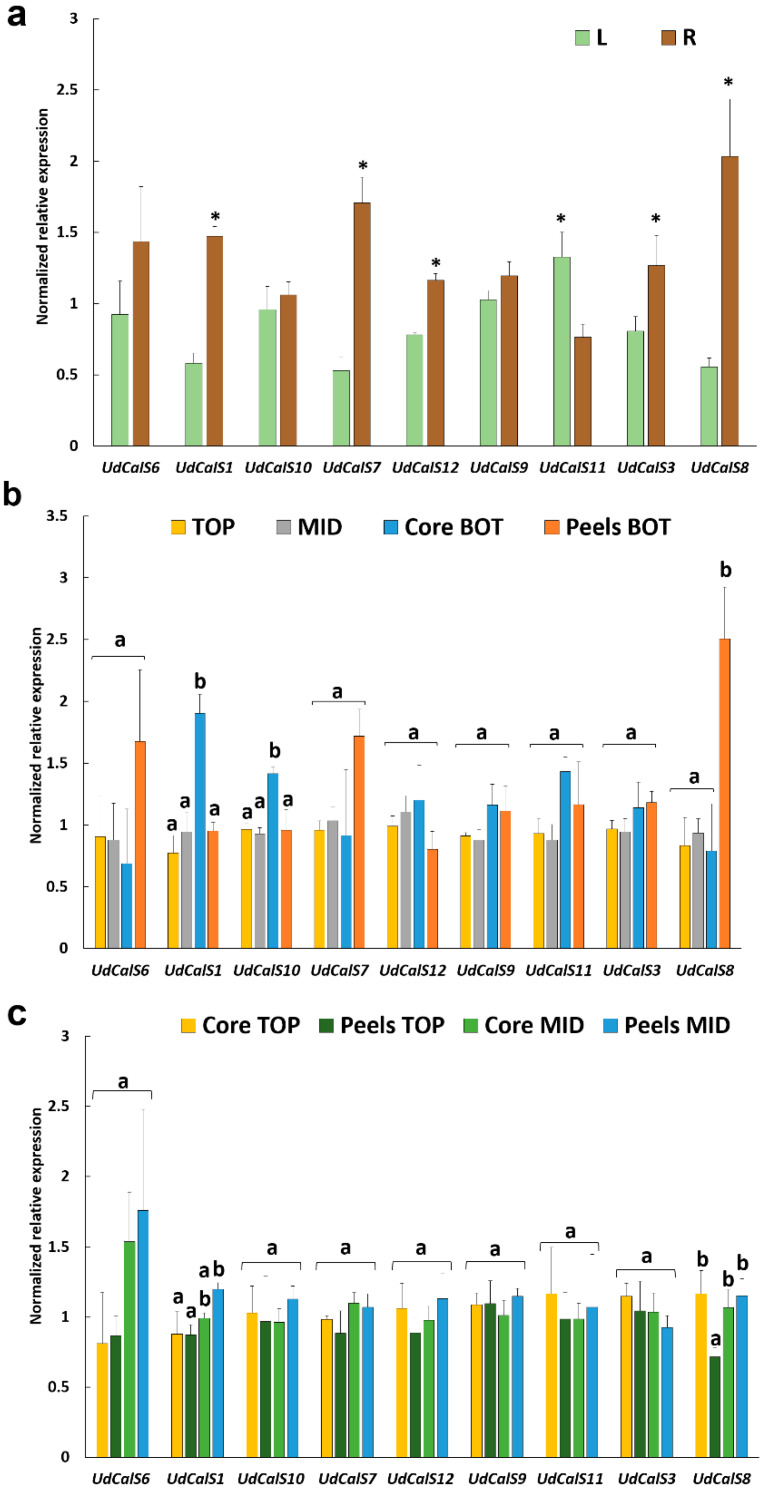
Callose is an important biopolymer of β-1,3-linked glucose units involved in different phases of plant development, reproduction and response to external stimuli. It is synthesized by glycosyltransferases (GTs) known as callose synthases (CalS) belonging to family 48 in the Carbohydrate-Active enZymes (CAZymes) database. These GTs are anchored to the plasma membrane via transmembrane domains. Several genes encoding CalS have been characterized in higher plants with 12 reported in the model organism . Recently, the transcriptome of a fibre-producing clone of stinging nettle ( L.) was published and here it is mined for genes with the aim of identifying members differentially expressed in the core and cortical tissues of the stem. The goal is to understand whether specific genes are associated with distinct developmental stages of the stem internodes (elongation, thickening). Nine genes, eight of which encoding full-length , are identified in stinging nettle. The phylogenetic analysis with CalS proteins from other fibre crops, namely textile hemp and flax, reveals grouping into 6 clades. The expression profiles in nettle tissues (roots, leaves, stem internodes sampled at different heights) reveal differences that are most noteworthy in roots vs leaves. Two are differentially expressed in the internodes sampled at the top and middle of the stem. Implications of their role in nettle stem tissue development are discussed.
胼胝质是一种重要的β-1,3-连接葡萄糖单元的生物聚合物,参与植物发育、繁殖和对外界刺激的反应的不同阶段。它由糖基转移酶(GTs)合成,这些酶被称为胼胝质合酶(CalS),属于碳水化合物活性酶(CAZymes)数据库中的 48 家族。这些 GTs 通过跨膜结构域锚定在质膜上。在高等植物中已经鉴定出了几种编码 CalS 的基因,在模式生物 中有 12 个报道。最近,发表了产纤维荨麻( L.)克隆的转录组,在此基础上对其进行挖掘,以寻找在茎的核心组织和皮质组织中差异表达的 基因。目的是了解是否有特定的 基因与茎节间的不同发育阶段(伸长、加粗)有关。在荨麻中鉴定出了 9 个基因,其中 8 个编码全长 。与其他纤维作物(如纺织大麻和亚麻)的 CalS 蛋白的系统发育分析显示,它们分为 6 个分支。在荨麻组织(根、叶、不同高度取样的茎节间)中的表达谱显示,根与叶之间的差异最为显著。在茎的顶部和中部取样的节间有两个 表达水平不同。讨论了它们在荨麻茎组织发育中的作用的意义。