Otorhinolaryngology Hospital, The First Affiliated Hospital, Sun Yat-sen University, 58 Zhongshan Road II, Guangzhou, China.
Department of Internal Medicine, Ohio State University College of Medicine and Wexner Medical Center, Columbus, OH, United States.
Cell Death Dis. 2020 Jun 1;11(6):409. doi: 10.1038/s41419-020-2606-x.
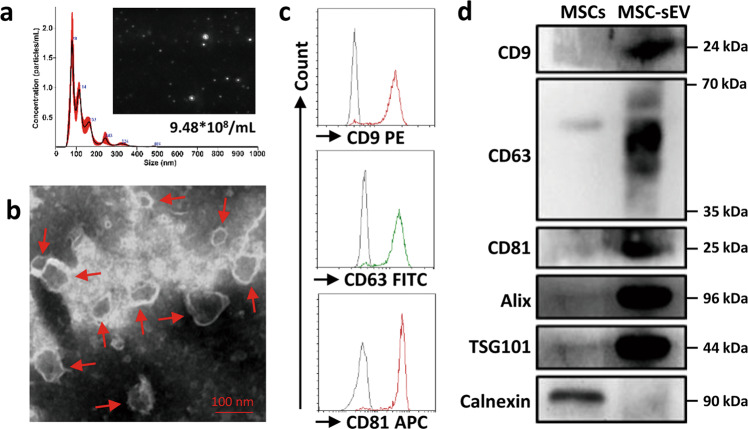
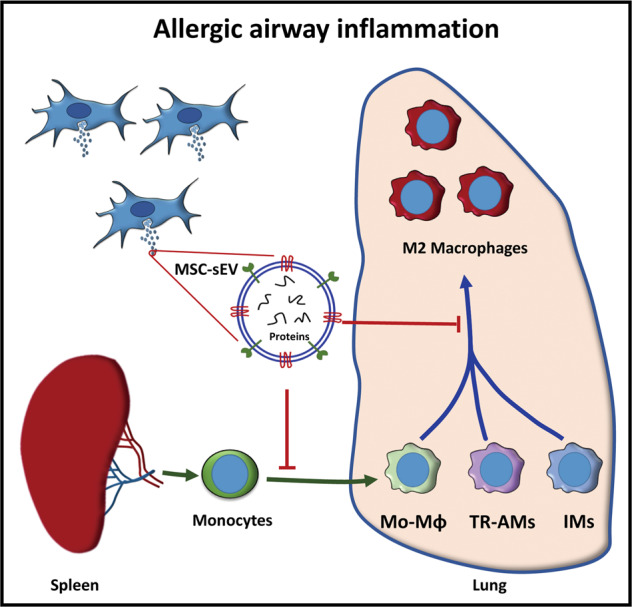
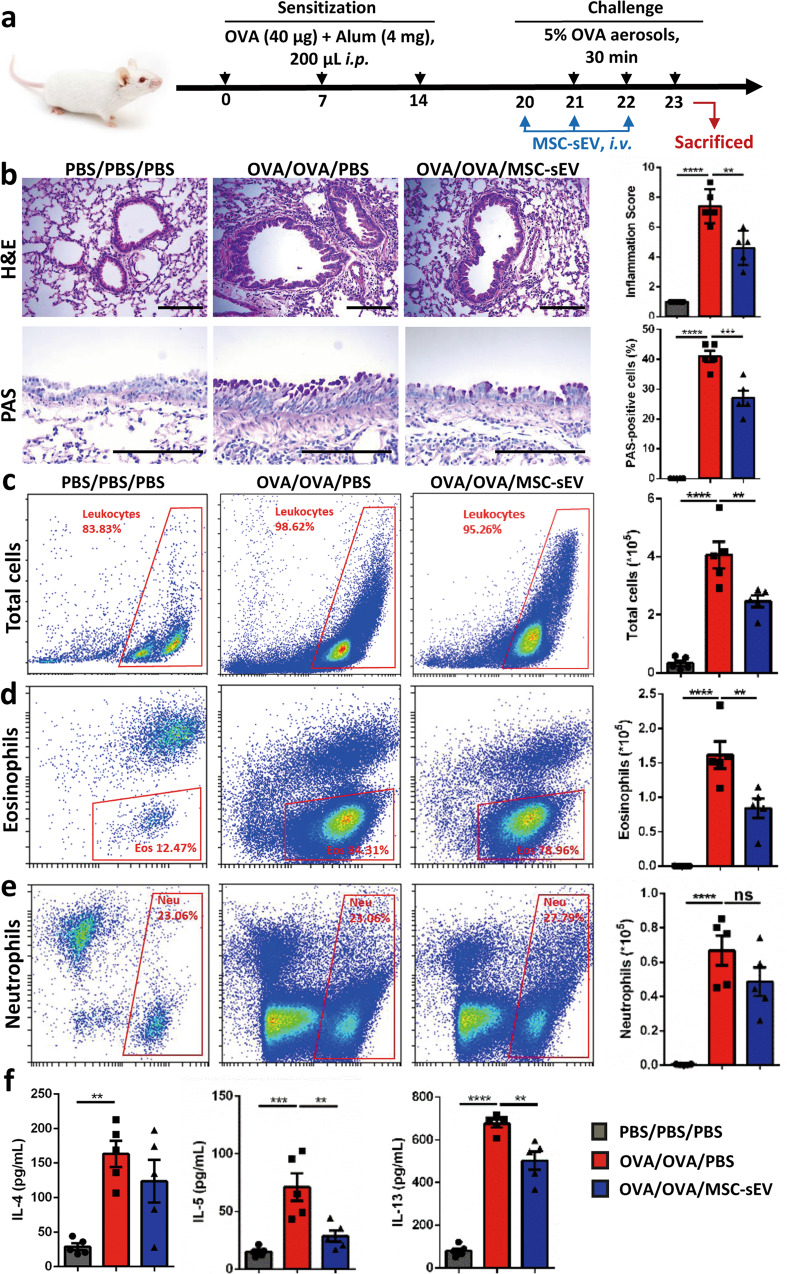
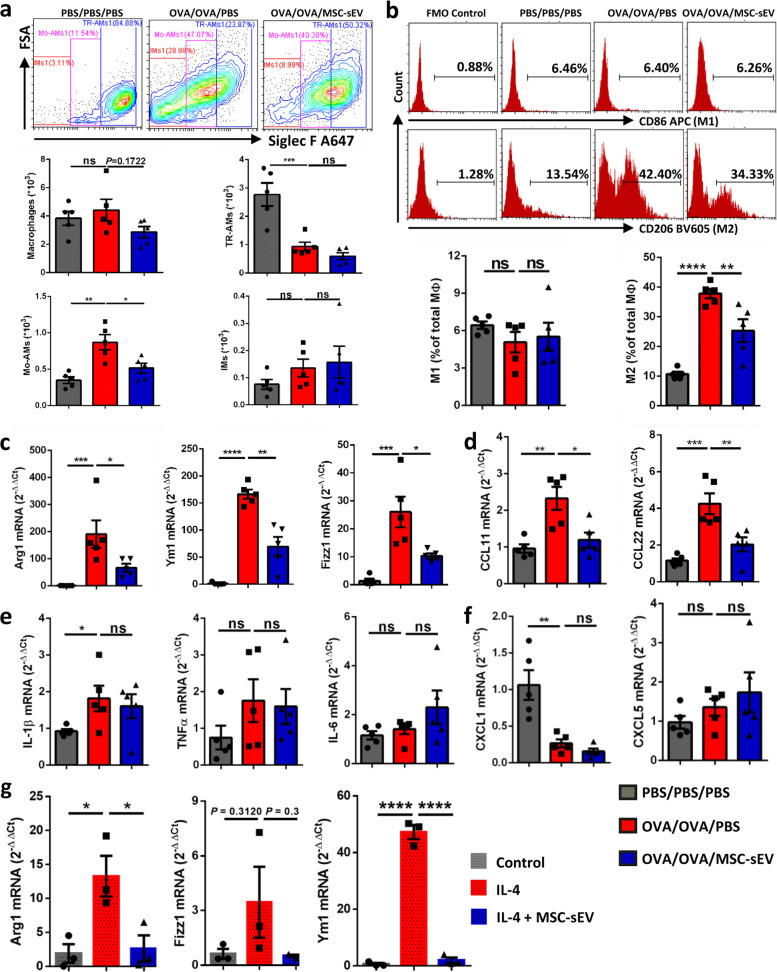
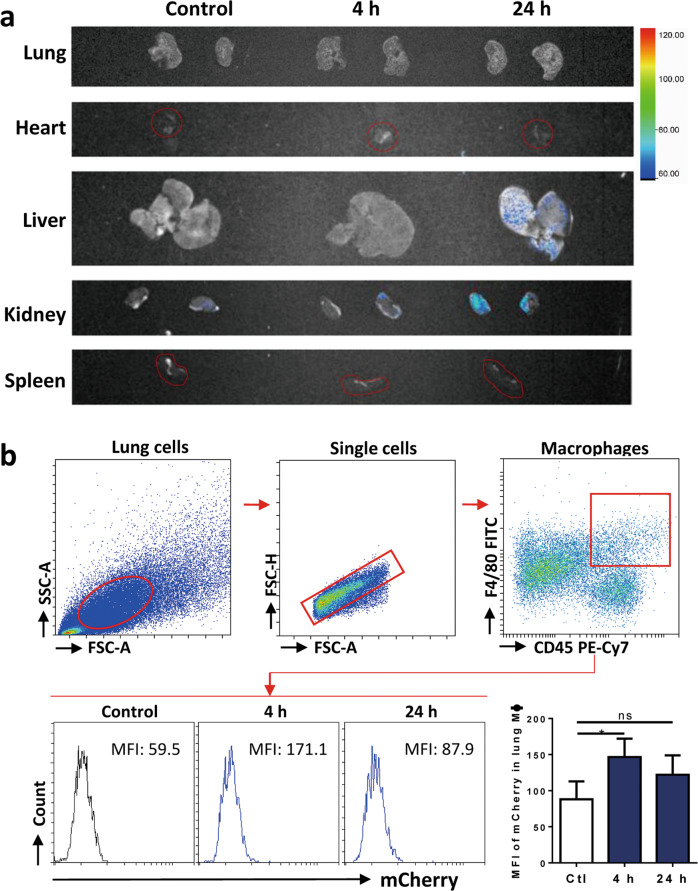
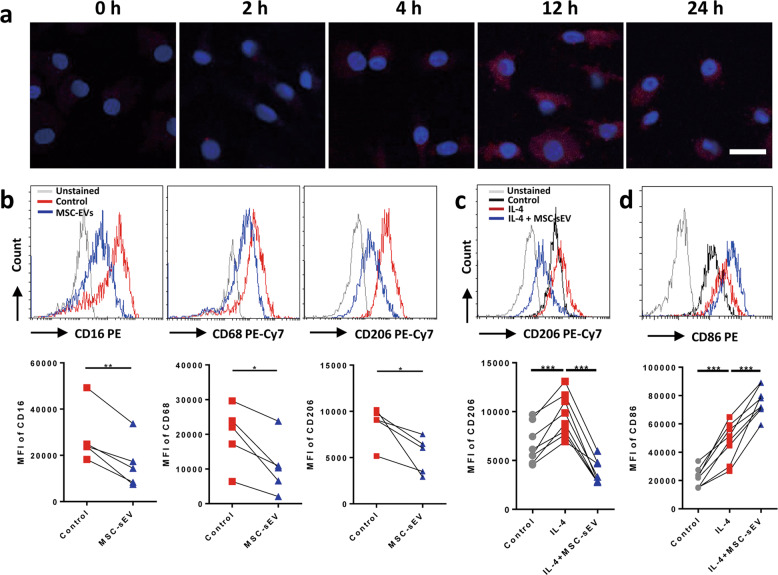
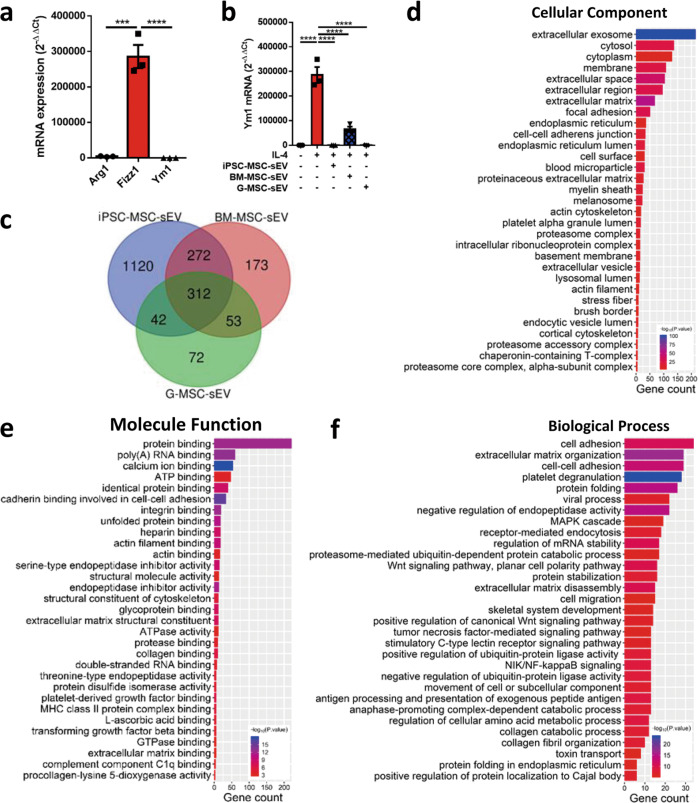
Allergic airway inflammation is a major public health disease that affects up to 300 million people in the world. However, its management remains largely unsatisfactory. The dysfunction of pulmonary macrophages contributes greatly to the development of allergic airway inflammation. It has been reported that small extracellular vesicles derived from mesenchymal stromal cells (MSC-sEV) were able to display extensive therapeutic effects in some immune diseases. This study aimed to investigate the effects of MSC-sEV on allergic airway inflammation, and the role of macrophages involved in it. We successfully isolated MSC-sEV by using anion exchange chromatography, which were morphologically intact and positive for the specific EV markers. MSC-sEV significantly reduced infiltration of inflammatory cells and number of epithelial goblet cells in lung tissues of mice with allergic airway inflammation. Levels of inflammatory cells and cytokines in bronchoalveolar lavage fluid were also significantly decreased. Importantly, levels of monocytes-derived alveolar macrophages and M2 macrophages were significantly reduced by MSC-sEV. MSC-sEV were excreted through spleen and liver at 24 h post-administration in mice, and were able to be taken in by macrophages both in vivo and in vitro. In addition, proteomics analysis of MSC-sEV revealed that the indicated three types of MSC-sEV contained different quantities of proteins and shared 312 common proteins, which may be involved in the therapeutic effects of MSC-sEV. In total, our study demonstrated that MSC-sEV isolated by anion exchange chromatography were able to ameliorate Th2-dominant allergic airway inflammation through immunoregulation on pulmonary macrophages, suggesting that MSC-sEV were promising alternative therapy for allergic airway inflammation in the future.
过敏性气道炎症是一种主要的公共卫生疾病,影响全球多达 3 亿人。然而,其管理仍然在很大程度上不尽人意。肺巨噬细胞的功能障碍对过敏性气道炎症的发展有很大的贡献。据报道,间充质基质细胞(MSC-sEV)衍生的小细胞外囊泡在一些免疫疾病中具有广泛的治疗作用。本研究旨在探讨 MSC-sEV 对过敏性气道炎症的影响及其涉及的巨噬细胞的作用。我们成功地通过阴离子交换色谱法分离了 MSC-sEV,其形态完整,且呈 EV 特异性标志物阳性。MSC-sEV 显著减少了过敏性气道炎症小鼠肺部炎症细胞浸润和上皮杯状细胞数量。支气管肺泡灌洗液中的炎症细胞和细胞因子水平也显著降低。重要的是,MSC-sEV 显著降低了单核细胞衍生的肺泡巨噬细胞和 M2 巨噬细胞的数量。MSC-sEV 在给予小鼠 24 小时后通过脾脏和肝脏排泄,并且能够在体内和体外被巨噬细胞摄取。此外,MSC-sEV 的蛋白质组学分析表明,所指示的三种类型的 MSC-sEV 含有不同数量的蛋白质,并且共享 312 种共同蛋白质,这些蛋白质可能参与 MSC-sEV 的治疗作用。总之,我们的研究表明,通过对肺巨噬细胞的免疫调节,阴离子交换色谱法分离的 MSC-sEV 能够改善 Th2 优势型过敏性气道炎症,提示 MSC-sEV 可能是未来过敏性气道炎症的一种有前途的替代治疗方法。