Shemyakin-Ovchinnikov Institute of Bioorganic Chemistry, Russian Academy of Sciences, 16/10 Miklukho-Maklaya St., Moscow, 117997, Russia.
National Research University Higher School of Economics, Moscow, 101000, Russia.
Sci Rep. 2020 Jun 1;10(1):8821. doi: 10.1038/s41598-020-65522-y.
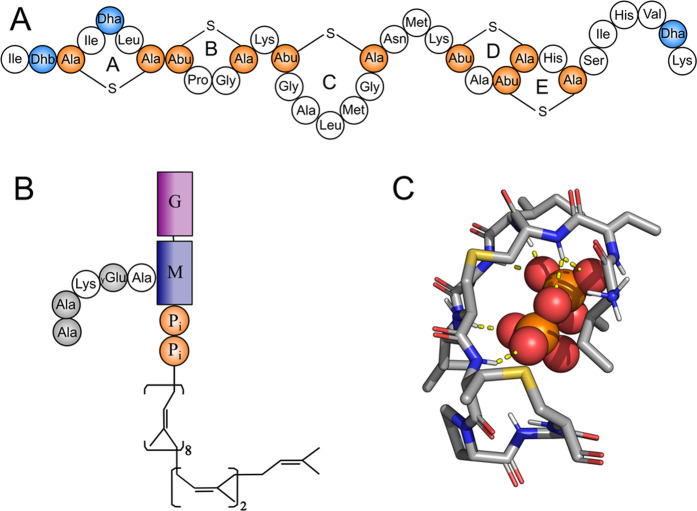
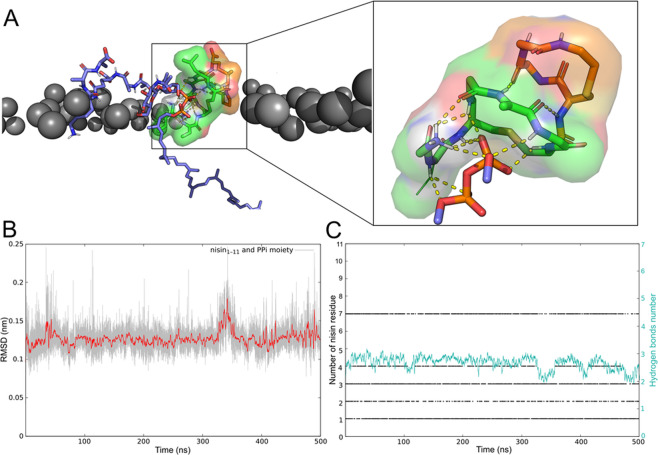
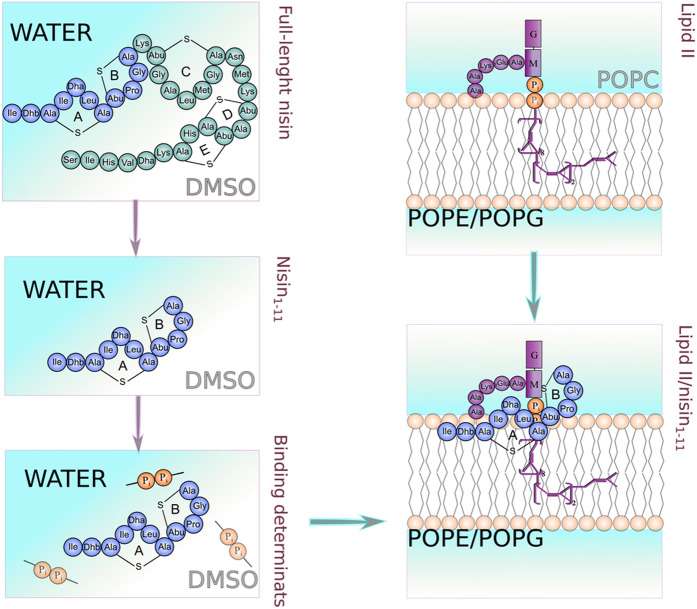
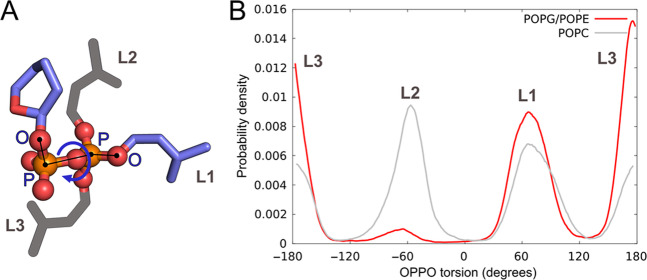
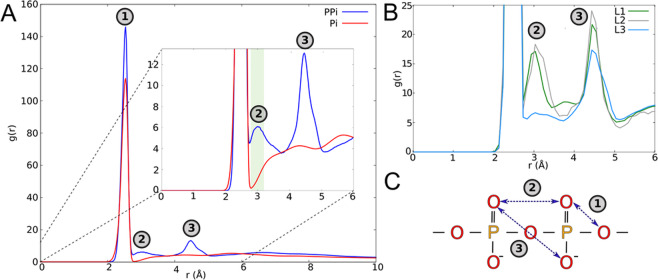
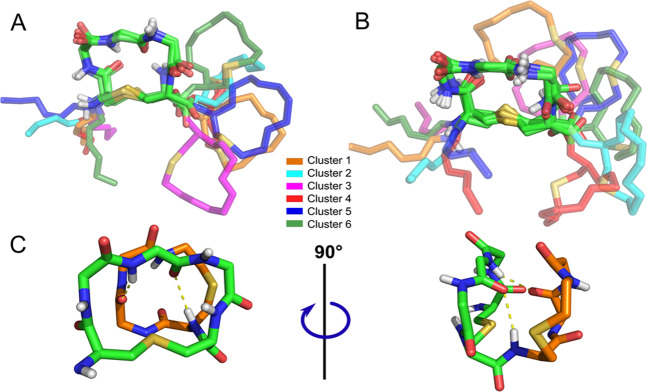
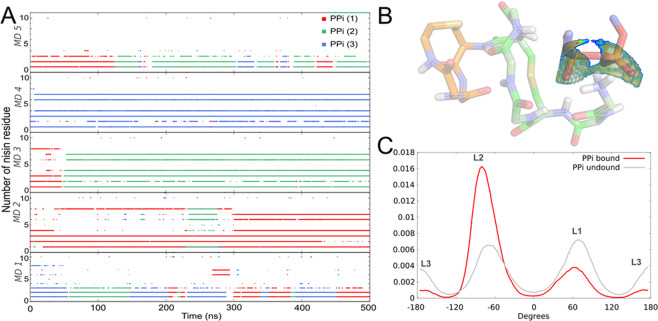
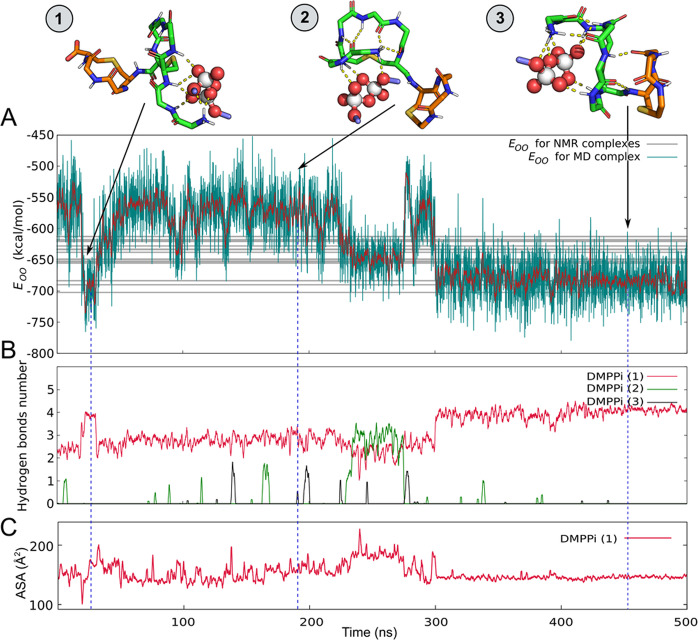
Antibiotics (AB) resistance is a major threat to global health, thus the development of novel AB classes is urgently needed. Lantibiotics (i.e. nisin) are natural compounds that effectively control bacterial populations, yet their clinical potential is very limited. Nisin targets membrane-embedded cell wall precursor - lipid II - via capturing its pyrophosphate group (PPi), which is unlikely to evolve, and thus represents a promising pharmaceutical target. Understanding of exact molecular mechanism of initial stages of membrane-bound lipid II recognition by water-soluble nisin is indispensable. Here, using molecular simulations, we demonstrate that the structure of lipid II is determined to a large extent by the surrounding water-lipid milieu. In contrast to the bulk solvent, in the bilayer only two conformational states remain capable of nisin binding. In these states PPi manifests a unique arrangement of hydrogen bond acceptors on the bilayer surface. Such a "pyrophosphate pharmacophore" cannot be formed by phospholipids, which explains high selectivity of nisin/lipid II recognition. Similarly, the "recognition module" of nisin, being rather flexible in water, adopts the only stable conformation in the presence of PPi analogue (which mimics the lipid II molecule). We establish the "energy of the pyrophosphate pharmacophore" approach, which effectively distinguishes nisin conformations that can form a complex with PPi. Finally, we propose a molecular model of nisin recognition module/lipid II complex in the bacterial membrane. These results will be employed for further study of lipid II targeting by antimicrobial (poly)cyclic peptides and for design of novel AB prototypes.
抗生素(AB)耐药性是对全球健康的主要威胁,因此急需开发新型 AB 类药物。类抗生素(即乳链菌肽)是一种有效的天然化合物,可以有效控制细菌种群,但它们的临床应用潜力非常有限。乳链菌肽通过捕获其焦磷酸基团(PPi)来靶向嵌入细胞膜前体 - 脂质 II - PPi 不太可能进化,因此代表了一个有前途的药物靶点。了解水溶性乳链菌肽识别膜结合脂质 II 的初始阶段的确切分子机制是必不可少的。在这里,我们使用分子模拟,证明了脂质 II 的结构在很大程度上取决于周围的水 - 脂质环境。与主体溶剂相比,在双层中只有两种构象状态仍然能够与乳链菌肽结合。在这些状态下,PPi 在双层表面上表现出独特的氢键接受体排列。这种“焦磷酸盐药效团”不能由磷脂形成,这解释了乳链菌肽/脂质 II 识别的高选择性。同样,乳链菌肽的“识别模块”在水中相当灵活,在存在 PPi 类似物(模拟脂质 II 分子)的情况下,它采用唯一稳定的构象。我们建立了“焦磷酸盐药效团的能量”方法,该方法有效地区分了能够与 PPi 形成复合物的乳链菌肽构象。最后,我们提出了一种乳链菌肽识别模块/脂质 II 复合物在细菌膜中的分子模型。这些结果将用于进一步研究抗菌(多)环肽对脂质 II 的靶向作用,并设计新型 AB 原型。