M.M. Shemyakin and Yu.A. Ovchinnikov Institute of Bioorganic Chemistry, Russian Academy of Sciences, 117997 Moscow, Russia.
Moscow Institute of Physics and Technology, 141700 Dolgoprudny, Russia.
Int J Mol Sci. 2023 Jan 10;24(2):1332. doi: 10.3390/ijms24021332.
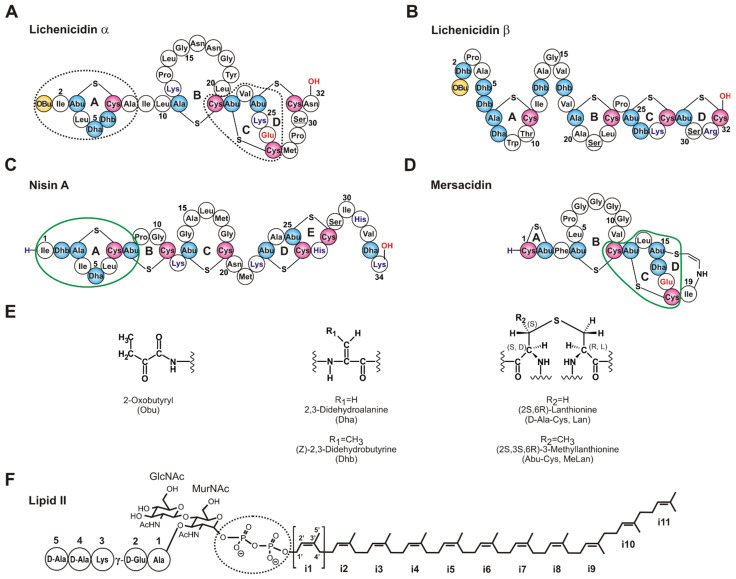
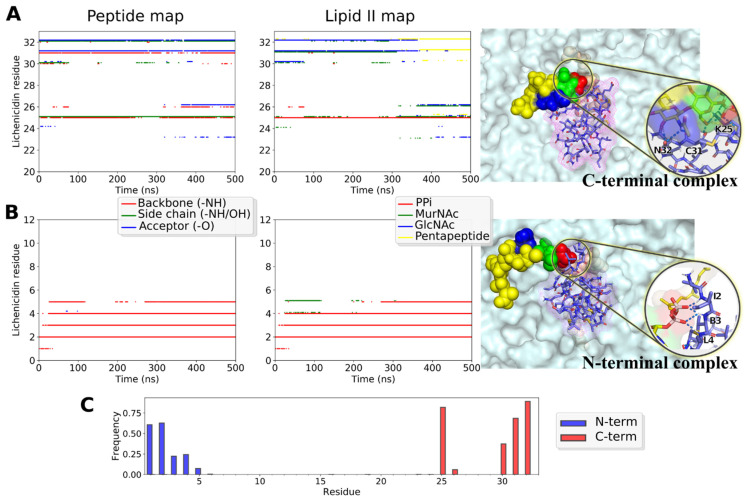
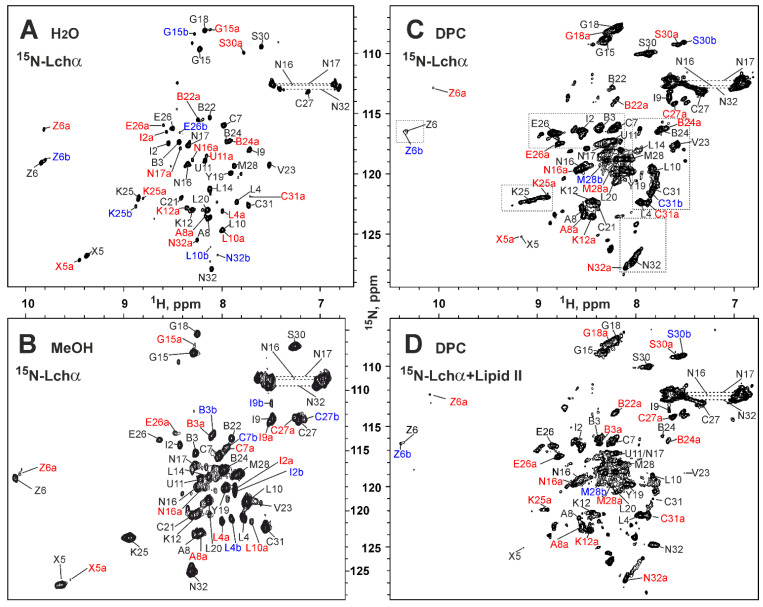
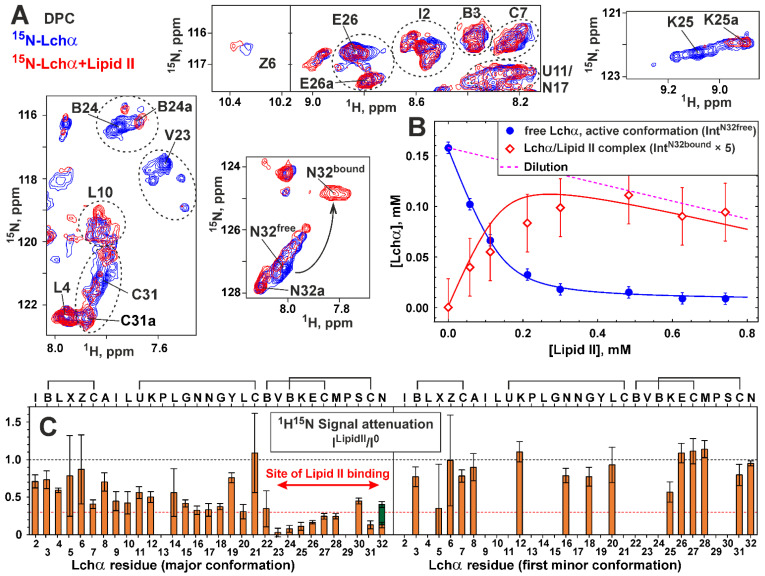
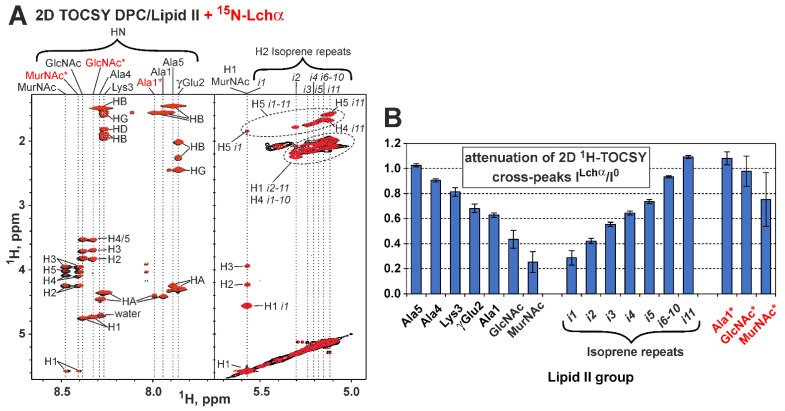
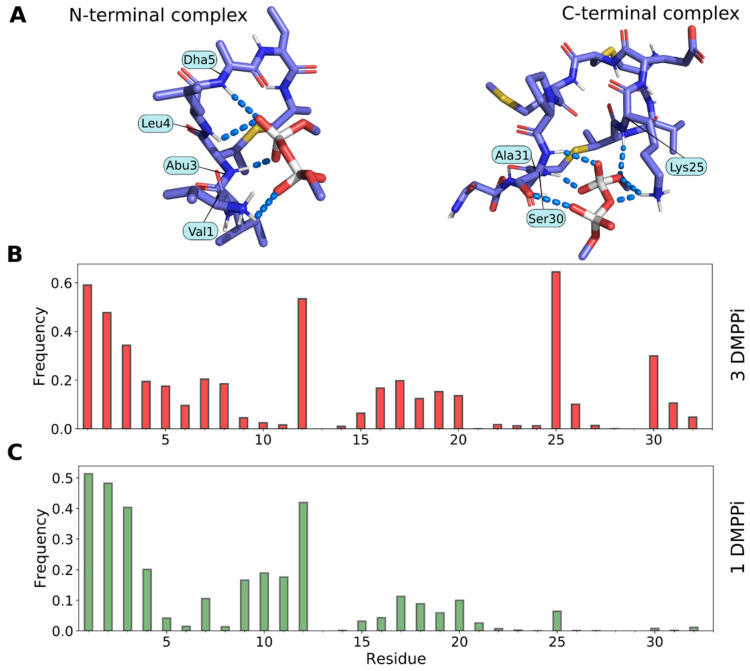
To date, a number of lantibiotics have been shown to use lipid II-a highly conserved peptidoglycan precursor in the cytoplasmic membrane of bacteria-as their molecular target. The α-component (Lchα) of the two-component lantibiotic lichenicidin, previously isolated from the VK21 strain, seems to contain two putative lipid II binding sites in its -terminal and -terminal domains. Using NMR spectroscopy in DPC micelles, we obtained convincing evidence that the -terminal mersacidin-like site is involved in the interaction with lipid II. These data were confirmed by the MD simulations. The contact area of lipid II includes pyrophosphate and disaccharide residues along with the first isoprene units of bactoprenol. MD also showed the potential for the formation of a stable -terminal nisin-like complex; however, the conditions necessary for its implementation in vitro remain unknown. Overall, our results clarify the picture of two component lantibiotics mechanism of antimicrobial action.
迄今为止,已有多种类杆菌素被证明将脂质 II——细菌细胞质膜中高度保守的肽聚糖前体——作为其分子靶标。先前从 VK21 菌株中分离出的双组分类杆菌素lichenicidin 的α-成分(Lchα)似乎在其-末端和-末端结构域包含两个假定的脂质 II 结合位点。使用 DPC 胶束中的 NMR 光谱,我们获得了令人信服的证据,证明-末端的 mersacidin 样位点参与与脂质 II 的相互作用。这些数据得到了 MD 模拟的证实。脂质 II 的接触区域包括焦磷酸和二糖残基以及细菌萜醇的第一个异戊二烯单元。MD 还显示了形成稳定-末端乳链菌肽样复合物的潜力;然而,其在体外实施所需的条件尚不清楚。总的来说,我们的结果阐明了双组分类杆菌素抗菌作用机制的情况。