Novo Nordisk Foundation Center for Basic Metabolic Research, Faculty of Health and Medical Sciences, University of Copenhagen, Copenhagen, Denmark.
Laboratory of Integrative and Systems Physiology, Interfaculty Institute of Bioengineering, École Polytechnique Fédérale de Lausanne, Lausanne, Switzerland.
Nat Commun. 2020 Jun 1;11(1):2695. doi: 10.1038/s41467-020-16537-6.
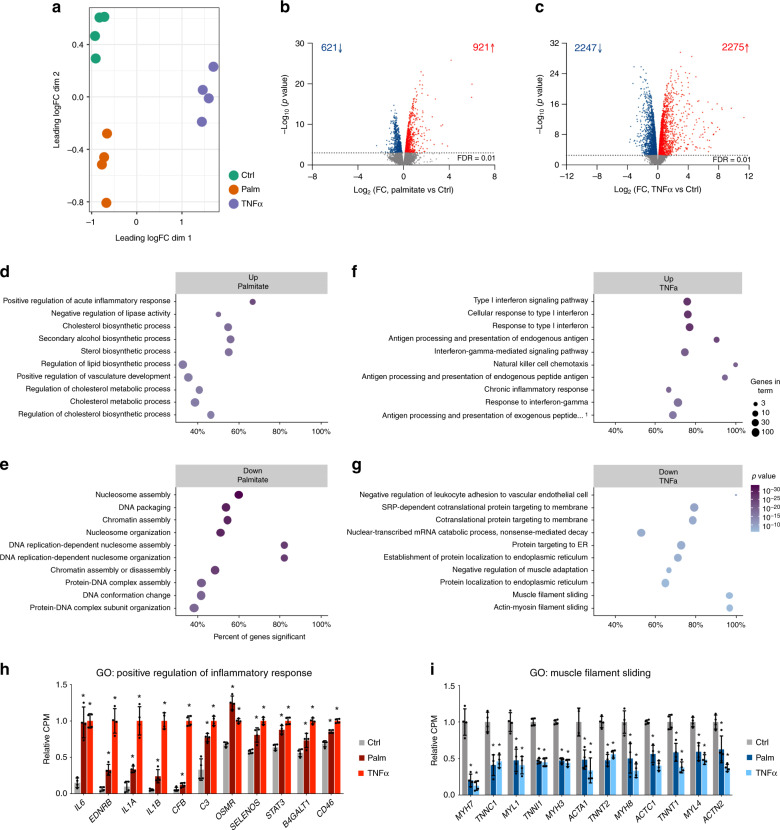
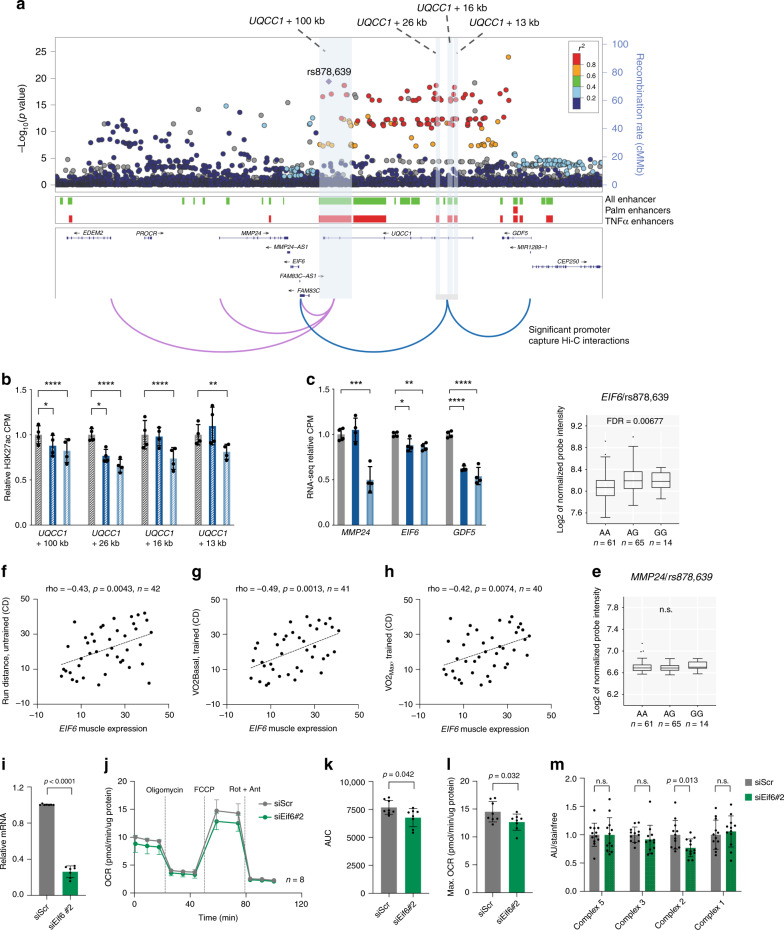
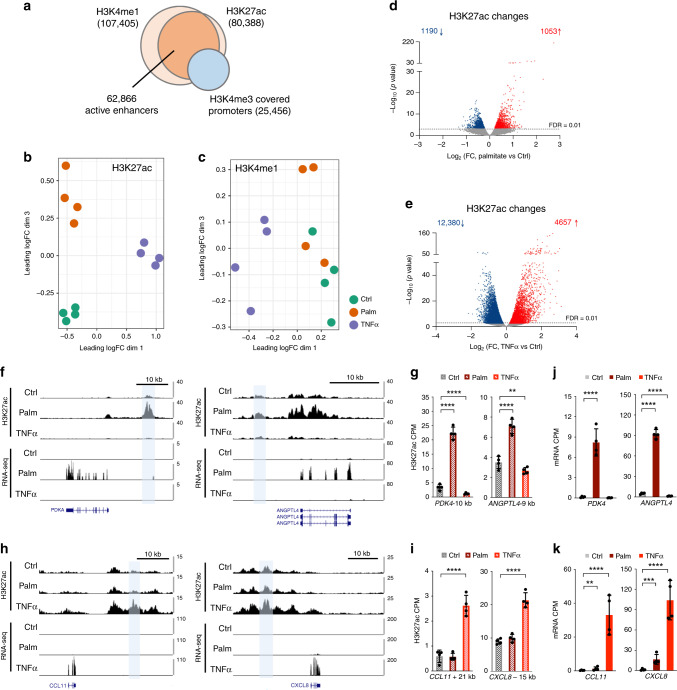
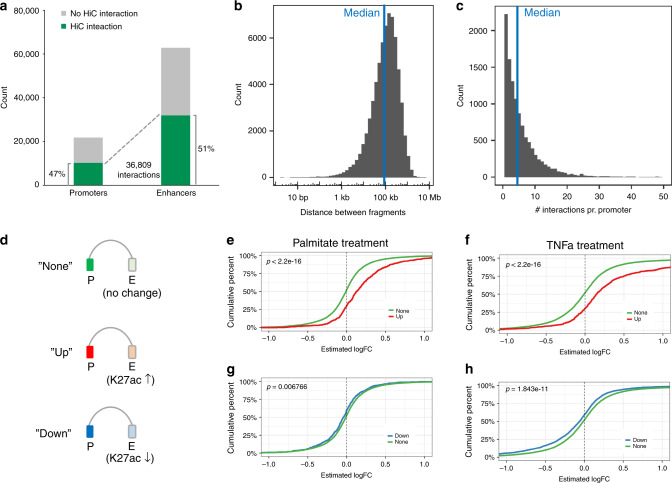
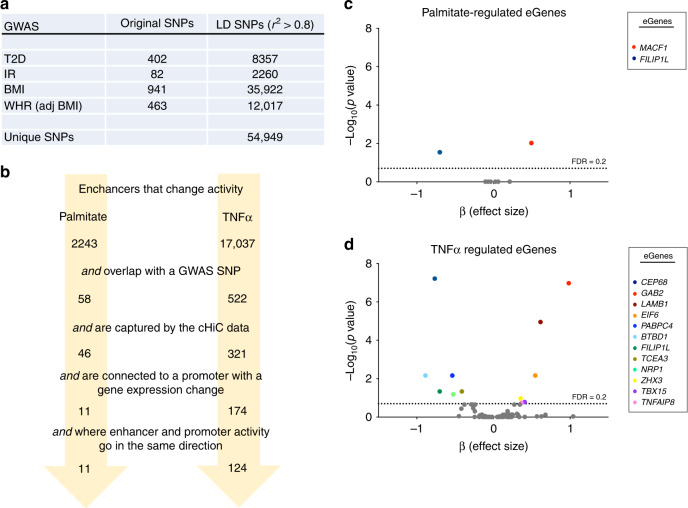
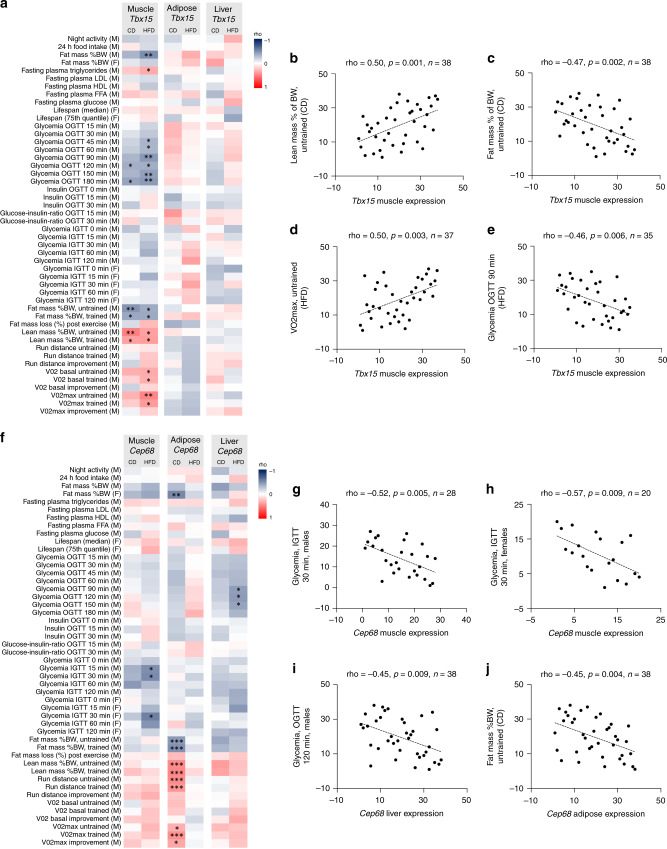
Obesity and type 2 diabetes (T2D) are metabolic disorders influenced by lifestyle and genetic factors that are characterized by insulin resistance in skeletal muscle, a prominent site of glucose disposal. Numerous genetic variants have been associated with obesity and T2D, of which the majority are located in non-coding DNA regions. This suggests that most variants mediate their effect by altering the activity of gene-regulatory elements, including enhancers. Here, we map skeletal muscle genomic enhancer elements that are dynamically regulated after exposure to the free fatty acid palmitate or the inflammatory cytokine TNFα. By overlapping enhancer positions with the location of disease-associated genetic variants, and resolving long-range chromatin interactions between enhancers and gene promoters, we identify target genes involved in metabolic dysfunction in skeletal muscle. The majority of these genes also associate with altered whole-body metabolic phenotypes in the murine BXD genetic reference population. Thus, our combined genomic investigations identified genes that are involved in skeletal muscle metabolism.
肥胖和 2 型糖尿病(T2D)是受生活方式和遗传因素影响的代谢性疾病,其特征是骨骼肌胰岛素抵抗,骨骼肌是葡萄糖处置的主要部位。大量的遗传变异与肥胖和 T2D 相关,其中大多数位于非编码 DNA 区域。这表明大多数变异通过改变基因调控元件(包括增强子)的活性来发挥其作用。在这里,我们绘制了在暴露于游离脂肪酸棕榈酸或炎性细胞因子 TNFα 后,骨骼肌基因组增强子元件的动态调控图谱。通过将增强子位置与疾病相关遗传变异的位置重叠,并解析增强子和基因启动子之间的长程染色质相互作用,我们确定了参与骨骼肌代谢功能障碍的靶基因。这些基因中的大多数也与小鼠 BXD 遗传参考群体中改变的全身代谢表型相关。因此,我们的综合基因组研究确定了参与骨骼肌代谢的基因。