Thoracic and GI Malignancies Branch, Center for Cancer Research, NCI, NIH, Bethesda, MD 20892, USA.
Present address: Developmental Therapeutics Branch, Center for Cancer Research, NCI, NIH, Bethesda, MD 20892, USA.
Cell Rep Med. 2020 Apr 21;1(1). doi: 10.1016/j.xcrm.2020.100007.
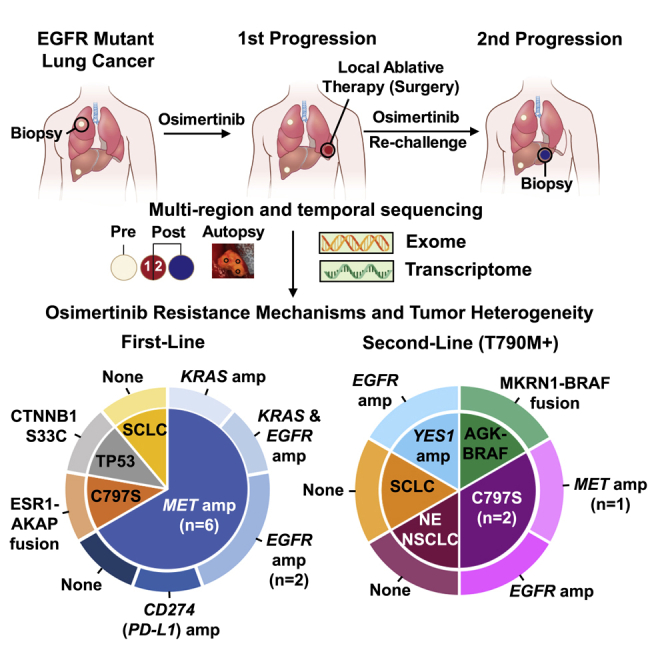
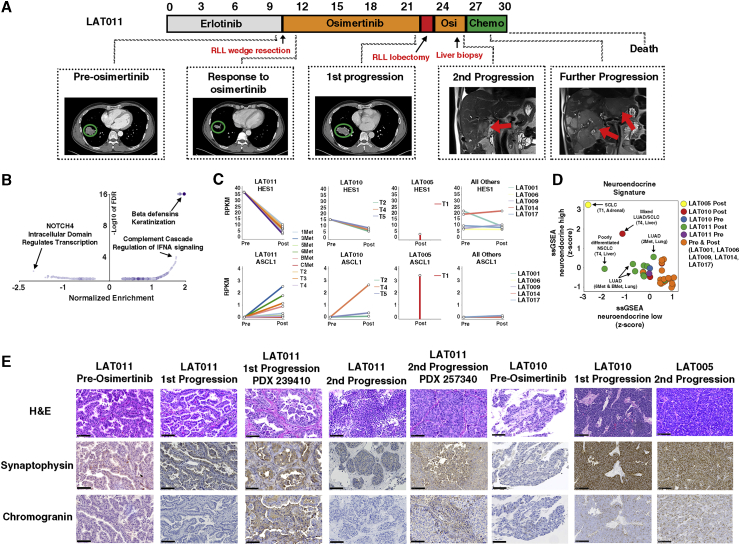
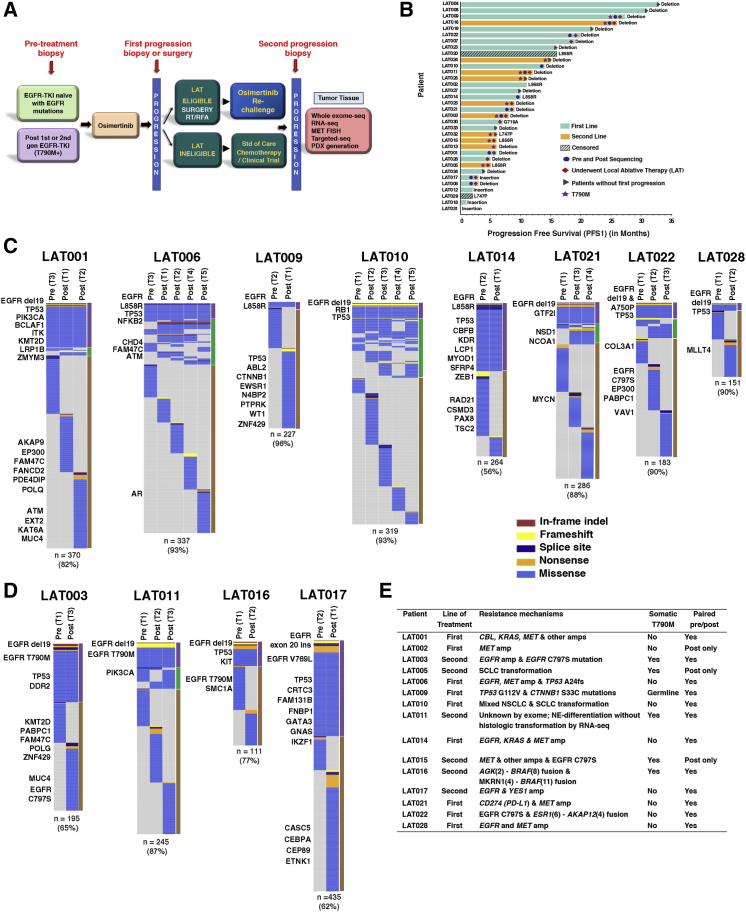
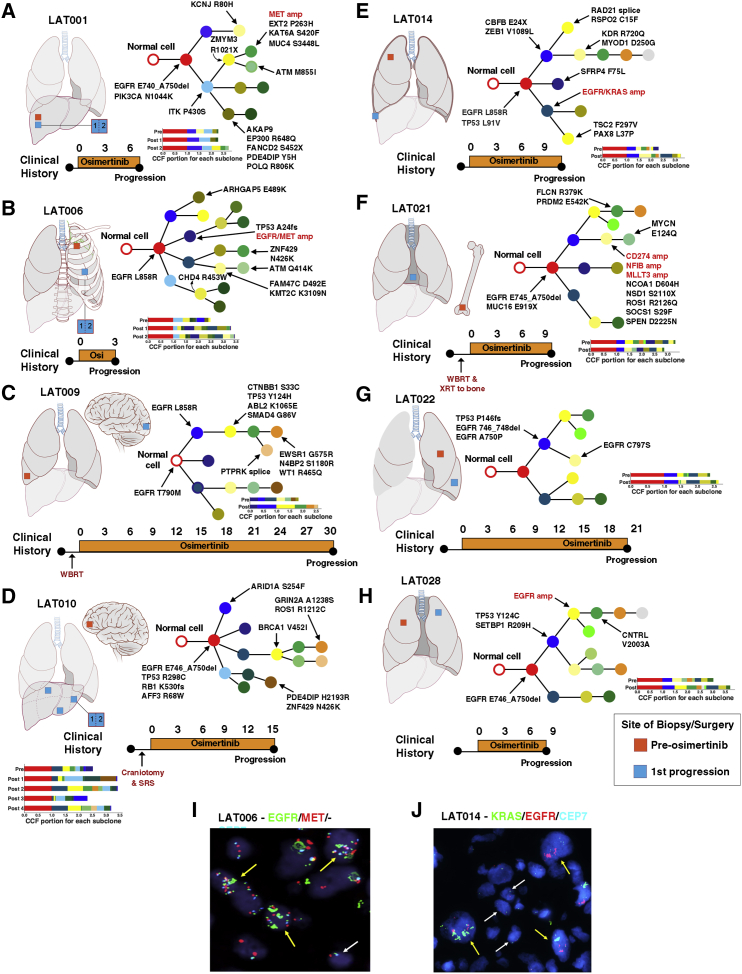
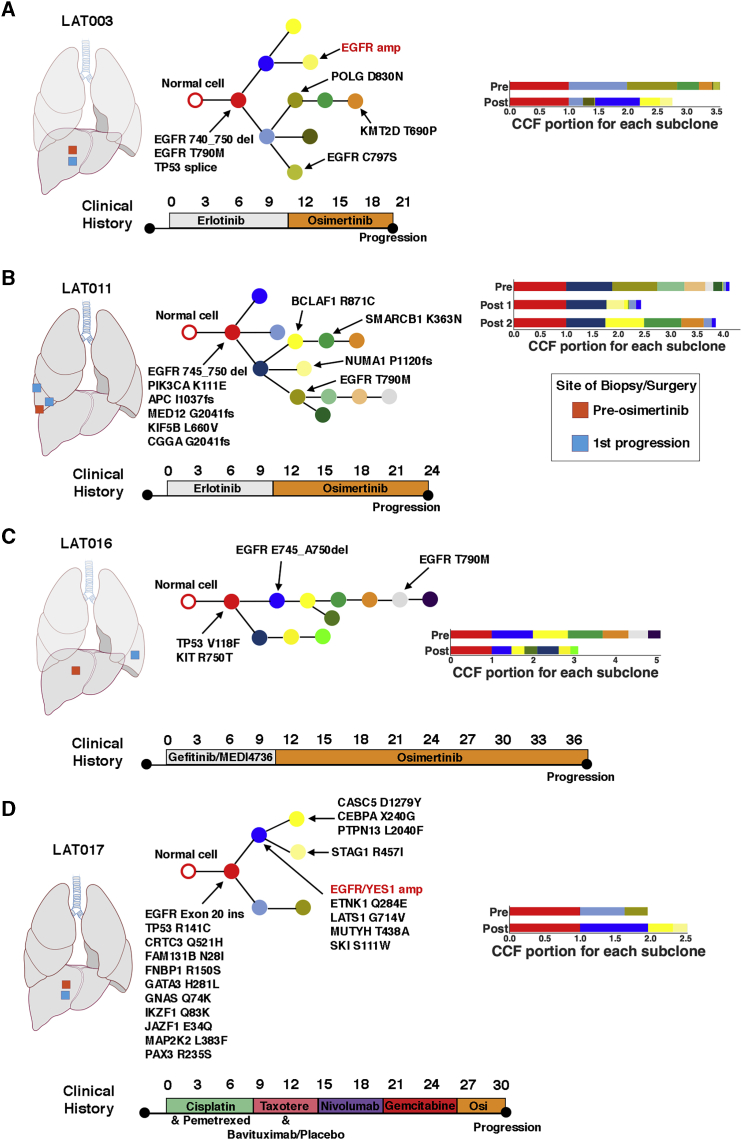
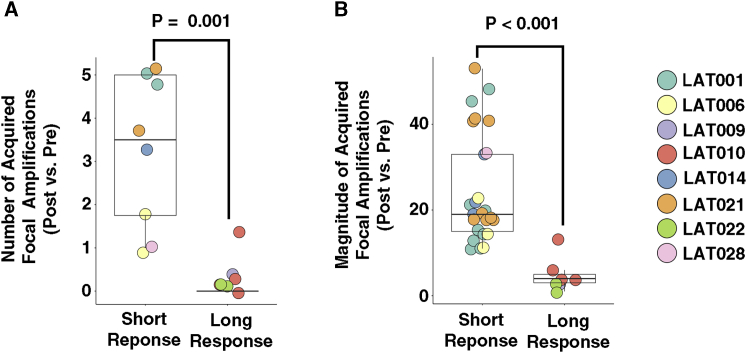
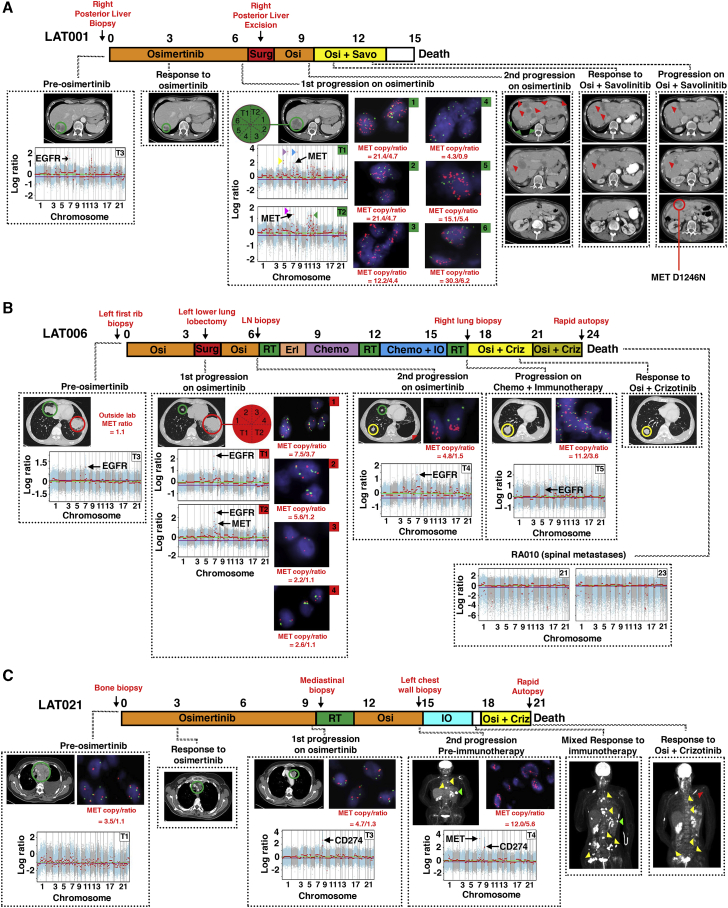
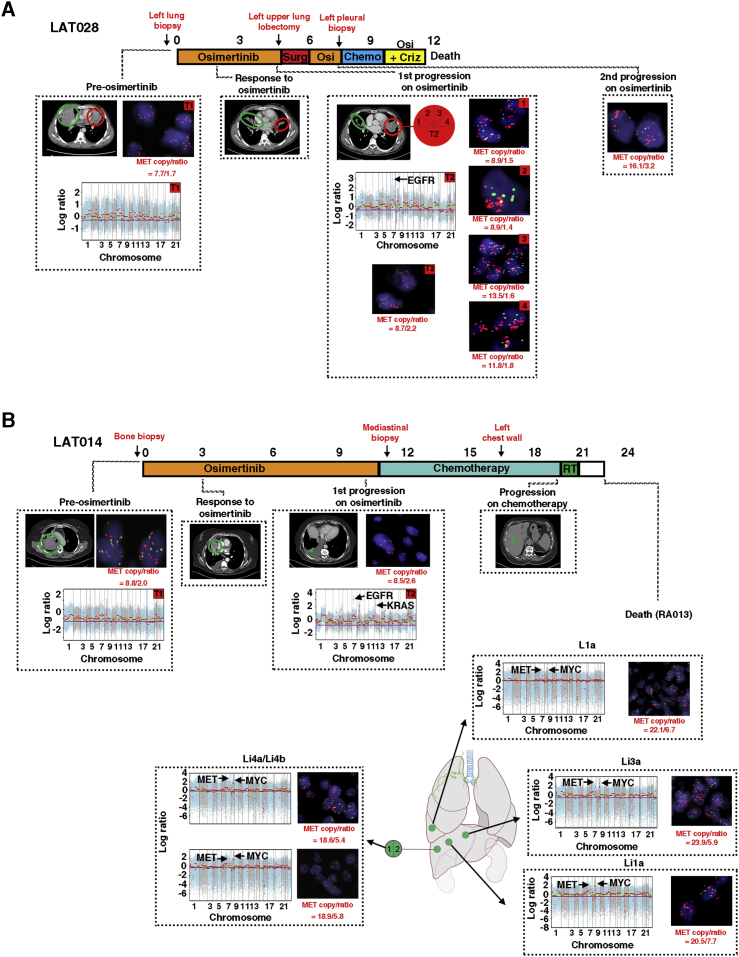
Clonal evolution of osimertinib-resistance mechanisms in EGFR mutant lung adenocarcinoma is poorly understood. Using multi-region whole-exome and RNA sequencing of prospectively collected pre- and post-osimertinib-resistant tumors, including at rapid autopsies, we identify a likely mechanism driving osimertinib resistance in all patients analyzed. The majority of patients acquire two or more resistance mechanisms either concurrently or in temporal sequence. Focal copy-number amplifications occur subclonally and are spatially and temporally separated from common resistance mutations such as C797S. amplification occurs in 66% (n = 6/9) of first-line osimertinib-treated patients, albeit spatially heterogeneous, often co-occurs with additional acquired focal copy-number amplifications and is associated with early progression. Noteworthy osimertinib-resistance mechanisms discovered include neuroendocrine differentiation without histologic transformation, amplification, and fusions. The subclonal co-occurrence of acquired genomic alterations upon osimertinib resistance will likely require targeting multiple resistance mechanisms by combination therapies.
奥希替尼耐药机制在 EGFR 突变型肺腺癌中的克隆进化尚不清楚。我们通过对前瞻性采集的奥希替尼耐药前和耐药后的肿瘤(包括快速尸检)进行多区域全外显子组和 RNA 测序,在所有分析的患者中确定了一种可能的驱动奥希替尼耐药的机制。大多数患者同时或先后获得两种或多种耐药机制。局部拷贝数扩增呈亚克隆发生,与常见的耐药突变如 C797S 在空间和时间上分离。在一线奥希替尼治疗的患者中,66%(6/9)发生扩增,尽管空间异质性,但常与其他获得性局部拷贝数扩增同时发生,并与早期进展相关。值得注意的是,发现的奥希替尼耐药机制包括没有组织学转化的神经内分泌分化、扩增和融合。奥希替尼耐药后获得的基因组改变的亚克隆共存可能需要通过联合治疗来靶向多种耐药机制。