Faculty of Biology and Medicine, University of Lausanne, Lausanne, Switzerland.
Center for Primary Care and Public Health (Unisanté), Lausanne, Rue du Bugnon 44, CH-1011, Lausanne, Switzerland.
BMC Med Educ. 2020 Jun 3;20(1):156. doi: 10.1186/s12909-020-02037-0.
Gender is an important social determinant, that influences healthcare. The lack of awareness on how gender influences health might lead to gender bias and can contribute to substandard patient care. Our objectives were to assess gender sensitivity and the presence of gender stereotypes among swiss medical students.
A validated scale (N-GAMS - Nijmegen Gender Awareness in Medicine Scale), with 3 subscores assessing gender sensitivity (GS) and gender stereotypes toward patients (GRIP) and doctors (GRID) (ranging from 1 to 5), was translated into French and was distributed to all medical students registered at the University of Lausanne, Switzerland in April-May 2017. Reliability of the three subscales was assessed calculating the alpha Cronbach coefficient. Mean subscales were calculated for male and female students and compared using two sample t-tests. A linear model was built with each subscale as a dependent variable and students' sex and age as covariables.
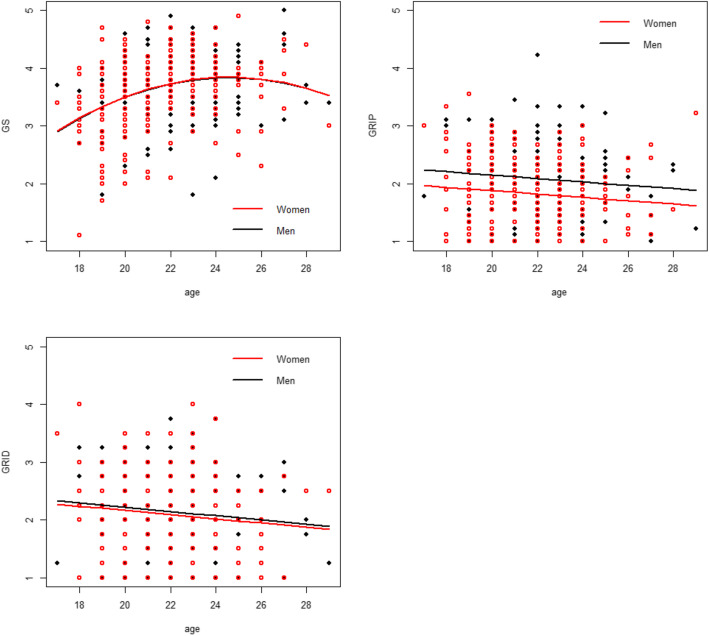
In total, 396 students answered the N-GAMS questionnaire, their mean age was 22 years old, 62.6% of them were women. GS and GRID sub-scores were not significantly different between female and male students (GS 3.62 for women, 3.70 for men, p = 0.27, GRID 2.10 for women, 2.13 for men, p = 0.76). A statistically significant difference was found in the GRIP subscale, with a mean score of 1.83 for women and 2.07 for men (p < 0.001), which suggests a more gender stereotyped opinion toward patients among male students. A trend was observed with age, gender sensibility increased (p < 0.001) and stereotypes decreased (GRIP p = 0.04, GRID p = 0.02) with students getting older.
Medical students' gender sensitivity seems to improve throughout the medical curriculum, and women students have less stereotypes towards patients than men do. The implementation of a gender-sensitive teaching in the medical curriculum could improve students' knowledge, limit gender bias and improve patients' care.
性别是一个重要的社会决定因素,影响着医疗保健。对性别如何影响健康缺乏认识可能导致性别偏见,并导致患者护理质量下降。我们的目标是评估瑞士医学生的性别敏感性和性别刻板印象的存在。
一个经过验证的量表(N-GAMS-尼美根医学性别意识量表),有 3 个子量表评估性别敏感性(GS)和对患者(GRIP)和医生(GRID)的性别刻板印象(范围从 1 到 5),被翻译成法语,并于 2017 年 4 月至 5 月分发给瑞士洛桑大学的所有医学生。通过计算 alpha Cronbach 系数评估三个子量表的可靠性。计算男女生的平均子量表,并使用双样本 t 检验进行比较。使用线性模型,将每个子量表作为因变量,学生的性别和年龄作为协变量。
共有 396 名学生回答了 N-GAMS 问卷,他们的平均年龄为 22 岁,其中 62.6%为女性。GS 和 GRID 子量表在女学生和男学生之间没有显著差异(GS 女性为 3.62,男性为 3.70,p=0.27,GRID 女性为 2.10,男性为 2.13,p=0.76)。在 GRIP 子量表中发现了统计学上的显著差异,女性的平均得分为 1.83,男性的平均得分为 2.07(p<0.001),这表明男学生对患者的看法更具性别刻板印象。随着年龄的增长,观察到一种趋势,即性别敏感性增加(p<0.001),性别刻板印象减少(GRIP p=0.04,GRID p=0.02)。
医学生的性别敏感性似乎在整个医学课程中有所提高,而且女学生对患者的刻板印象比男学生少。在医学课程中实施性别敏感教学可以提高学生的知识,限制性别偏见,改善患者护理。