North Wales Clinical Research Centre, Betsi Cadwaladr University Health Board (BCUHB) Wrexham Maelor Hospital, Wrexham, Wales, UK.
North Wales & North West Urological Research Centre, Betsi Cadwaladr University Health Board (BCUHB) Wrexham Maelor Hospital, Wrexham, Wales, UK.
Eur J Med Res. 2020 Jun 1;25(1):18. doi: 10.1186/s40001-020-00417-2.
The number of patients undergoing shock wave lithotripsy (SWL) for kidney stones is increasing annually, and as such the development of post-operative complications, such as haematuria and acute kidney injury (AKI) following SWL, is likely to increase. The aim of the study was to evaluate changes in routine blood and novel biomarkers following SWL, for the treatment of kidney stones.
Twelve patients undergoing SWL for solitary unilateral kidney stones were recruited. From patients (8 males and 4 females) aged between 31 and 72 years (median 43 years), venous blood samples were collected pre-operatively (baseline), at 30, 120 and 240 min post-operatively. Routine blood tests were performed using a Sysmex XE-5000, and Beckman Coulter AU5800 and AU680 analysers. NGAL, IL-18, IL-6, TNF-α, IL-10 and IL-8 concentrations were determined using commercially available ELISA kits.
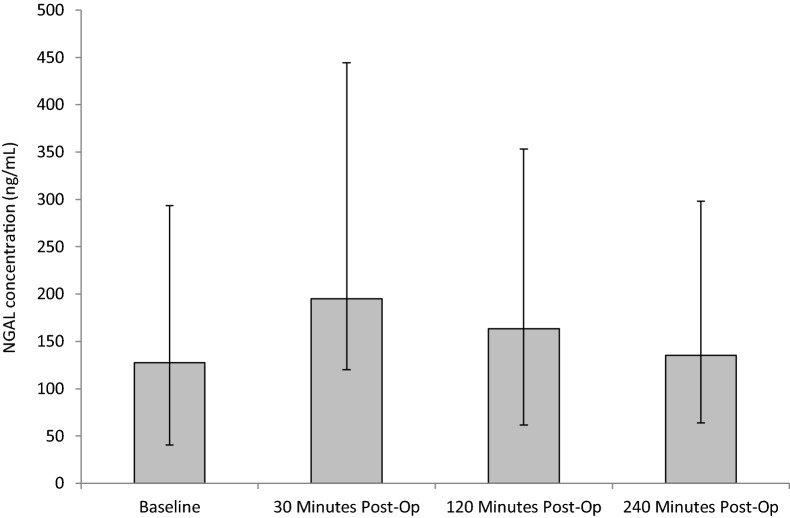
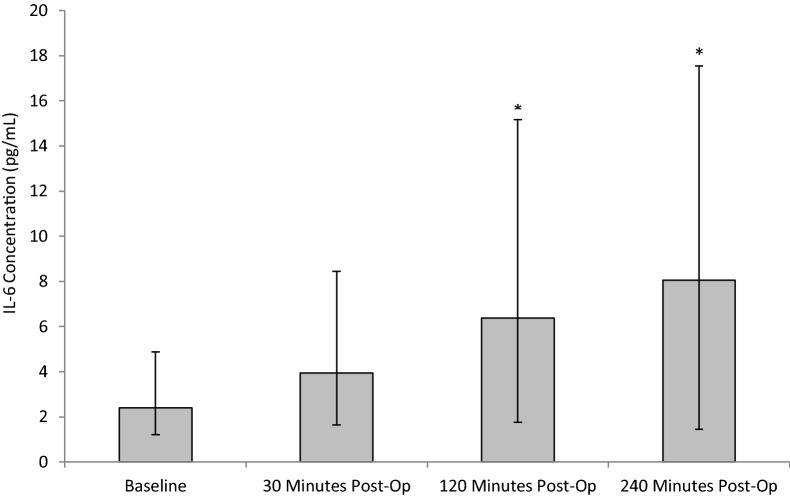
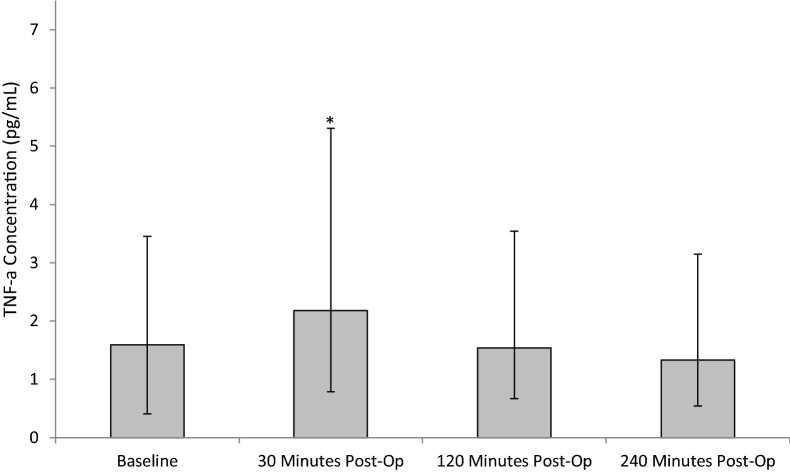
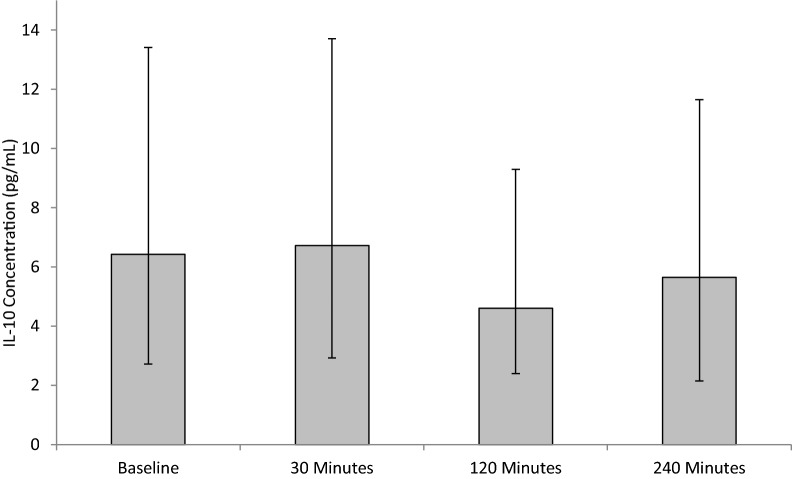
Significant (p ≤ 0.05) changes were observed in several blood parameters following SWL. NGAL concentration significantly increased, with values peaking at 30 min post-treatment (p = 0.033). Although IL-18 concentration increased, these changes were not significant (p = 0.116). IL-6 revealed a statistically significant rise from pre-operative up to 4 h post-operatively (p < 0.001), whilst TNF-α significantly increased, peaking at 30 min post-SWL (p = 0.05). There were no significant changes to IL-10 and IL-8 concentrations post-SWL (p > 0.05).
Changes to routine blood tests and specific biomarkers, in the future, may be more useful for clinicians. In turn, identification of a panel of biomarkers could provide valuable data on "normal" physiological response after lithotripsy. Ultimately, studies could be expanded to identify or predict those patients at increased risk of developing post-operative complications, such as acute kidney injury or. These studies, however, need validating involving larger cohorts.
接受冲击波碎石术(SWL)治疗肾结石的患者数量逐年增加,因此,SWL 后血尿和急性肾损伤(AKI)等术后并发症的发展可能会增加。本研究的目的是评估 SWL 治疗肾结石后常规血液和新型生物标志物的变化。
招募了 12 名接受单侧肾结石 SWL 的患者。患者(8 名男性和 4 名女性)年龄在 31 至 72 岁之间(中位年龄 43 岁),分别在术前(基线)、术后 30、120 和 240 分钟采集静脉血样。使用 Sysmex XE-5000、Beckman Coulter AU5800 和 AU680 分析仪进行常规血液检查。使用商业上可获得的 ELISA 试剂盒测定 NGAL、IL-18、IL-6、TNF-α、IL-10 和 IL-8 浓度。
SWL 后,几种血液参数发生了显著变化(p≤0.05)。NGAL 浓度显著增加,治疗后 30 分钟时达到峰值(p=0.033)。虽然 IL-18 浓度增加,但这些变化没有统计学意义(p=0.116)。IL-6 从术前到术后 4 小时呈统计学显著升高(p<0.001),而 TNF-α 在 SWL 后 30 分钟时显著升高(p=0.05)。SWL 后 IL-10 和 IL-8 浓度没有明显变化(p>0.05)。
未来,常规血液检查和特定生物标志物的变化可能对临床医生更有用。反过来,一组生物标志物的鉴定可以为碎石术后“正常”生理反应提供有价值的数据。最终,可以扩大研究范围,以确定或预测那些发生术后并发症(如急性肾损伤)风险增加的患者。然而,这些研究需要涉及更大队列的验证。