Wang Nan, Song Jiyang, Zhou Gang, Li Wenli, Ma Huiyuan
Department of Cardiology, Gansu Provincial Hospital, Lanzhou City 730000, Gansu Province, China.
Saudi J Biol Sci. 2020 Jun;27(6):1533-1537. doi: 10.1016/j.sjbs.2020.04.035. Epub 2020 Apr 25.
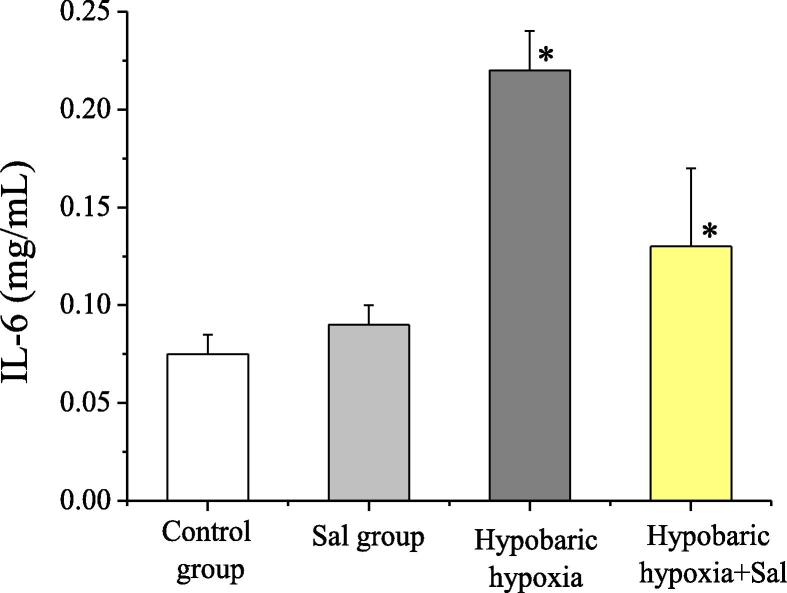
The objective was to investigate the anti-inflammatory effects of salidroside through the PI3K/Akt signaling pathway and its protective effects on acute hypoxia-induced myocardial injury in rats.
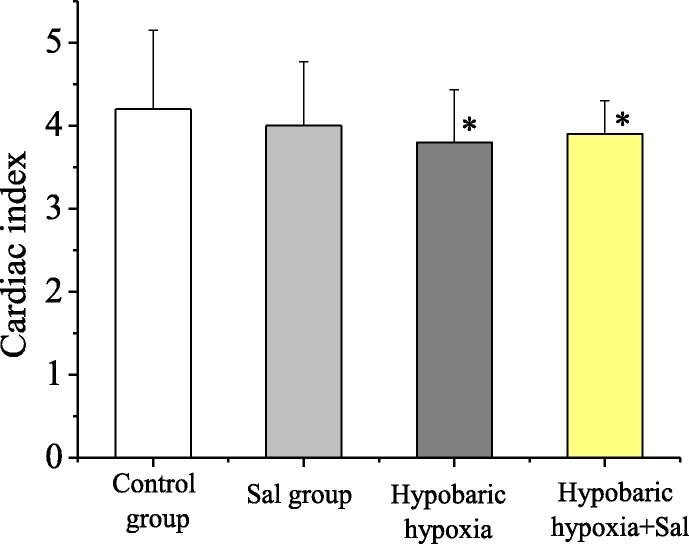
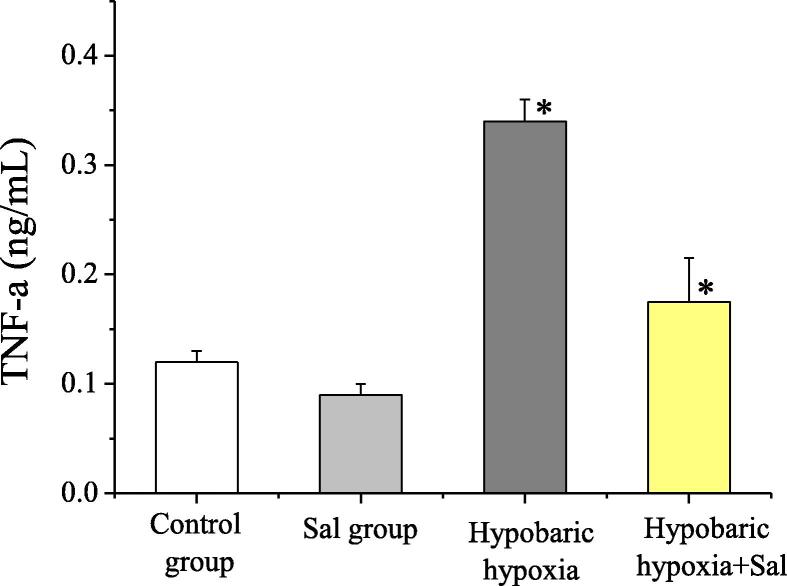
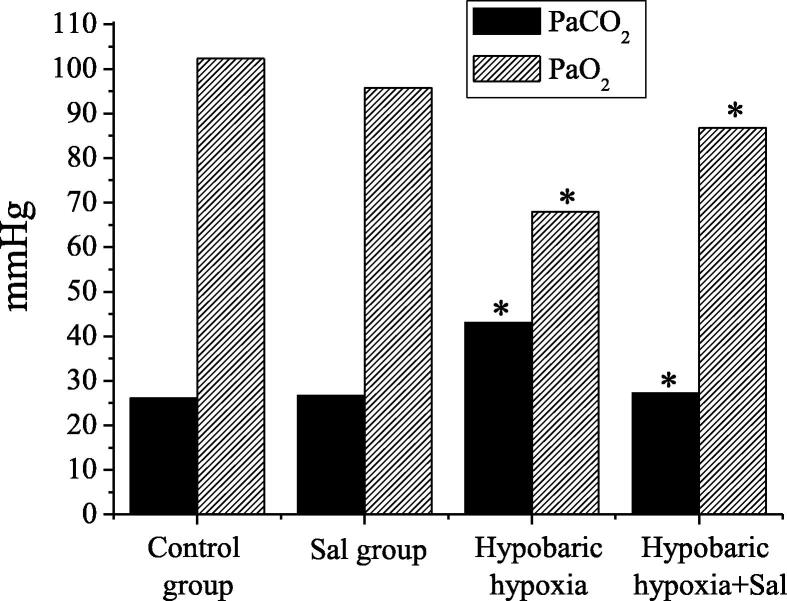
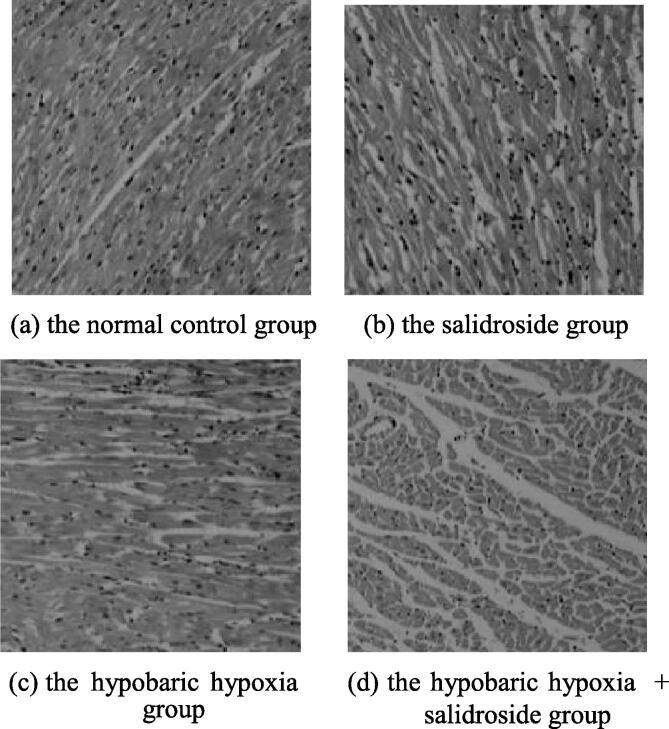
A total of 24 healthy Sprague-Dawley male rats were selected as the experimental subjects. All rats were divided into 4 groups by using the random number table method, with 6 rats in each group. The groups included the normal control group, the salidroside group, the hypobaric hypoxia group, and the hypobaric hypoxia + salidroside group. Rats in the salidroside group were fed in the original animal laboratory and were intragastrically administered with salidroside every morning at a dosage of 35 mg/kg. Rats in the normal control group were intragastrically administered with an equal dosage of saline. Rats in the hypobaric hypoxia + salidroside group were intragastrically administered with salidroside every morning at a dosage of 35 mg/kg, who were fed in the hypoxic experiment module for animals. The altitude was increased to 4000 m, and the rats were kept in the module for 24 h. Rats in the hypobaric hypoxia group were intragastrically administered with an equal dosage of saline in the same environment, and the altitude was increased to 4000 m after administration. Parameters of blood gas analysis, histopathological changes in cardiac tissues, cardiac indexes, and inflammatory factors IL-6 and TNF-α levels of rats in groups were compared.
Salidroside had the repairing and protective effects on the hypobaric hypoxia-induced myocardial injuries in rats. The application of salidroside could reduce the inflammatory responses of rats with hypobaric hypoxia-induced myocardial injuries through PI3K/Akt signaling pathway, thereby protecting the myocardial cells.
探讨红景天苷通过PI3K/Akt信号通路的抗炎作用及其对大鼠急性缺氧性心肌损伤的保护作用。
选取24只健康的雄性Sprague-Dawley大鼠作为实验对象。采用随机数字表法将所有大鼠分为4组,每组6只。分组包括正常对照组、红景天苷组、低压缺氧组和低压缺氧+红景天苷组。红景天苷组大鼠在原动物实验室饲养,每天上午以35 mg/kg的剂量灌胃给予红景天苷。正常对照组大鼠灌胃给予等量的生理盐水。低压缺氧+红景天苷组大鼠每天上午以35 mg/kg的剂量灌胃给予红景天苷,在动物缺氧实验舱内饲养。将海拔升高至4000 m,大鼠在舱内饲养24 h。低压缺氧组大鼠在相同环境下灌胃给予等量的生理盐水,给药后将海拔升高至4000 m。比较各组大鼠的血气分析参数、心脏组织病理变化、心脏指数以及炎症因子IL-6和TNF-α水平。
红景天苷对大鼠低压缺氧性心肌损伤具有修复及保护作用。红景天苷的应用可通过PI3K/Akt信号通路减轻大鼠低压缺氧性心肌损伤的炎症反应,从而保护心肌细胞。