Pan Shuxian, Wang Jingjie, Wu Anqing, Guo Ziyang, Wang Ziyang, Zheng Lijun, Dai Yingchu, Zhu Lin, Nie Jing, Hei Tom K, Zhou Guangming, Li Youchen, Li Bingyan, Hu Wentao
State Key Laboratory of Radiation Medicine and Protection, School of Radiation Medicine and Protection, Soochow University, Suzhou, People's Republic of China.
Collaborative Innovation Center of Radiological Medicine of Jiangsu Higher Education Institutions, Suzhou, People's Republic of China.
Dose Response. 2020 May 19;18(2):1559325820926744. doi: 10.1177/1559325820926744. eCollection 2020 Apr-Jun.
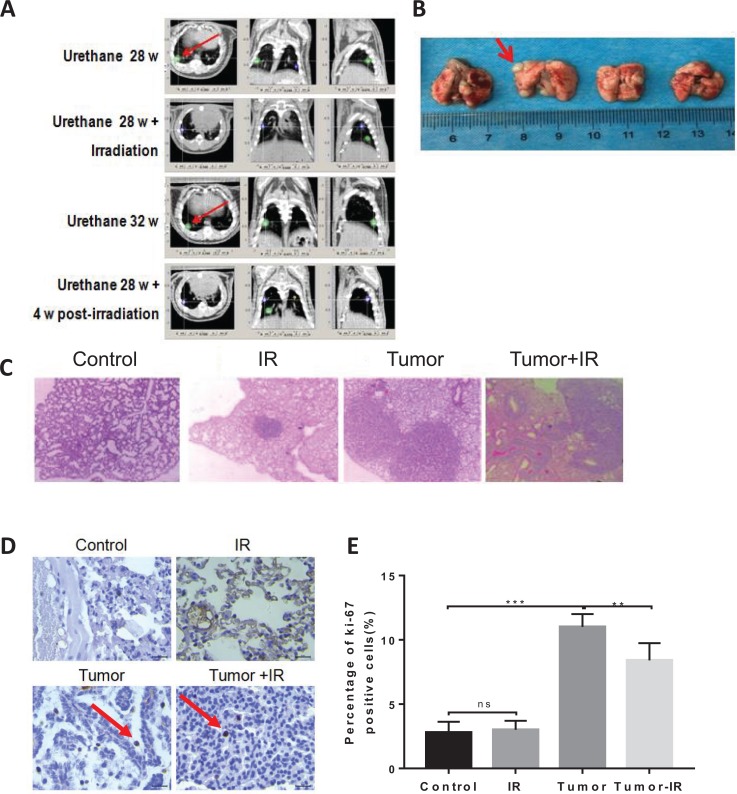
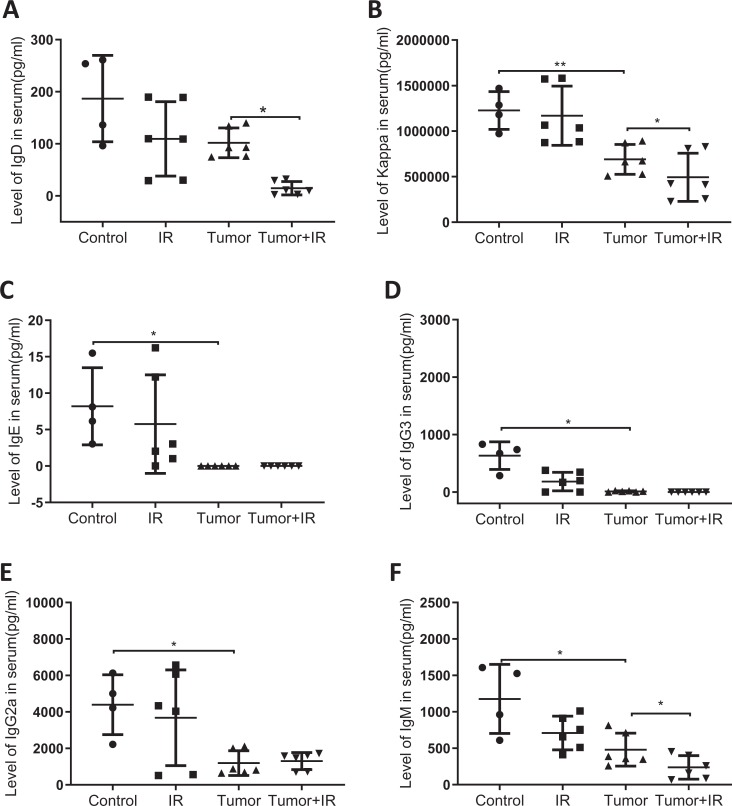
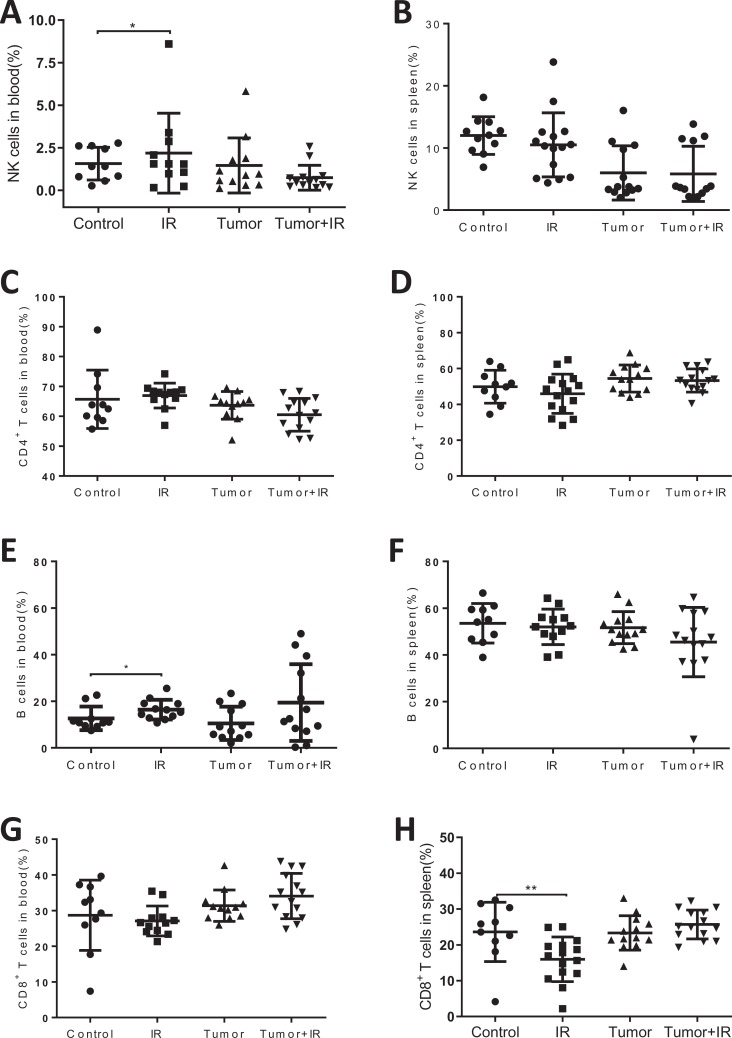
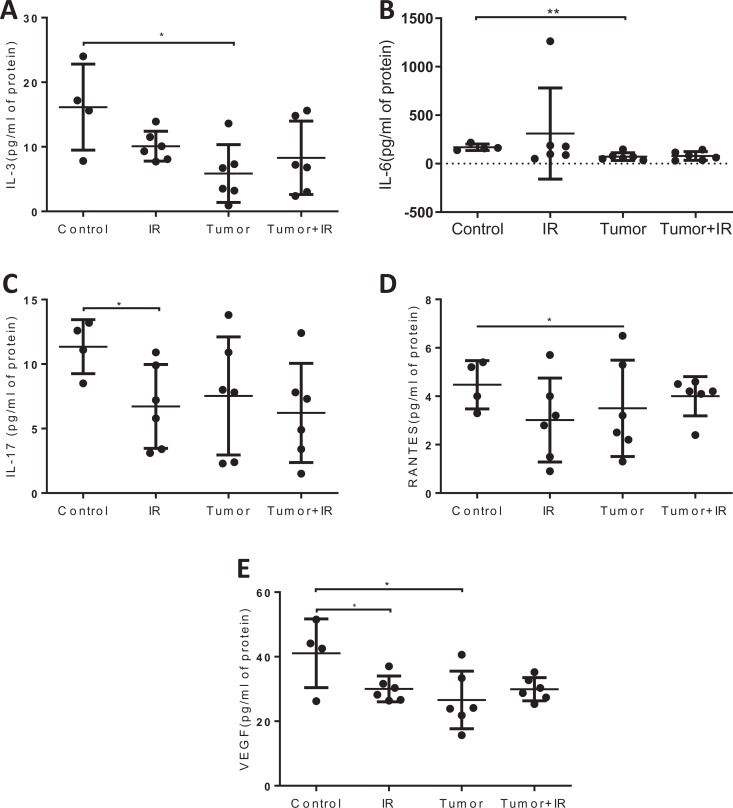
Recent studies have demonstrated that radiation activates in situ antitumor immunity and consequently induced a synergistic effect of radiotherapy and immunotherapy. However, studies related to radiation-induced changes in immune system of tumor-bearing mice are limited, which are of great significance to improve the efficacy of radioimmunotherapy. In this study, we first established a primary lung tumor mouse model using urethane. Then part of the right lung of the mouse was exposed to X-ray irradiation with a computed tomography-guided small animal irradiator and the changes of immune cells in both peripheral blood and spleen were determined by flow cytometry. Besides, the levels of both cytokines and immunoglobulins in mouse serum were detected by a protein chip. We found that B lymphocytes increased while CD8 T lymphocytes reduced significantly. Interleukin-3 (IL-3), IL-6, regulated upon activation, normally T-expressed, and presumably secreted factor (RANTES), and vascular endothelial growth factor (VEGF) were found to be decreased after tumor formation, and the similar results have also been observed with kappa, IgG3, IgE, IgM, and IgG2a. After irradiation, lower concentrations of IgD, kappa, and IgM were found in the serum. Our findings indicate that localized tumor irradiation caused some obvious changes like inhibiting the ability of innate immunity, and these changes may be useful in predicting prognosis.
最近的研究表明,辐射可激活原位抗肿瘤免疫,从而诱导放疗和免疫治疗的协同效应。然而,关于荷瘤小鼠免疫系统辐射诱导变化的研究有限,这对提高放射免疫治疗的疗效具有重要意义。在本研究中,我们首先使用乌拉坦建立了原发性肺肿瘤小鼠模型。然后,用计算机断层扫描引导的小动物辐照仪对小鼠右肺的一部分进行X射线照射,并通过流式细胞术测定外周血和脾脏中免疫细胞的变化。此外,用蛋白质芯片检测小鼠血清中细胞因子和免疫球蛋白的水平。我们发现B淋巴细胞增加,而CD8 T淋巴细胞显著减少。肿瘤形成后,白细胞介素-3(IL-3)、IL-6、活化后正常T细胞表达和可能分泌的调节因子(RANTES)以及血管内皮生长因子(VEGF)均降低,κ、IgG3、IgE、IgM和IgG2a也观察到类似结果。照射后,血清中IgD、κ和IgM的浓度较低。我们的研究结果表明,局部肿瘤照射会引起一些明显的变化,如抑制先天免疫能力,这些变化可能有助于预测预后。