Hodgkinson Tom, Wignall Francis, Hoyland Judith A, Richardson Stephen M
Division of Cell Matrix Biology and Regenerative Medicine, School of Biological Sciences, Faculty of Biology, Medicine and Health, University of Manchester, Manchester Academic Health Science Centre, Oxford Road, Manchester, UK.
NIHR Manchester Musculoskeletal Biomedical Research Unit, Central Manchester Foundation Trust, Manchester Academic Health Science Centre, Manchester, UK.
J Tissue Eng. 2020 May 18;11:2041731420919334. doi: 10.1177/2041731420919334. eCollection 2020 Jan-Dec.
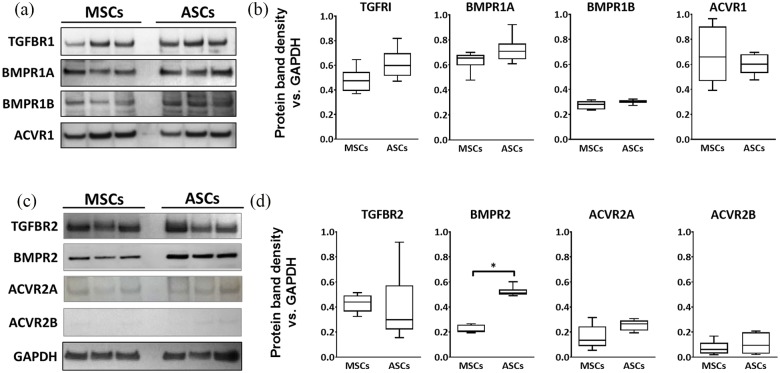
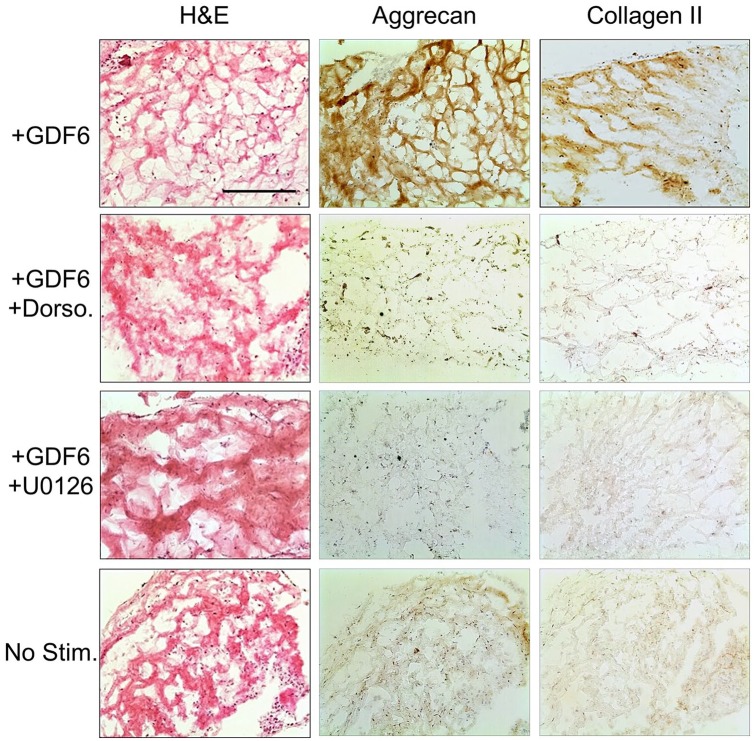
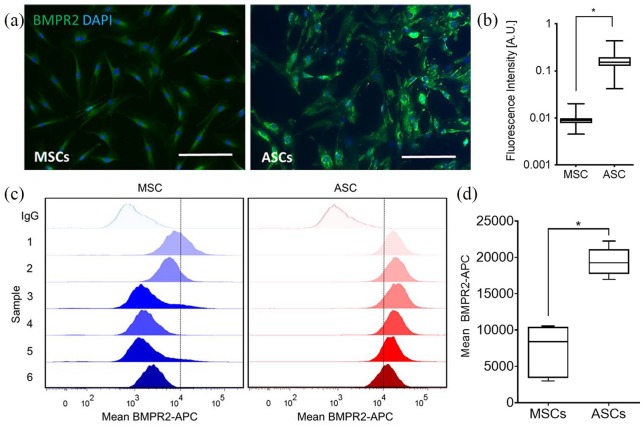
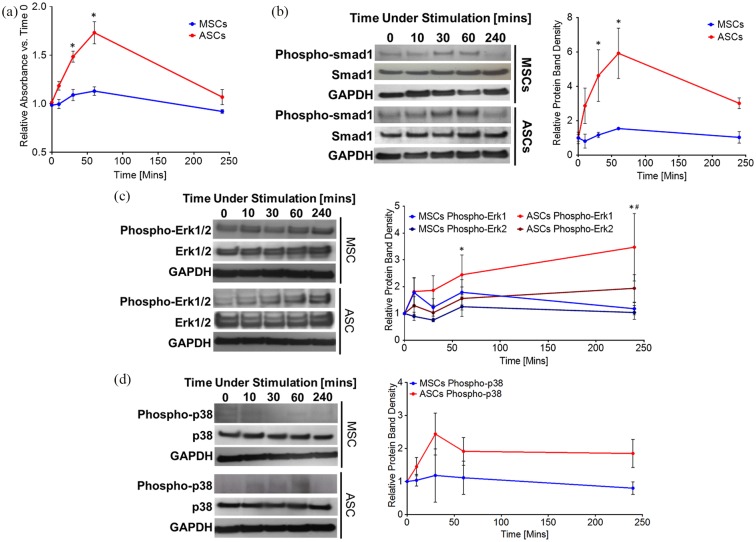
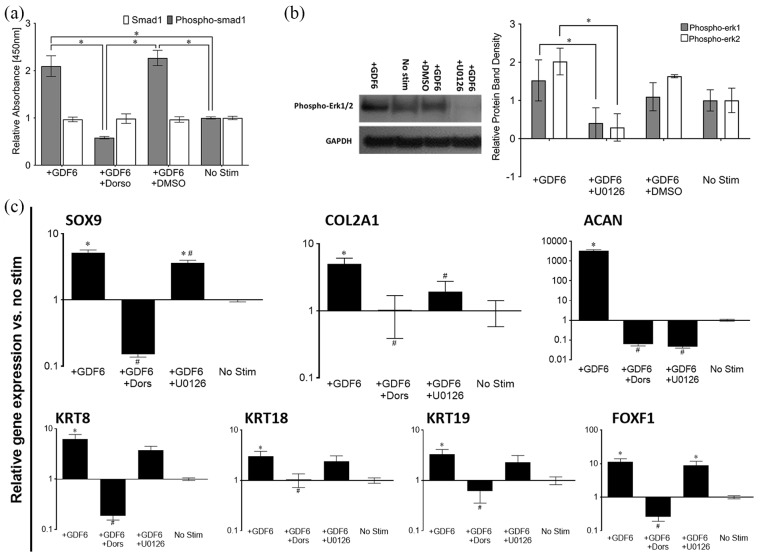
Stem cell-based regenerative strategies are promising for intervertebral disc degeneration. Stimulation of bone-marrow- and adipose-derived multipotent stem cells with recombinant human growth differentiation factor 6 (rhGDF6) promotes anabolic nucleus pulposus like phenotypes. In comparison to mesenchymal stem cells, adipose-derived multipotent stem cells exhibit greater NP-marker gene expression and proteoglycan-rich matrix production. To understand these response differences, we investigated bone morphogenetic protein receptor profiles in donor-matched human mesenchymal stem cells and adipose-derived multipotent stem cells, determined differences in rhGDF6 signalling and their importance in NP-like differentiation between cell populations. Bone morphogenetic protein receptor expression in mesenchymal stem cells and adipose-derived multipotent stem cells revealed elevated and less variable expression of BMPR2 in adipose-derived multipotent stem cells, which corresponded with increased downstream pathway activation (SMAD1/5/8, ERK1/2). Inhibitor studies demonstrated SMAD1/5/8 signalling was required for rhGDF6-induced nucleus-pulposus-like adipose-derived multipotent stem cell differentiation, while ERK1/2 contributed significantly to critical nucleus pulposus gene expression, aggrecan and type II collagen production. These data inform cell regenerative therapeutic choices for intervertebral disc degeneration regeneration and identify further potential optimisation targets.
基于干细胞的再生策略对于椎间盘退变具有广阔前景。用重组人生长分化因子6(rhGDF6)刺激骨髓和脂肪来源的多能干细胞可促进类髓核合成代谢表型。与间充质干细胞相比,脂肪来源的多能干细胞表现出更高的髓核标记基因表达和富含蛋白聚糖的基质生成。为了解这些反应差异,我们研究了供体匹配的人间充质干细胞和脂肪来源的多能干细胞中的骨形态发生蛋白受体谱,确定了rhGDF6信号传导的差异及其在不同细胞群体间向类髓核分化中的重要性。间充质干细胞和脂肪来源的多能干细胞中的骨形态发生蛋白受体表达显示,脂肪来源的多能干细胞中BMPR2表达升高且变异性较小,这与下游通路激活增加(SMAD1/5/8、ERK1/2)相对应。抑制剂研究表明,SMAD1/5/8信号传导是rhGDF6诱导脂肪来源的多能干细胞向类髓核分化所必需的,而ERK1/2对关键的髓核基因表达、聚集蛋白聚糖和II型胶原蛋白生成有显著贡献。这些数据为椎间盘退变再生的细胞再生治疗选择提供了信息,并确定了进一步潜在的优化靶点。