Chen Xiao, Zhang Zheng, Hu Yan, Cui Jin, Zhi Xin, Li Xiaoqun, Jiang Hao, Wang Yao, Gu Zhengrong, Qiu Zili, Dong Xin, Li Yuhong, Su Jiacan
1Department of Orthopedics Trauma, Shanghai Changhai Hospital, Second Military Medical University, Shanghai, China.
2College of Basic Medicine, Second Military Medical University, Shanghai, China.
Aging Dis. 2020 May 9;11(3):629-641. doi: 10.14336/AD.2019.0613. eCollection 2020 May.
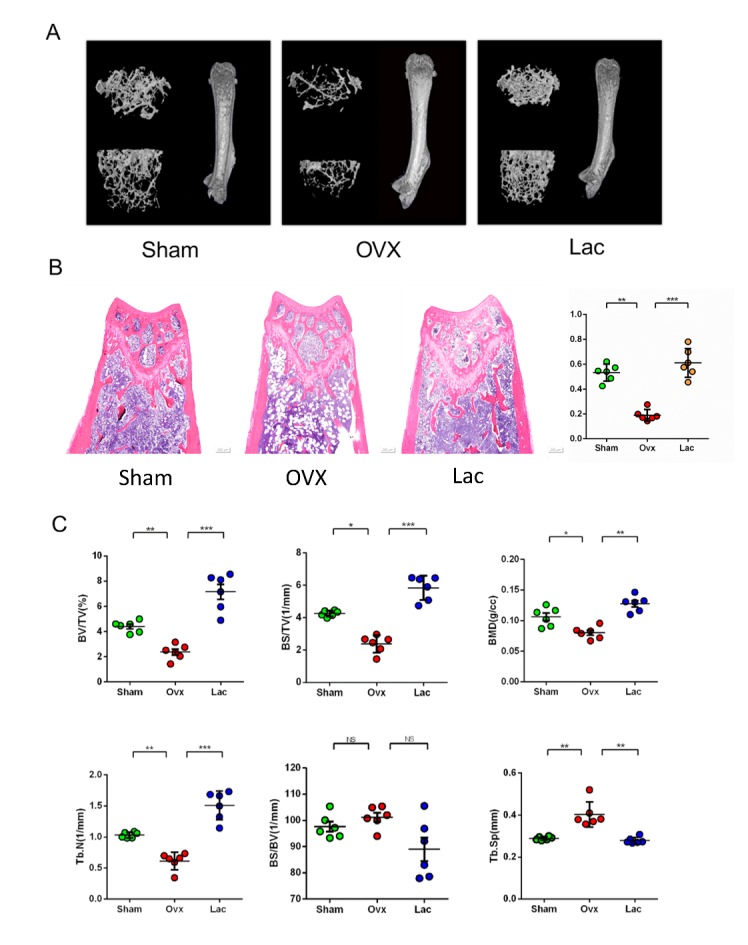
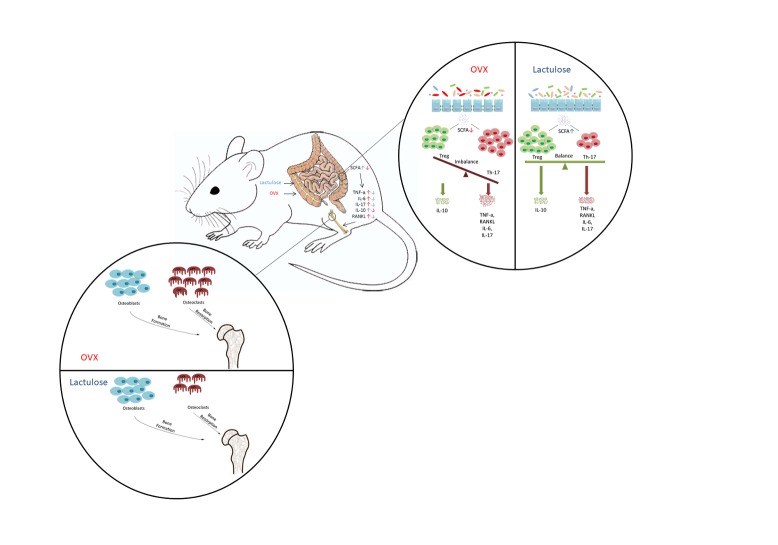
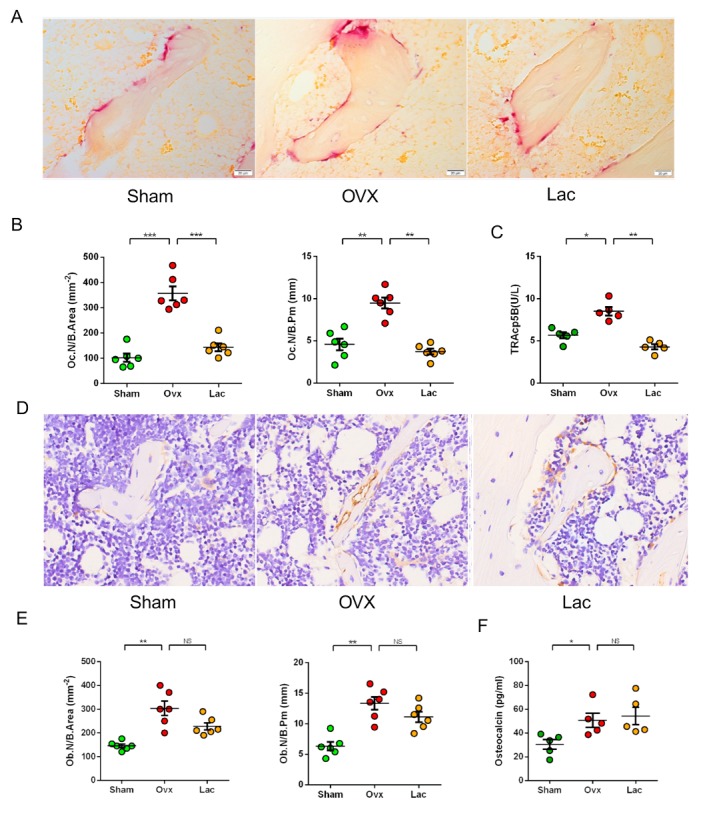
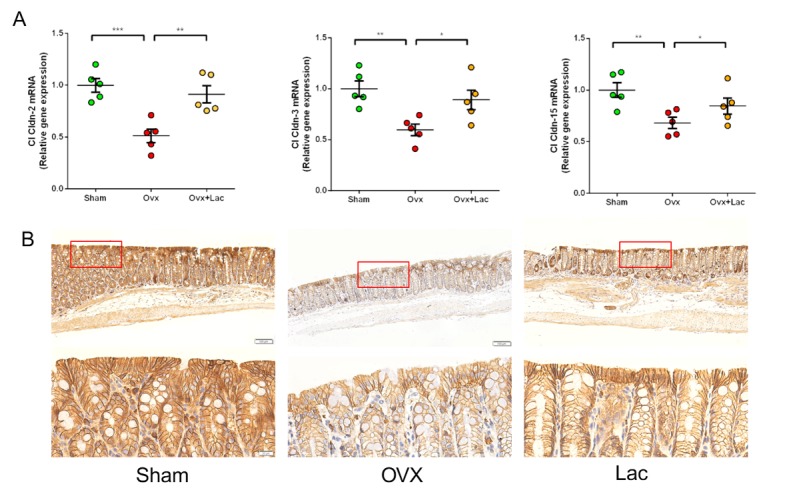
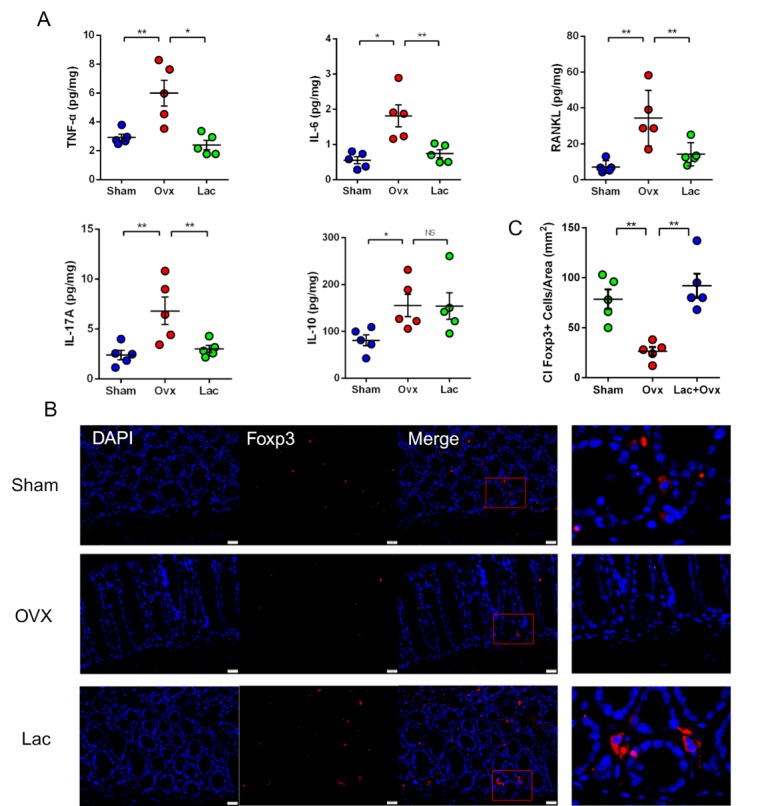
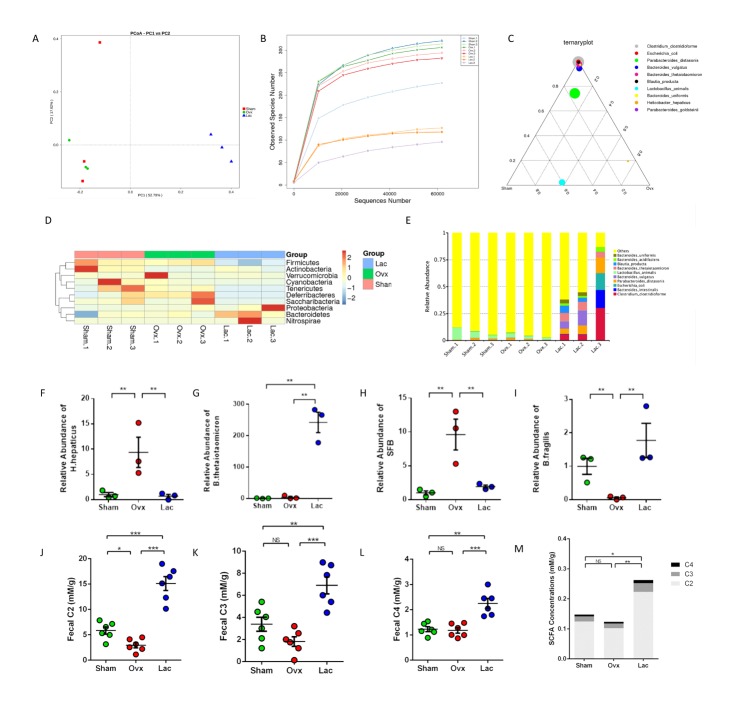
Postmenopausal osteoporosis is characterized by excess osteoclastogenesis which leads to net bone loss and brittle fractures. Studies have demonstrated that estrogen deficiency-associated bone loss is microbiota-dependent and could be prevented by probiotics and prebiotics. In this study, we report that orally administered lactulose (20 g/kg, 6 weeks) orally administered significantly inhibited osteoclastogenesis, bone resorption, and prevented ovariectomy (OVX)-induced bone loss in mice. Lactulose increased intestinal compared to the OVX group, and lowered pro-osteoclastogenic cytokines levels including tumor necrosis factor-α, interleukin(IL)-6, receptor activator of nuclear factor kappa-Β ligand (RANKL), and IL-17 as well as increased the anti-inflammatory cytokine IL-10 in the intestine, peripheral blood, and bone marrow. Lactulose significantly preserved the number of Foxp3 Treg cells in the intestines compared with that in OVX mice. Lactulose altered the composition of intestinal microbiota measured by 16s rDNA sequencing and increased intestinal and serum short-chain fatty acids (SCFAs) levels including acetate, propionate and butyrate which were decreased in OVX mice as measured by gas chromatography. Oral administration of lactulose for 2 weeks significantly lowered the level of bone resorption marker C-telopeptide of type 1 collagen-1 in healthy male young volunteers (aging 20-25 years). In conclusion, lactulose inhibited osteoclastogenesis and bone resorption by altering the intestinal microbiota and increasing SCFAs. Lactulose could serve as an ideal therapeutic agent for postmenopausal osteoporosis.
绝经后骨质疏松症的特征是破骨细胞生成过多,导致净骨量流失和脆性骨折。研究表明,雌激素缺乏相关的骨质流失依赖于微生物群,益生菌和益生元可以预防这种情况。在本研究中,我们报告口服乳果糖(20 g/kg,6周)可显著抑制小鼠破骨细胞生成、骨吸收,并预防卵巢切除(OVX)诱导的骨质流失。与OVX组相比,乳果糖增加了肠道[此处原文似乎不完整],降低了包括肿瘤坏死因子-α、白细胞介素(IL)-6、核因子κB受体激活剂配体(RANKL)和IL-17在内的促破骨细胞生成细胞因子水平,并增加了肠道、外周血和骨髓中抗炎细胞因子IL-10的水平。与OVX小鼠相比,乳果糖显著保留了肠道中Foxp3调节性T细胞的数量。通过16s rDNA测序测量,乳果糖改变了肠道微生物群的组成,并增加了肠道和血清短链脂肪酸(SCFAs)水平,包括醋酸盐、丙酸盐和丁酸盐,通过气相色谱法测量,这些在OVX小鼠中有所降低。对健康男性青年志愿者(年龄20-25岁)口服乳果糖2周可显著降低骨吸收标志物1型胶原蛋白-1 C-末端肽的水平。总之,乳果糖通过改变肠道微生物群和增加SCFAs来抑制破骨细胞生成和骨吸收。乳果糖可作为绝经后骨质疏松症的理想治疗药物。