Ahn Sang-Hyun, Yang Eun-Sun, Cho Hey-Rin, Lee Syng-Ook, Ha Ki-Tae, Kim Kibong
Department of Anatomy, College of Korean Medicine, Semyung University, Semyung-ro 65, Jecheon-si, Chungbuk 27136, Republic of Korea.
Department of Korean Medical Science, School of Korean Medicine and Korean Medical Research Center for Healthy Aging, Pusan National University, Busandaehak-ro 49, Mulgeum-eup, Yangsan-si, Gyeongsangnam-do 50612, Republic of Korea.
Integr Med Res. 2020 Dec;9(4):100422. doi: 10.1016/j.imr.2020.100422. Epub 2020 May 14.
Non-alcoholic fatty liver disease (NAFLD) is one of the most common liver diseases and is caused by obesity, diabetes, high blood pressure, and insulin resistance. Many studies have explored novel candidates to treat NAFLD using herbal medicines owing to their fewer side effects. In this study, we examined the effect of MIT, an herbal formula comprising , , and , on the murine model of NAFLD.
To evaluate the effect of MIT on NAFLD, we used the high-fat diet (HFD)-induced NAFLD mice model. The mice were divided into four groups: control, HFD, HFD with metformin administration, and HFD with MIT administration. Freeze-dried MIT was dissolved in phosphate buffered saline and orally administered for 8 weeks to MIT-treated mice (60 mg/kg) after feeding them with HFD for 16 weeks.
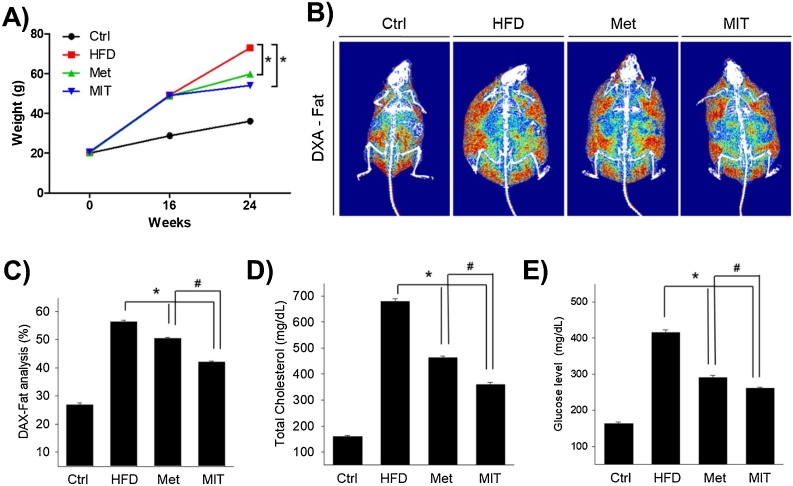
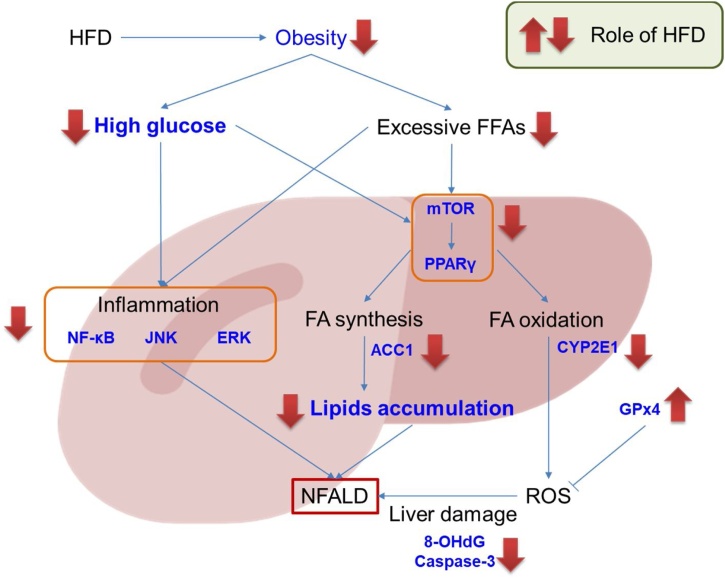
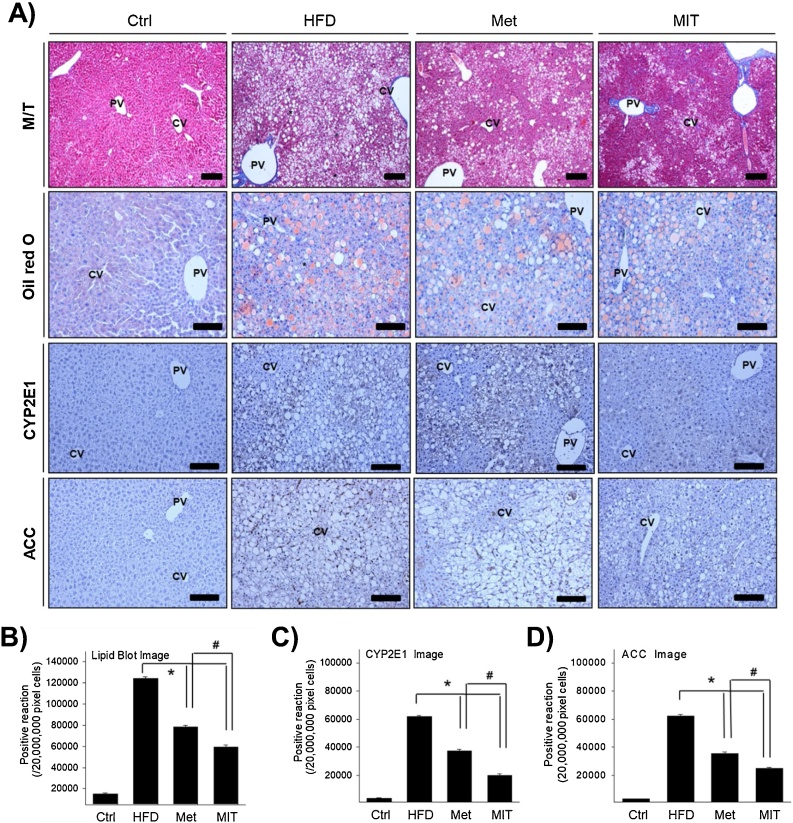
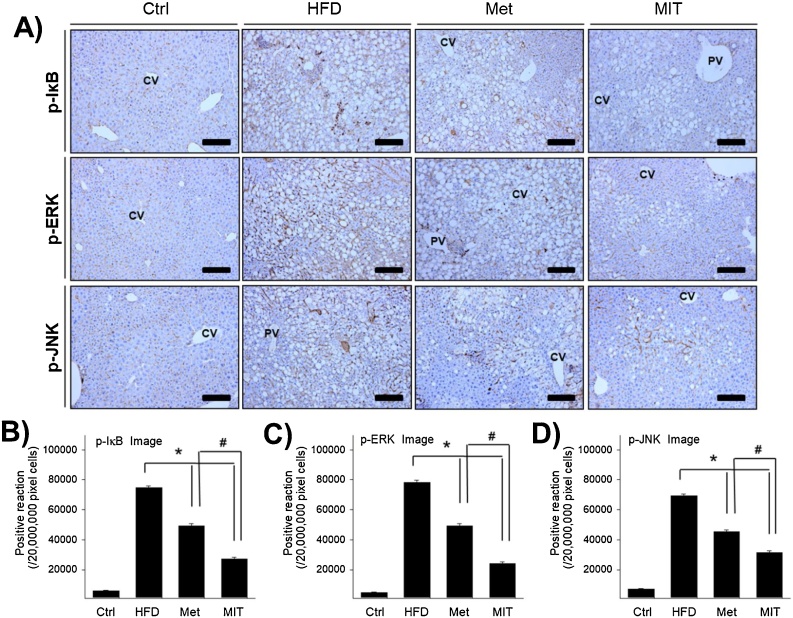
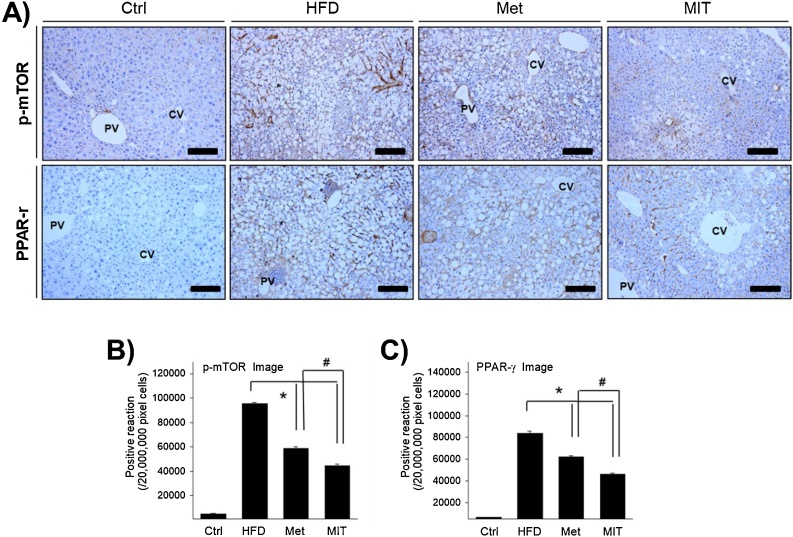
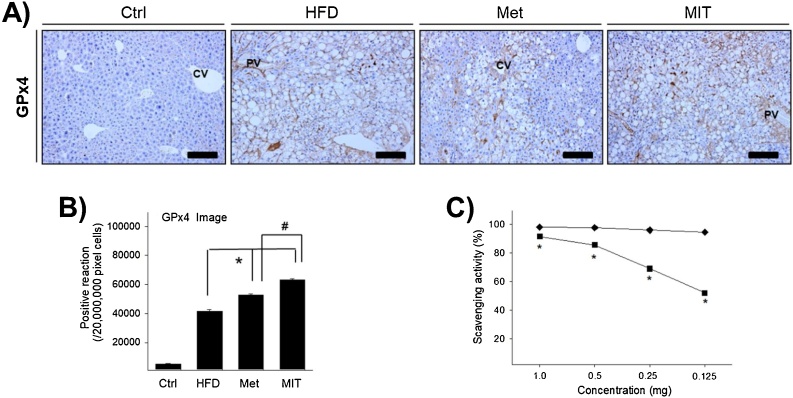
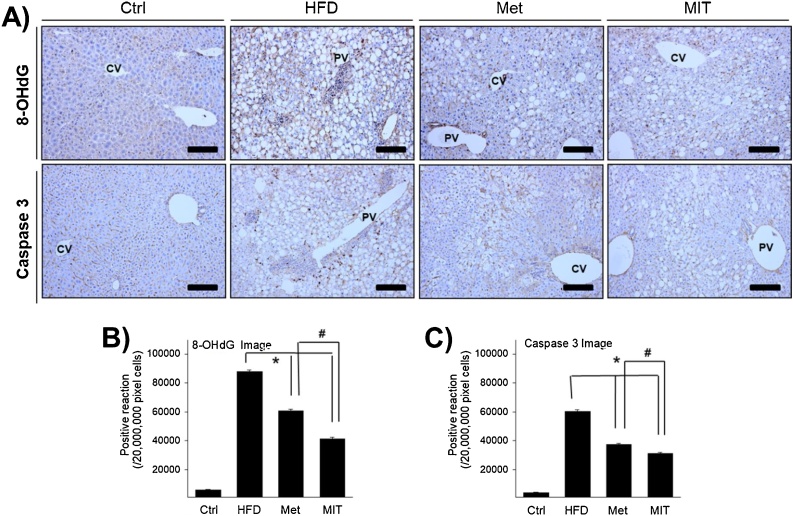
MIT treatment significantly attenuated fat accumulation, serum glucose levels, and excessive cholesterol. It also reduced the activation of NF-κB, JNK, ERK, mammalian target of rapamycin, and peroxisome proliferator-activated receptor γ in the HFD-induced NAFLD mice. The expression level of enzymes involved in the synthesis and oxidation of fatty acids, acetyl-coA carboxylase and CYP2E1, were clearly reduced by MIT treatment. Reactive oxygen species (ROS) production and subsequent liver damage were effectively reduced by MIT treatment.
We suggest that MIT is a potent herbal formula that can be used for the prevention and treatment of obesity-related NAFLD regulating the levels of serum glucose and free fatty acids, inflammation, lipid accumulation, and ROS-mediated liver damage.
非酒精性脂肪性肝病(NAFLD)是最常见的肝脏疾病之一,由肥胖、糖尿病、高血压和胰岛素抵抗引起。由于草药副作用较少,许多研究探索了用草药治疗NAFLD的新候选药物。在本研究中,我们研究了由[具体成分1]、[具体成分2]和[具体成分3]组成的草药配方MIT对NAFLD小鼠模型的影响。
为了评估MIT对NAFLD的影响,我们使用了高脂饮食(HFD)诱导的NAFLD小鼠模型。将小鼠分为四组:对照组、HFD组、给予二甲双胍的HFD组和给予MIT的HFD组。将冻干的MIT溶解在磷酸盐缓冲盐水中,在给小鼠喂食HFD 16周后,对接受MIT治疗的小鼠(60mg/kg)口服给药8周。
MIT治疗显著减轻了脂肪堆积、血糖水平和过高的胆固醇。它还降低了HFD诱导的NAFLD小鼠中NF-κB、JNK、ERK、雷帕霉素靶蛋白和过氧化物酶体增殖物激活受体γ的激活。MIT治疗明显降低了参与脂肪酸合成和氧化的酶乙酰辅酶A羧化酶和CYP2E1的表达水平。MIT治疗有效减少了活性氧(ROS)的产生及随后的肝损伤。
我们认为MIT是一种有效的草药配方,可用于预防和治疗与肥胖相关的NAFLD,调节血清葡萄糖和游离脂肪酸水平、炎症、脂质积累和ROS介导的肝损伤。