Merkel Sebastian, Hess Moritz
Faculty of Social Sciences, Ruhr-University Bochum, Bochum, Germany.
SOCIUM Research Center on Inequality and Social Policy, Bremen, Germany.
JMIR Aging. 2020 Jun 3;3(1):e15491. doi: 10.2196/15491.
Digital health care is becoming increasingly important, but it has the risk of further increasing the digital divide, as not all individuals have the opportunity, skills, and knowledge to fully benefit from potential advantages. In particular, elderly people have less experience with the internet, and hence, they are in danger of being excluded. Knowledge on the influences of the adoption of internet-based health and care services by elderly people will help to develop and promote strategies for decreasing the digital divide.
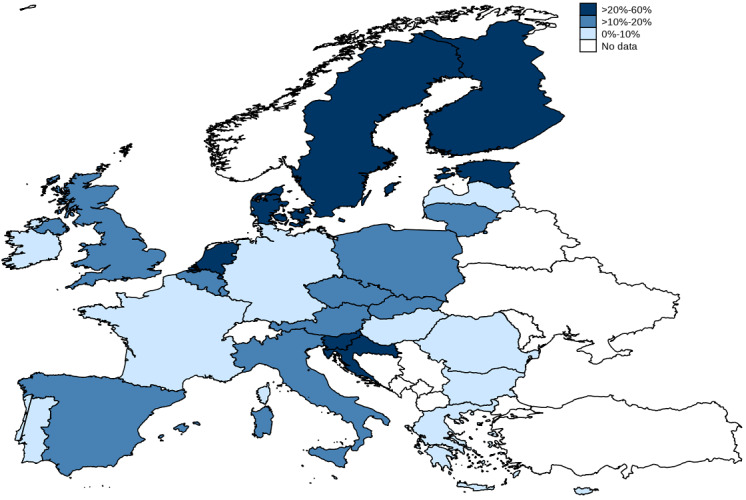
This study examined if and how elderly people are using digital services to access health and social care. Moreover, it examined what personal characteristics are associated with using these services and if there are country differences.
Data for this study were obtained from the Special Eurobarometer 460 (SB 460), which collected data on Europeans' handling of and attitudes toward digital technologies, robots, and artificial intelligence, including data on the use of internet-based health and social care services, among 27,901 EU citizens aged 15 years or older. Multilevel logistic regression models were adopted to analyze the association of using the internet for health and social care services with several individual and country-level variables.
At the individual level, young age, high education, high social class, and living in an urban area were positively associated with a high probability of using internet-based health and social services. At the country level, the proportion of elderly people who participated in any training activity within the last month was positively associated with the proportion of elderly people using these services.
The probability of using internet-based health and social services and their accompanying advantages strongly depend on the socioeconomic background. Training and educational programs might be helpful to mitigate these differences.
数字医疗保健正变得越来越重要,但它有进一步加剧数字鸿沟的风险,因为并非所有人都有机会、技能和知识来充分受益于其潜在优势。特别是老年人对互联网的体验较少,因此,他们有被排除在外的危险。了解老年人采用基于互联网的健康和护理服务的影响,将有助于制定和推广减少数字鸿沟的策略。
本研究调查了老年人是否以及如何使用数字服务来获取健康和社会护理。此外,研究还调查了哪些个人特征与使用这些服务相关,以及是否存在国家差异。
本研究的数据来自特别欧洲晴雨表460(SB 460),该调查收集了27901名15岁及以上欧盟公民对数字技术、机器人和人工智能的使用及态度的数据,包括基于互联网的健康和社会护理服务的使用数据。采用多水平逻辑回归模型分析使用互联网获取健康和社会护理服务与若干个人和国家层面变量之间的关联。
在个人层面,年轻、高学历、高社会阶层以及居住在城市地区与使用基于互联网的健康和社会服务的高概率呈正相关。在国家层面,上个月参加任何培训活动的老年人比例与使用这些服务的老年人比例呈正相关。
使用基于互联网的健康和社会服务的可能性及其附带优势在很大程度上取决于社会经济背景。培训和教育项目可能有助于缩小这些差异。