Barba Anna Angela, Naddeo Carlo, Caputo Silvestro, Lamberti Gaetano, d'Amore Matteo, Dalmoro Annalisa
Dipartimento di Farmacia, Università degli Studi di Salerno, via Giovanni Paolo II, 132-84084 Fisciano SA, Italy.
Dipartimento di Ingegneria Industriale, Università degli Studi di Salerno, via Giovanni Paolo II, 132-84084 Fisciano SA, Italy.
Foods. 2020 Jun 1;9(6):711. doi: 10.3390/foods9060711.
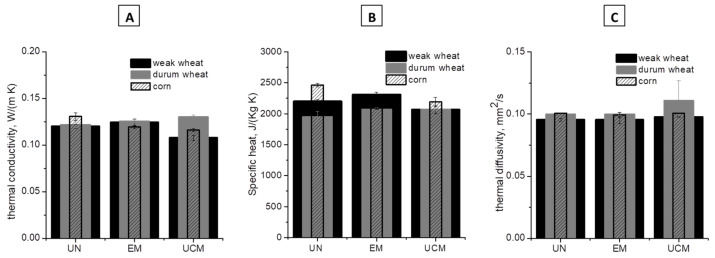
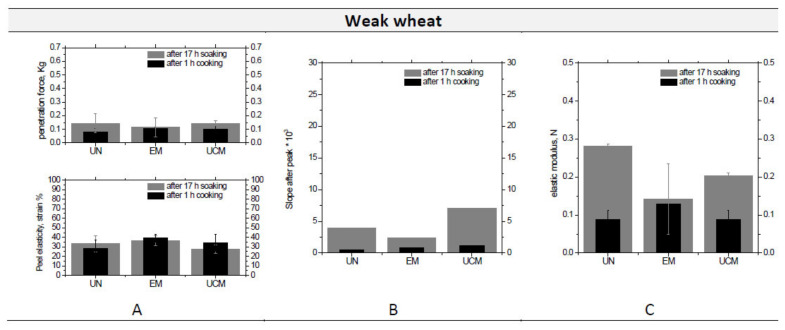
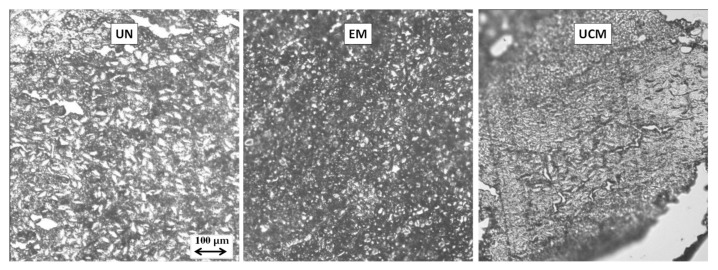
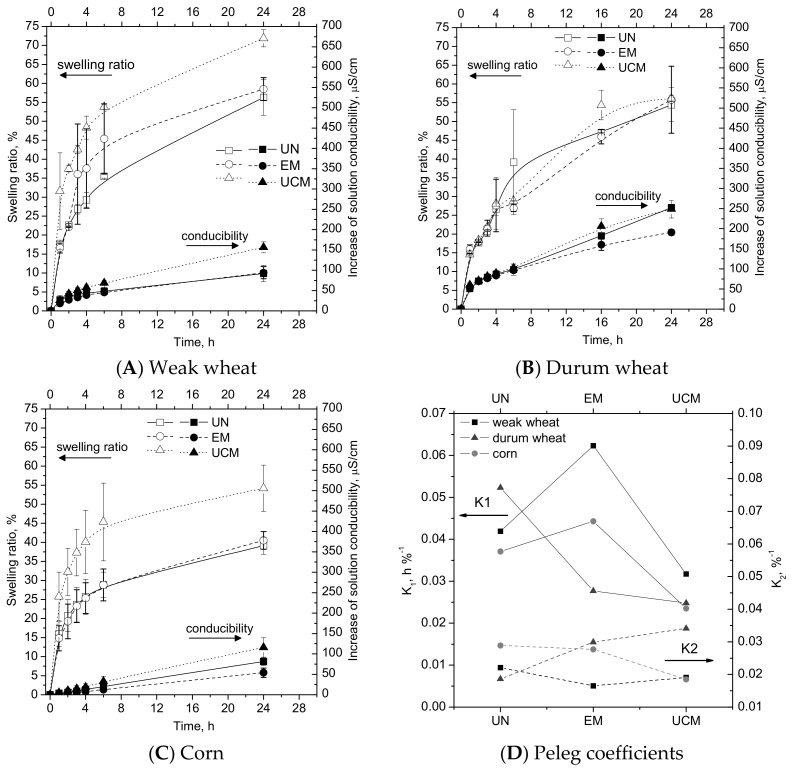
Dielectric heating is one of the most interesting techniques for pest disinfestation. However, most of the literature works give information about the ability of microwave treatments at different power-time conditions to kill insects; less is given about the analysis of matrices structural properties and heat transport. Accordingly, the aim of this work is to investigate the effect of microwave treatments, applied for pest disinfestation, on heat transport behavior and physical/structural properties, such as water uptake capability, mineral losses, texture change, and germination capability, of most consumed cereals in human diet, such as weak wheat, durum wheat, and corn. Two different radiative treatments were performed: one in time-temperature conditions capable of inactivating the weed fauna, and the other at high temperatures of ~150 °C, simulating uncontrolled treatments. Heat transport properties were measured and showed to keep unvaried during both effective and uncontrolled microwave treatments. Instead, grain physical properties were worsened when exposed to high temperatures (reduction of germination ability and texture degradation). The achieved results, on the one hand, provide new structural and heat transport data of cereals after microwave treatments, actually not present in the literature, and on the other, they confirm the importance of correctly performing microwave treatments for an effective disinfestation without affecting matrices physical properties and nutritional features.
介电加热是害虫除害处理中最有趣的技术之一。然而,大多数文献介绍的是不同功率 - 时间条件下微波处理杀灭昆虫的能力;关于基质结构特性和热传递分析的内容较少。因此,本研究的目的是调查用于害虫除害处理的微波处理对人类饮食中最常食用的谷物(如软质小麦、硬质小麦和玉米)的热传递行为以及物理/结构特性(如水吸收能力、矿物质损失、质地变化和发芽能力)的影响。进行了两种不同的辐射处理:一种是在能使杂草动物群失活的时间 - 温度条件下进行,另一种是在约150°C的高温下进行,模拟非受控处理。测量了热传递特性,结果表明在有效和非受控微波处理过程中热传递特性均保持不变。相反,谷物在高温下暴露时物理特性会变差(发芽能力降低和质地降解)。一方面,所取得的结果提供了微波处理后谷物新的结构和热传递数据,这些数据在文献中实际上并不存在;另一方面,它们证实了正确进行微波处理对于有效除害而不影响基质物理特性和营养特性的重要性。