Department of Emotion Engineering, Sangmyung University, Seoul 03016, Korea.
Department of Human-Centered Artificial Intelligence, Sangmyung University, Seoul 03016, Korea.
Sensors (Basel). 2020 Jun 1;20(11):3136. doi: 10.3390/s20113136.
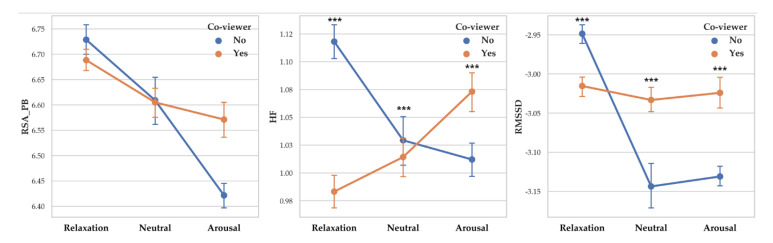
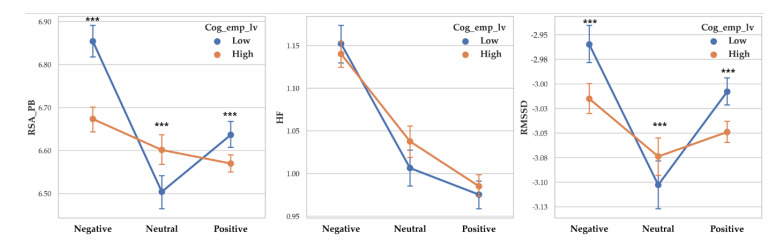
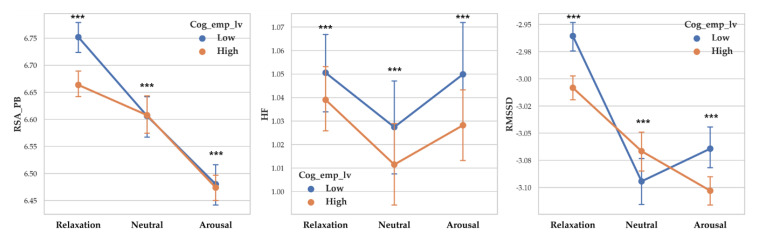
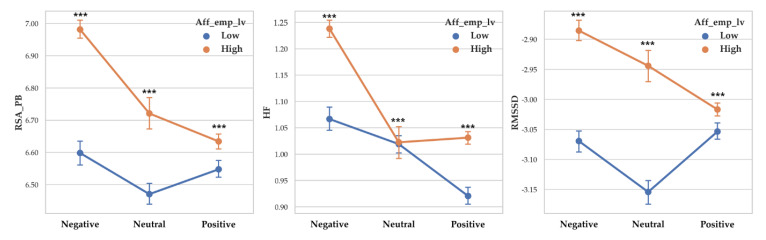
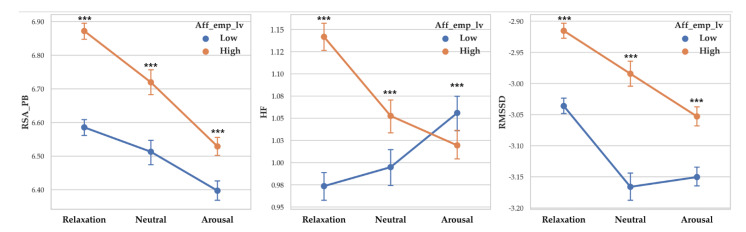
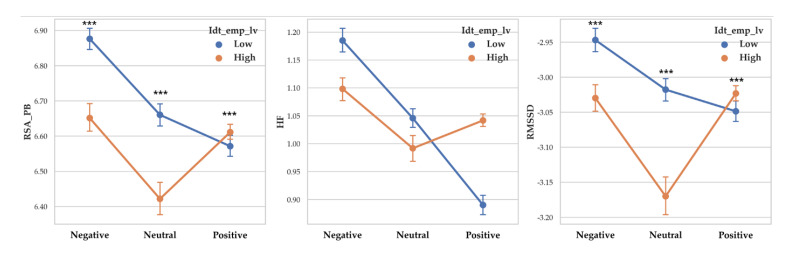
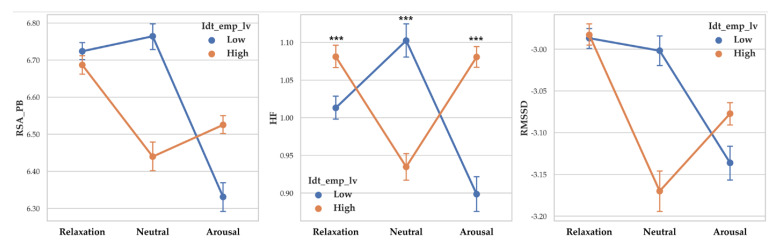
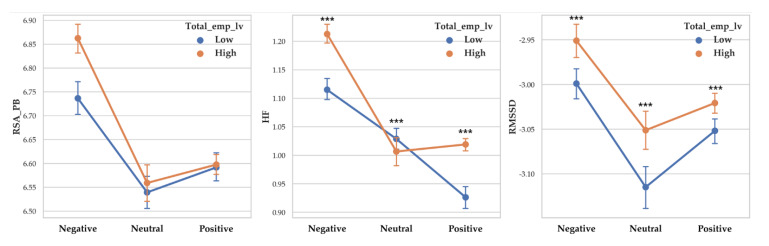
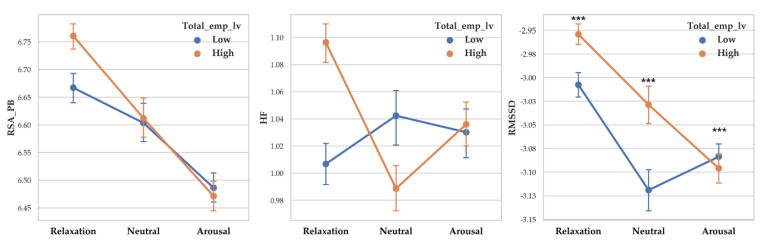
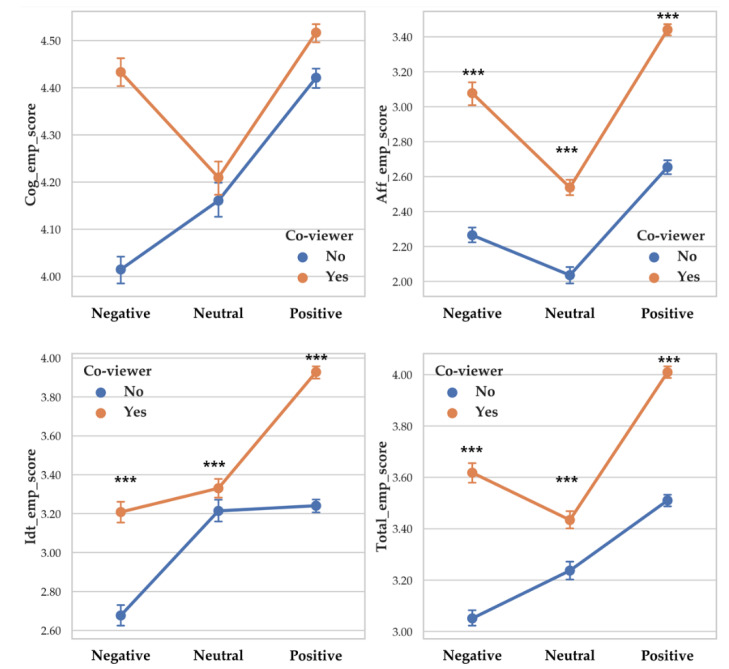
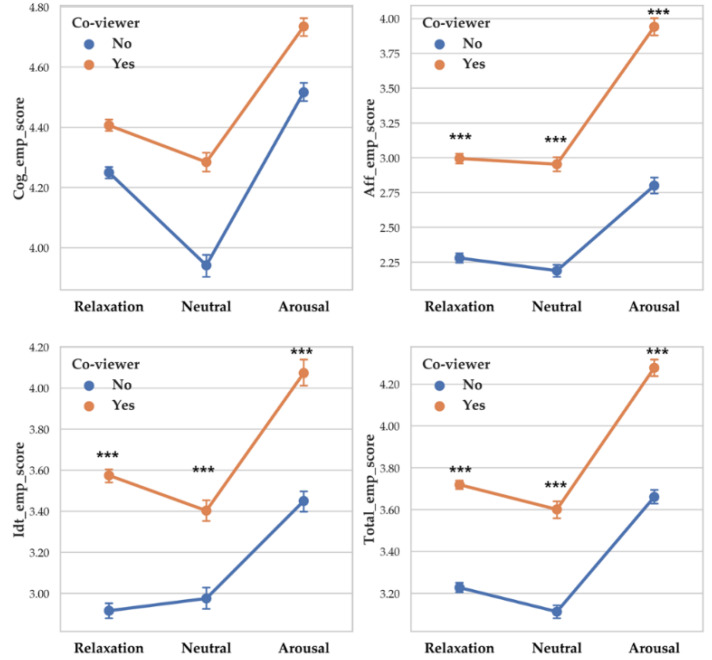
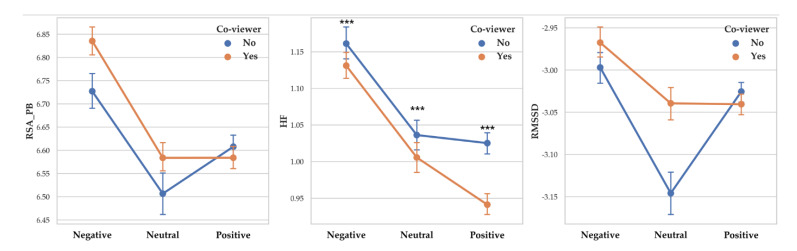
Empathy can bring different benefits depending on what kind of emotions people empathize with. For example, empathy with negative emotions can raise donations to charity while empathy with positive emotions can increase participation during remote education. However, few studies have focused on the physiological differences depending on what kind of emotions people empathize with. Furthermore, co-viewer can influence the elicitation of different levels of empathy, but this has been less discussed. Therefore, this study investigated vagal response differences according to each empathy factor level elicited by different emotions and co-viewer. Fifty-nine participants were asked to watch 4 videos and to evaluate subjective valence, arousal scores, and undertake an empathy questionnaire, which included cognitive, affective and identification empathy. Half of the participants watched the videos alone and the other half watched the videos with a co-viewer. Valence and arousal scores were categorized into three levels to figure out what kind of emotions they empathized with. Empathy level (high vs. low) was determined based on the self-report scores. Two-way MANOVA revealed an interaction effect of empathy level and emotions. High affective empathy level is associated with higher vagal response regardless of what kind of emotions they empathized with. However, vagal response differences in other empathy factor level showed a different pattern depending on what kind of emotions that participant empathized with. A high cognitive empathy level showed lower vagal responses when participants felt negative or positive valence. High identification level also showed increased cognitive burden when participants empathized with negative and neutral valence. The results implied that emotions and types of empathy should be considered when measuring empathic responses using vagal tone. Two-way MANOVA revealed empathic response differences between co-viewer condition and emotion. Participants with a co-viewer felt higher vagal responses and self-reporting empathy scores only when participants empathized with arousal. This implied that the effect of a co-viewer may impact on empathic responses only when participants felt higher emotional intensity.
同理心可以带来不同的好处,具体取决于人们共情的情绪类型。例如,对负面情绪的同理心可以提高慈善捐款,而对积极情绪的同理心可以增加远程教育的参与度。然而,很少有研究关注同理心所引起的生理差异取决于人们共情的情绪类型。此外,共同观看者可以影响不同水平同理心的诱发,但这方面的讨论较少。因此,本研究根据不同情绪和共同观看者引起的每个同理心因素水平,研究了迷走神经反应的差异。要求 59 名参与者观看 4 个视频,并评估主观效价、唤醒分数,并进行同理心问卷,其中包括认知、情感和认同同理心。一半的参与者单独观看视频,另一半与共同观看者一起观看视频。效价和唤醒分数分为三个级别,以确定他们共情的情绪类型。同理心水平(高与低)是根据自我报告分数确定的。双向 MANOVA 显示了同理心水平和情绪的交互效应。无论他们共情的情绪类型如何,高情感同理心水平与更高的迷走神经反应相关。然而,其他同理心因素水平的迷走神经反应差异表现出不同的模式,具体取决于参与者共情的情绪类型。当参与者感到负面或正面效价时,高认知同理心水平表现出较低的迷走神经反应。当参与者对负面和中性效价产生共鸣时,高认同水平也表现出认知负担的增加。结果表明,在使用迷走神经音调测量同理心反应时,应该考虑情绪和同理心的类型。双向 MANOVA 显示了共同观看者条件和情绪之间的同理心反应差异。只有当参与者对唤醒产生共鸣时,有共同观看者的参与者才会感到更高的迷走神经反应和自我报告的同理心分数。这表明,只有当参与者感到更高的情绪强度时,共同观看者的影响才会影响同理心反应。