Center of Excellence for Emerging and Re-emerging Infectious Diseases in Animals, Chulalongkorn University, Bangkok, Thailand.
Sirinthorn College of Public Health Khon Kaen, Ministry of Public Health, Khon Kaen, Thailand.
BMC Public Health. 2020 Jun 3;20(1):841. doi: 10.1186/s12889-020-08968-z.
Bats serve as an important reservoir for emerging infectious diseases. Bat contact and consumption, which persists in Asia, poses risks for the transmission of bat-borne infections.
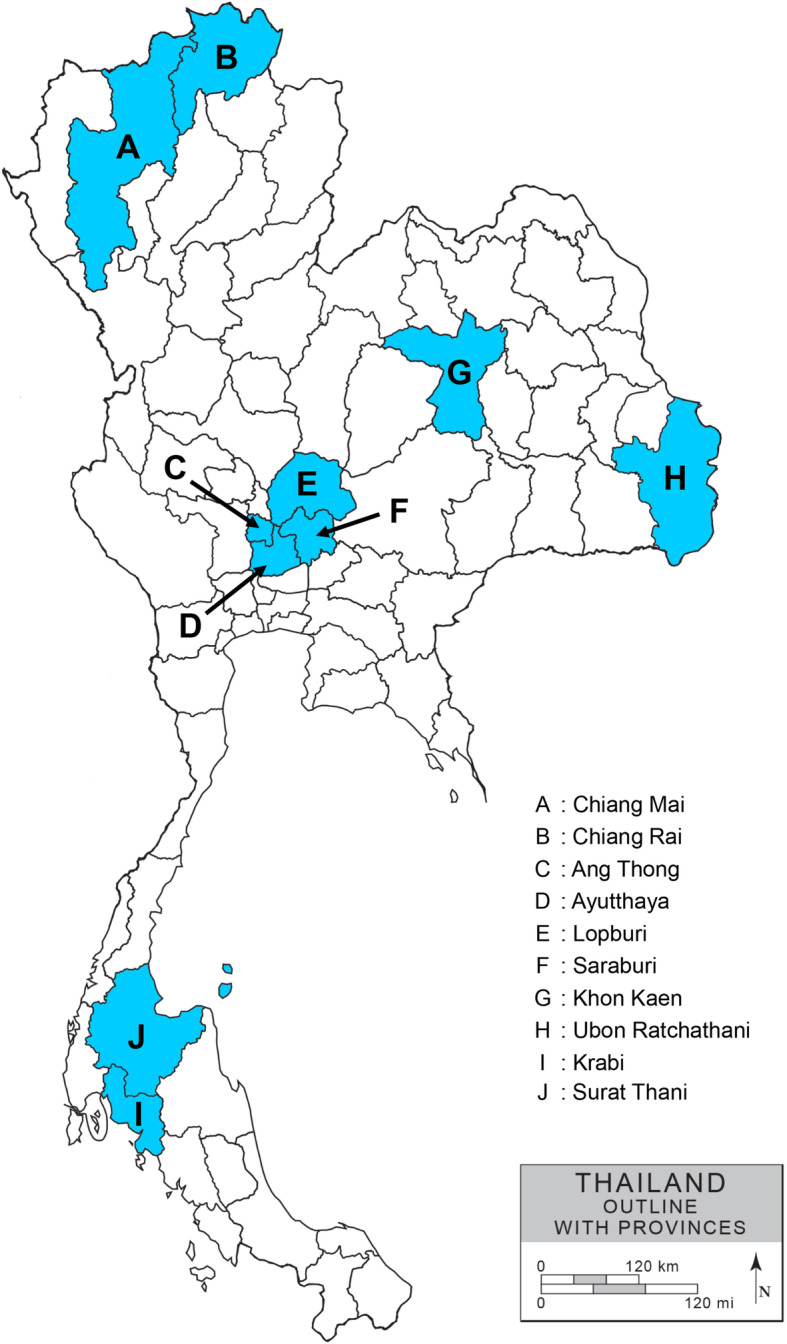
An analytical cross-sectional survey for risk factors associated with bat contact and consumption behaviors was conducted in ten provinces of Thailand from May 2016 to December 2017. A standardized questionnaire administered through face-to-face interviews was used to collect information from 626 villagers who lived in or nearby areas of high bat density. The questionnaire contained 23 independent variables related to sociodemographic, knowledge, attitudes, practices, and perceptions.
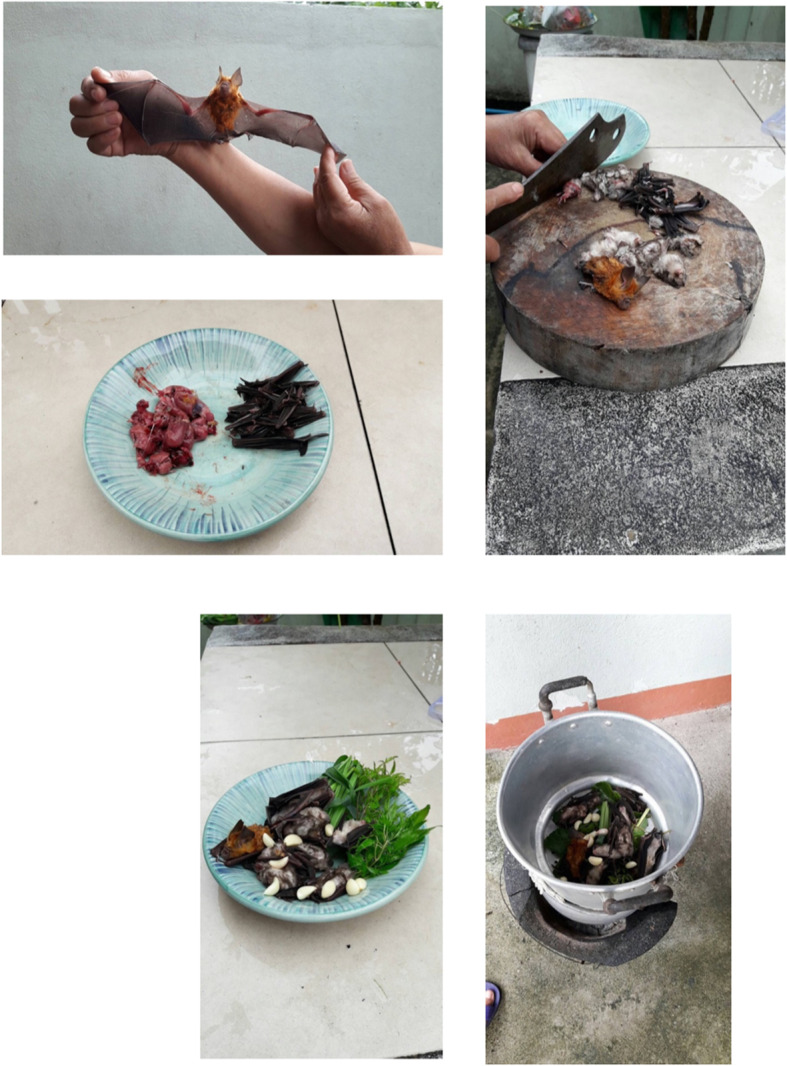
The respondents (n = 626) were 285 females and 341 males, mean age of respondents was 47.58 years-old and lived in rural setting. Our results showed that 36.42% of respondents (n = 228) in 10 provinces reported bat contact during the past 6 months. Furthermore, 15.34% of respondents (n = 96) in 9 out of 10 provinces reported of having consumed bat meat in the past 6 months. Risk factors for bat contact included sex (male) (OR = 1.56, 95% CI 1.09-2.28), educational attainment (lower than secondary school) (OR = 1.45, 95% CI 1.02-2.18), and the consideration of bats as being economically beneficial to the community (OR = 3.18, 95% CI 2.03-4.97), while agriculture-related occupation (OR = 0.54, 95% CI 0.37-0.79), knowledge that it is safe to eat bats (OR = 0.58, 95% CI 0.37-0.93), practice of allowing children to play with bats (OR = 0.65, 95% CI 0.44-0.96), and attitude of feeling safe in areas where bats live (OR = 0.56, 95% CI 0.38-0.86) were statistically significant protective factors against bat contact. Risk factors for bat consumption included sex (male) (OR = 2.48, 95% CI 1.49-4.11) and educational attainment (lower than secondary school) (OR = 2.21, 95% CI 1.27-3.85), while knowledge of whether bats are safe to eat (OR = 0.04, 95% CI 0.01-0.25), knowledge of whether there are laws pertaining to hunting bats for consumption (OR = 0.35, 95% CI 0.18-0.71), and the practice of allowing children to play with bats (OR = 0.51, 95% CI 0.31-0.81) were statistically significant protective factors against bat consumption.
This study provides a better understanding of the sociodemographic factors, knowledge, attitudes, perceptions and practices that might influence bat contact and bat consumption behaviors. Information on risk factors can be used for the development of appropriate education and communication interventions to promote proper knowledge, attitudes and practices regarding bats and bat-borne zoonotic diseases in Thailand and other areas in the Southeast Asia region with similar environmental and cultural characteristics.
蝙蝠是许多新发传染病的重要宿主。亚洲仍存在蝙蝠接触和食用的情况,这给蝙蝠传播的传染病带来了传播风险。
本研究于 2016 年 5 月至 2017 年 12 月在泰国的 10 个省进行了一项与蝙蝠接触和食用行为相关的风险因素的分析性横断面调查。通过面对面访谈使用标准化问卷从居住在高蝙蝠密度地区或附近的 626 名村民中收集信息。问卷包含 23 个与社会人口学、知识、态度、实践和认知相关的独立变量。
受访者(n=626)中 285 名为女性,341 名为男性,平均年龄为 47.58 岁,居住在农村地区。我们的结果表明,在过去 6 个月中,10 个省中有 36.42%(n=228)的受访者报告接触过蝙蝠。此外,在过去 6 个月中,10 个省中有 15.34%(n=96)的受访者报告食用过蝙蝠肉。接触蝙蝠的风险因素包括性别(男性)(OR=1.56,95%CI 1.09-2.28)、教育程度(低于中学)(OR=1.45,95%CI 1.02-2.18)和认为蝙蝠对社区具有经济价值(OR=3.18,95%CI 2.03-4.97),而与农业相关的职业(OR=0.54,95%CI 0.37-0.79)、食用蝙蝠是安全的知识(OR=0.58,95%CI 0.37-0.93)、允许孩子与蝙蝠玩耍的做法(OR=0.65,95%CI 0.44-0.96)和感觉在蝙蝠居住的地方安全的态度(OR=0.56,95%CI 0.38-0.86)是接触蝙蝠的统计学显著保护因素。食用蝙蝠的风险因素包括性别(男性)(OR=2.48,95%CI 1.49-4.11)和教育程度(低于中学)(OR=2.21,95%CI 1.27-3.85),而是否知道食用蝙蝠是安全的(OR=0.04,95%CI 0.01-0.25)、是否有关于猎食蝙蝠的法律(OR=0.35,95%CI 0.18-0.71)和允许孩子与蝙蝠玩耍的做法(OR=0.51,95%CI 0.31-0.81)是食用蝙蝠的统计学显著保护因素。
本研究更好地了解了可能影响蝙蝠接触和食用行为的社会人口学因素、知识、态度、认知和实践。有关风险因素的信息可用于制定适当的教育和宣传干预措施,以促进泰国和其他具有类似环境和文化特征的东南亚地区对蝙蝠和蝙蝠传播的人畜共患病的正确知识、态度和实践。