Department of Human Development & Family Studies, Iowa State University, Ames, Iowa, United States of America.
Department of Obstetrics and Gynaecology, University of Groningen, University Medical Center Groningen, Groningen, the Netherlands.
PLoS One. 2020 Jun 4;15(6):e0233718. doi: 10.1371/journal.pone.0233718. eCollection 2020.
Person and environment-related childhood adverse events have been demonstrated to increase the risk of impaired mental health in later life differently for boys and girls. Altered hypothalamic pituitary adrenal (HPA)-axis functioning has been suggested as a key mechanism underlying this association. Cortisol and dehydroepiandrosterone (DHEA) are both output hormones of the HPA-axis. DHEA may have a protective function against long-term exposure to increased levels of cortisol, but has been little investigated in relation to childhood adversity.
We aimed to test the associations between person-, and environment-related childhood adversity and levels of cortisol, DHEA and cortisol/DHEA ratio in adolescent boys and girls.
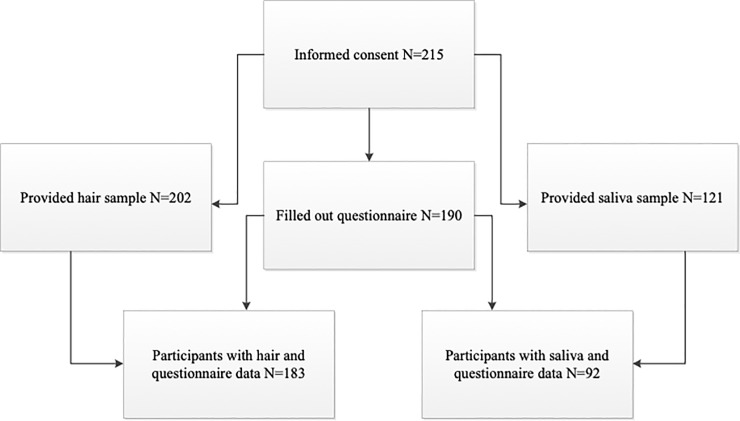
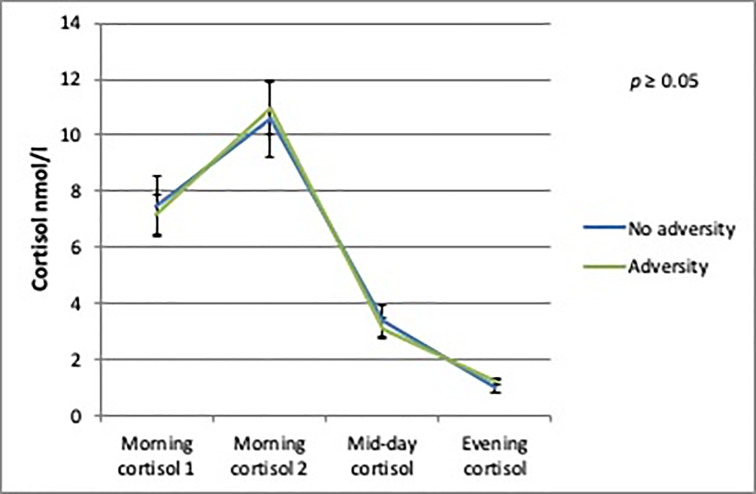
A total of 215 Dutch adolescents participated in the study and filled out the 27-item Adverse Life Events Questionnaire for the assessment of childhood adversity, which was split up in separate scores for person-related and environment-related events. Cortisol and DHEA concentrations and cortisol/DHEA ratio were determined in proximal 3 cm long hair segments. Additionally, saliva samples were collected immediately and 30 minutes after waking up, at noon and at 8 pm. Multiple linear regression analyses were used to test associations between childhood adversity and cortisol and DHEA concentrations, for boys and girls separately, with age, BMI and pubertal development as covariates.
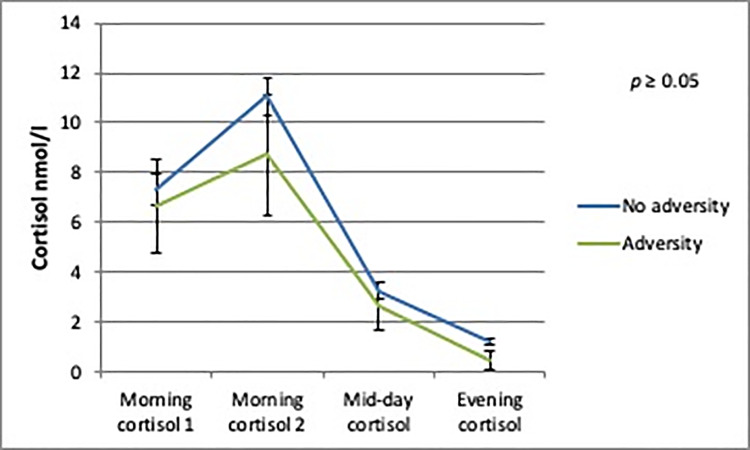
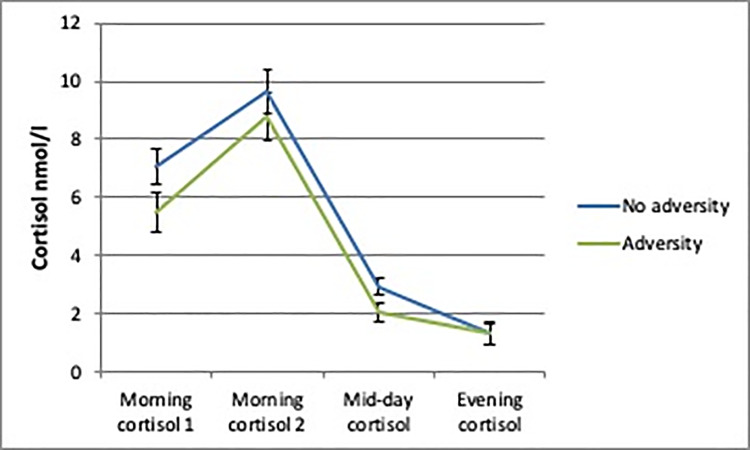
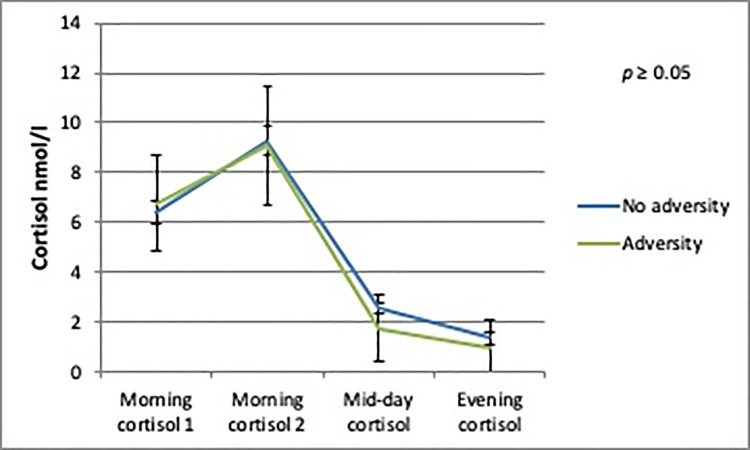
Data were available for 74 boys and 116 girls with a mean age of 15.7 years (SD = 2.0). Higher levels of person-related childhood adversity were associated with higher hair DHEA levels in girls and with higher hair cortisol levels in boys. A trend towards a significant association was observed between higher levels of environment-related childhood adversity and higher DHEA levels in boys. Neither person- nor environment related childhood adversity was associated with cortisol/DHEA ratio. A trend was observed for environment-related childhood adversity and lower daily cortisol output in boys.
We found differential associations between childhood adversity and cortisol and DHEA levels in girls and boys, for respectively person-related and environment-related childhood adversity. Our findings suggest that different types of childhood adversity are not only linked to levels of cortisol, but also to DHEA concentrations, in a sex-specific manner, with possible future implications for mental health.
已证实人与环境相关的儿童期逆境事件会分别增加男孩和女孩在以后生活中出现心理健康受损的风险。下丘脑-垂体-肾上腺(HPA)轴功能的改变被认为是这种关联的关键机制。皮质醇和脱氢表雄酮(DHEA)都是 HPA 轴的输出激素。DHEA 可能对长期暴露于升高的皮质醇水平具有保护作用,但在与儿童期逆境的关系方面研究甚少。
我们旨在检验人与环境相关的儿童期逆境与青少年男孩和女孩的皮质醇、DHEA 水平以及皮质醇/DHEA 比值之间的关系。
共有 215 名荷兰青少年参与了这项研究,他们填写了 27 项生活不良事件问卷,以评估儿童期逆境,其中包括人与环境相关事件的单独得分。皮质醇和 DHEA 浓度以及皮质醇/DHEA 比值是通过近端 3 厘米长的头发段来确定的。此外,还在醒来后即刻、中午和晚上 8 点采集唾液样本。使用多元线性回归分析分别检验男孩和女孩中,童年逆境与皮质醇和 DHEA 浓度之间的关系,以年龄、BMI 和青春期发育为协变量。
数据可用于 74 名男孩和 116 名女孩,平均年龄为 15.7 岁(SD=2.0)。较高水平的人与环境相关的儿童期逆境与女孩的头发 DHEA 水平较高以及男孩的头发皮质醇水平较高相关。观察到环境相关的儿童期逆境与男孩的 DHEA 水平较高之间存在显著关联的趋势。人与环境相关的儿童期逆境均与皮质醇/DHEA 比值无关。观察到环境相关的儿童期逆境与男孩的皮质醇日输出量降低有关。
我们发现,女孩和男孩的儿童期逆境与皮质醇和 DHEA 水平之间存在差异关联,分别与人与环境相关的儿童期逆境有关。我们的研究结果表明,不同类型的儿童期逆境不仅与皮质醇水平有关,而且还与 DHEA 浓度有关,且具有性别特异性,这可能对心理健康有未来的影响。