Division of Oncology, Center for Childhood Cancer Research, Children's Hospital of Philadelphia, Philadelphia, Pennsylvania 19104, USA.
Department of Cell and Developmental Biology, Perelman School of Medicine, University of Pennsylvania, Philadelphia, Pennsylvania 19104, USA.
Genes Dev. 2020 Jul 1;34(13-14):950-964. doi: 10.1101/gad.338202.120. Epub 2020 Jun 4.
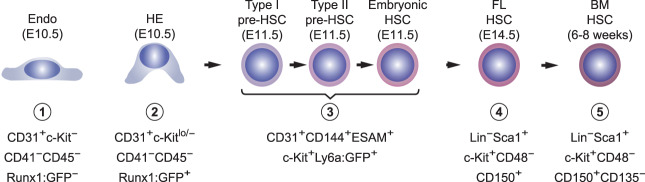
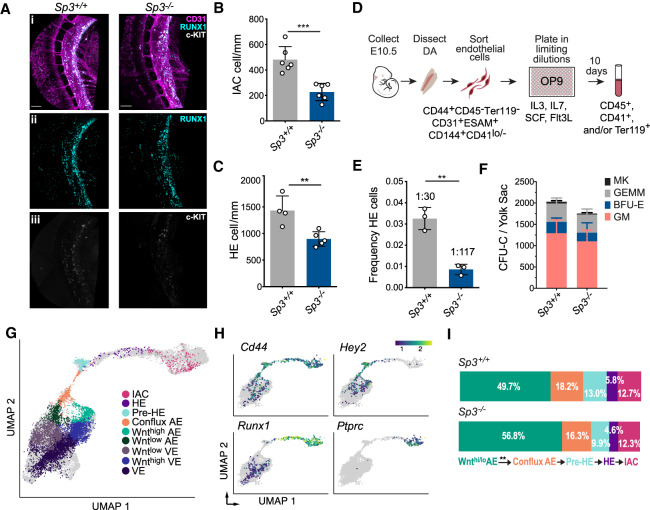
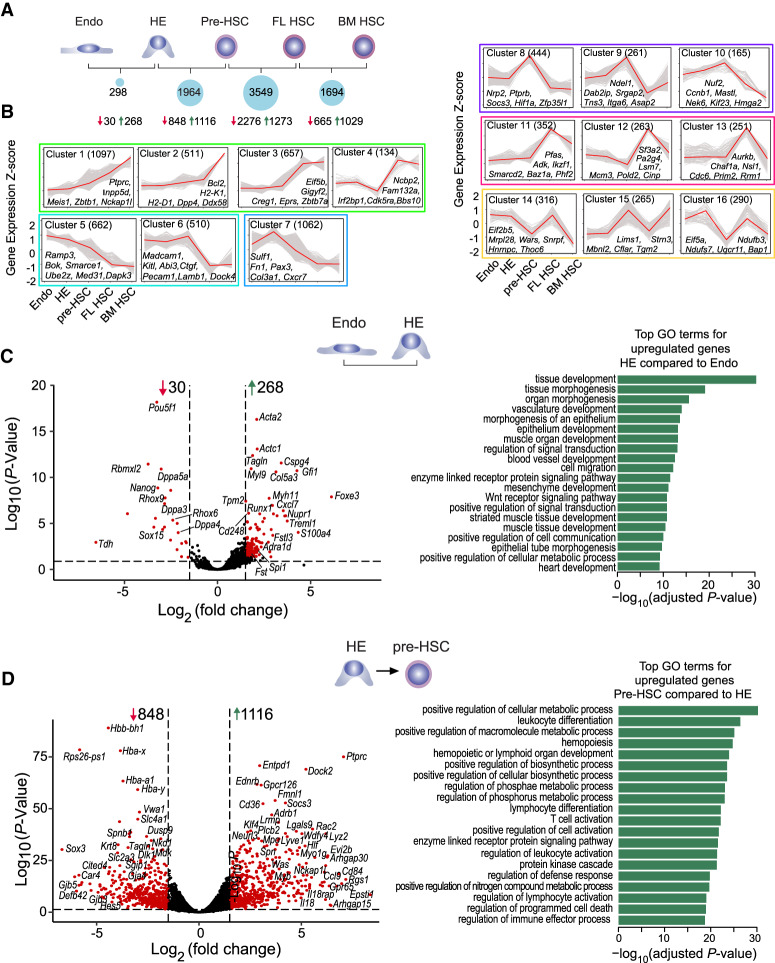
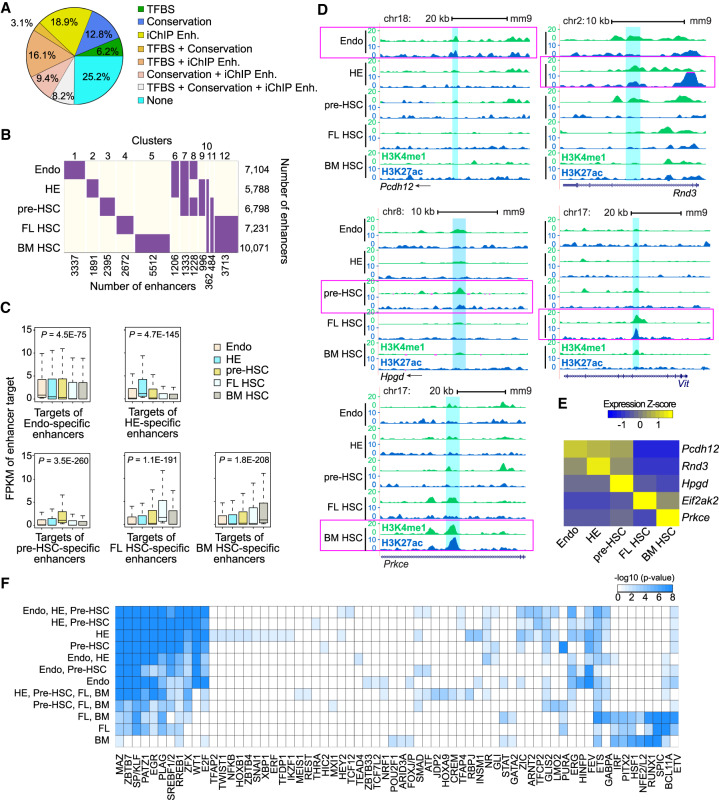
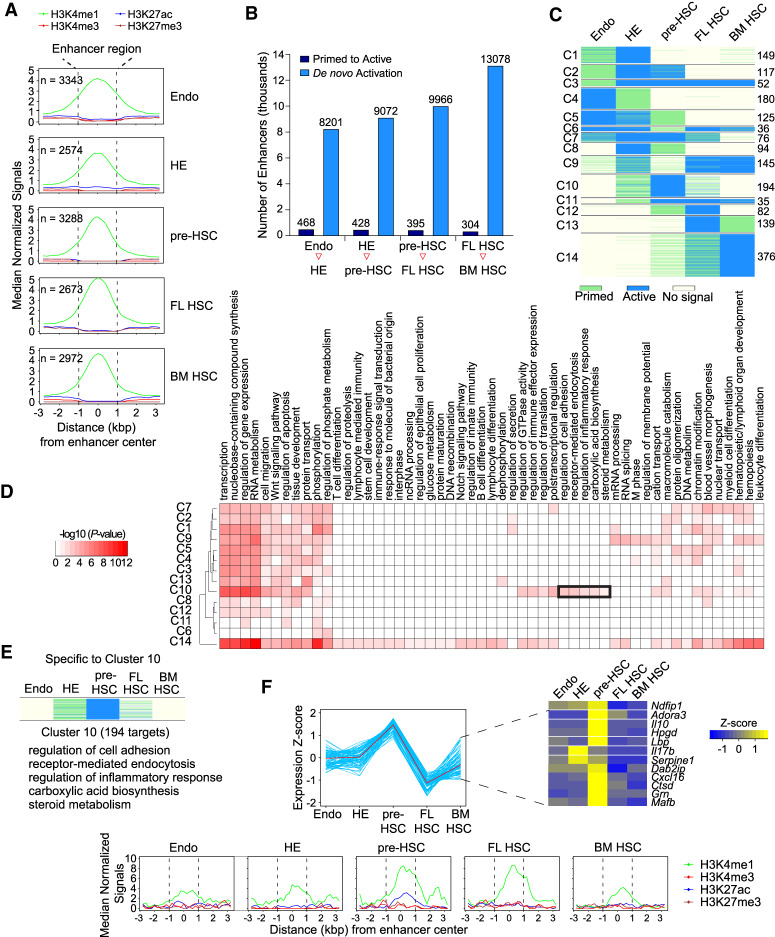
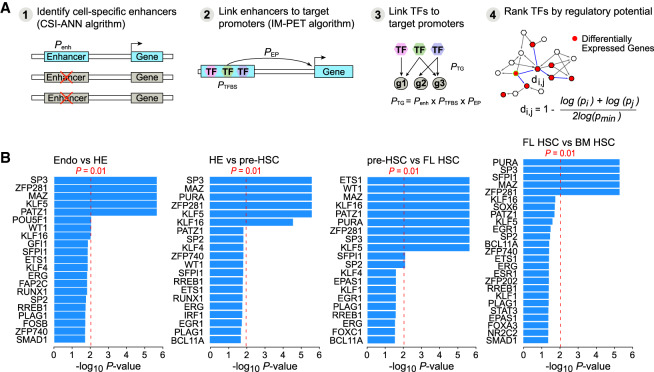
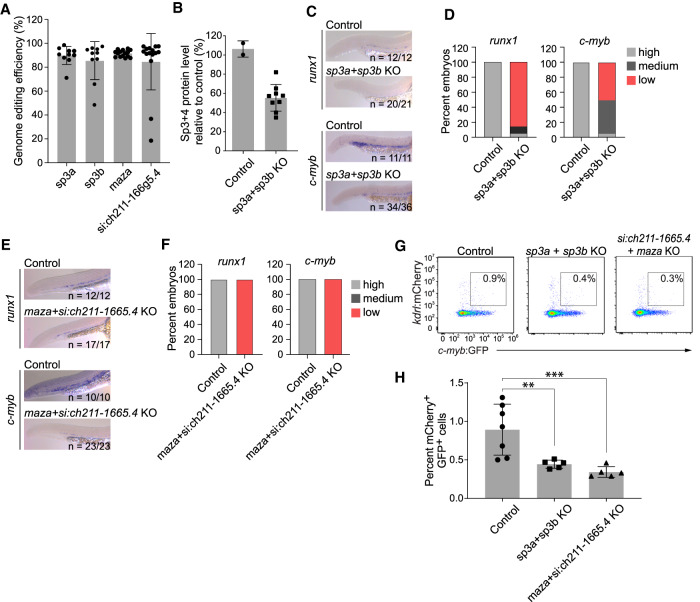
Hematopoietic stem cell (HSC) ontogeny is accompanied by dynamic changes in gene regulatory networks. We performed RNA-seq and histone mark ChIP-seq to define the transcriptomes and epigenomes of cells representing key developmental stages of HSC ontogeny in mice. The five populations analyzed were embryonic day 10.5 (E10.5) endothelium and hemogenic endothelium from the major arteries, an enriched population of prehematopoietic stem cells (pre-HSCs), fetal liver HSCs, and adult bone marrow HSCs. Using epigenetic signatures, we identified enhancers for each developmental stage. Only 12% of enhancers are primed, and 78% are active, suggesting the vast majority of enhancers are established de novo without prior priming in earlier stages. We constructed developmental stage-specific transcriptional regulatory networks by linking enhancers and predicted bound transcription factors to their target promoters using a novel computational algorithm, target inference via physical connection (TIPC). TIPC predicted known transcriptional regulators for the endothelial-to-hematopoietic transition, validating our overall approach, and identified putative novel transcription factors, including the broadly expressed transcription factors SP3 and MAZ. Finally, we validated a role for SP3 and MAZ in the formation of hemogenic endothelium. Our data and computational analyses provide a useful resource for uncovering regulators of HSC formation.
造血干细胞(HSC)发生伴随着基因调控网络的动态变化。我们进行了 RNA-seq 和组蛋白标记 ChIP-seq,以定义代表小鼠 HSC 发生关键发育阶段的细胞的转录组和表观基因组。分析的五个群体是胚胎第 10.5 天(E10.5)内皮细胞和主要动脉的造血内皮细胞、富含造血前体细胞(pre-HSCs)的群体、胎肝 HSCs 和成年骨髓 HSCs。使用表观遗传特征,我们为每个发育阶段鉴定了增强子。只有 12%的增强子被启动,78%是活跃的,这表明绝大多数增强子是在早期阶段没有预先启动的情况下从头建立的。我们通过将增强子与预测的结合转录因子连接起来,使用一种新的计算算法,通过物理连接进行目标推断(TIPC),构建了发育阶段特异性转录调控网络。TIPC 预测了内皮细胞向造血细胞过渡的已知转录调节剂,验证了我们的整体方法,并鉴定了潜在的新转录因子,包括广泛表达的转录因子 SP3 和 MAZ。最后,我们验证了 SP3 和 MAZ 在形成造血内皮细胞中的作用。我们的数据和计算分析为揭示 HSC 形成的调控因子提供了有用的资源。