Key Laboratory for Regenerative Medicine of Ministry of Education, Institute of Hematology, School of Medicine, Jinan University, Guangzhou, Guangdong, 510632, China.
State Key Laboratory of Experimental Hematology, Fifth Medical Center of Chinese PLA General Hospital, Beijing, 100071, China.
Cell Res. 2020 May;30(5):376-392. doi: 10.1038/s41422-020-0300-2. Epub 2020 Mar 20.
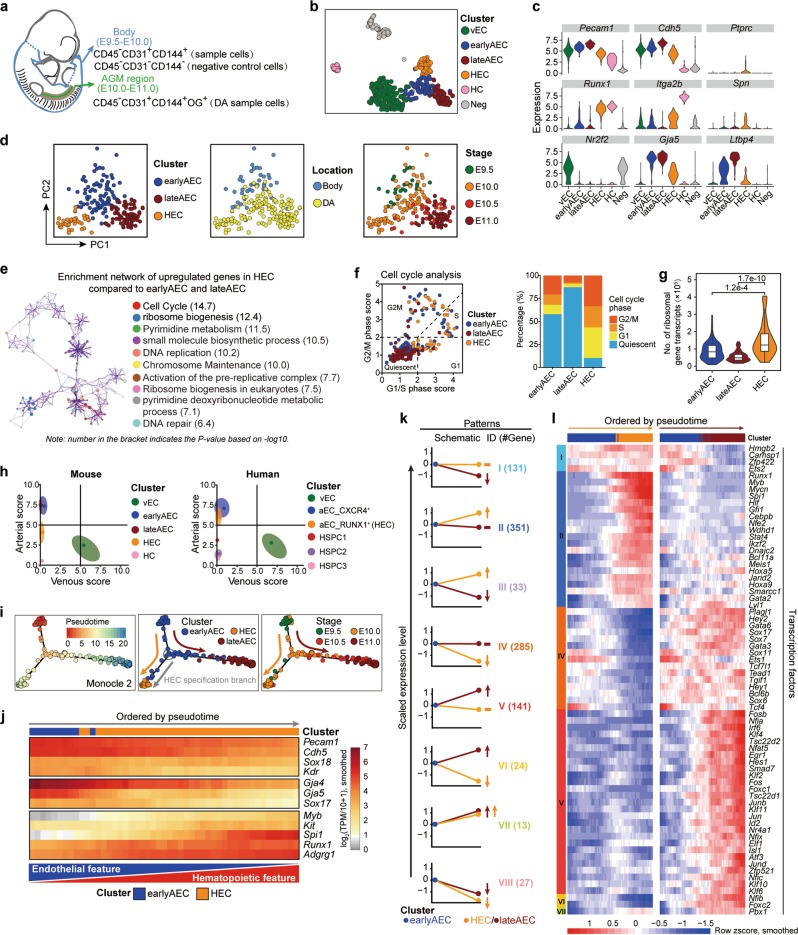
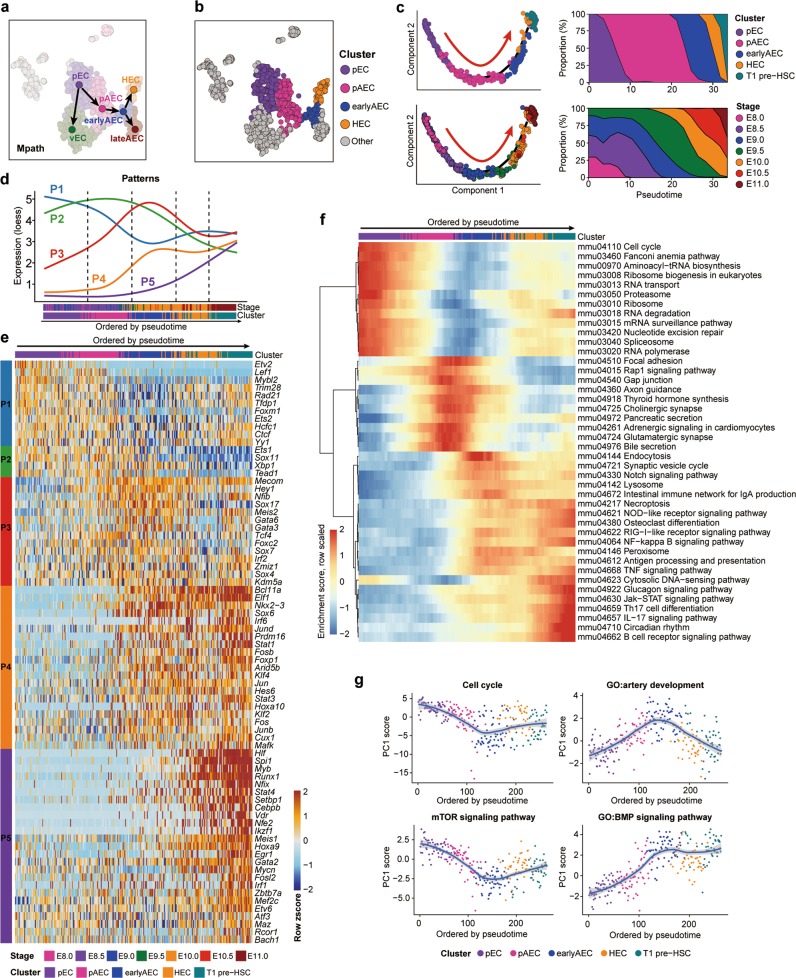
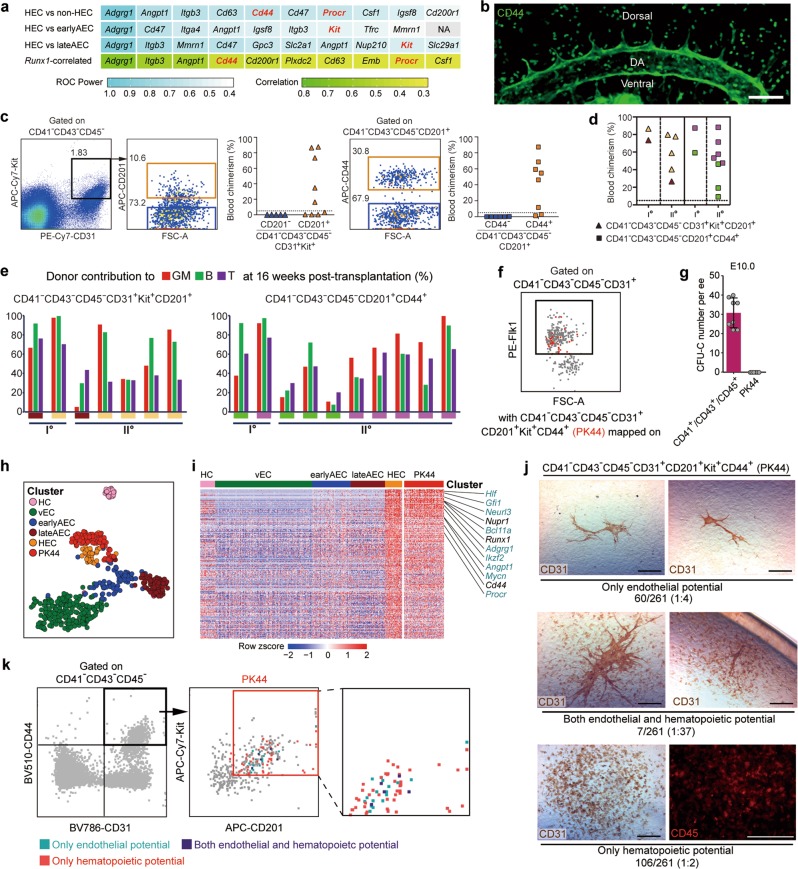
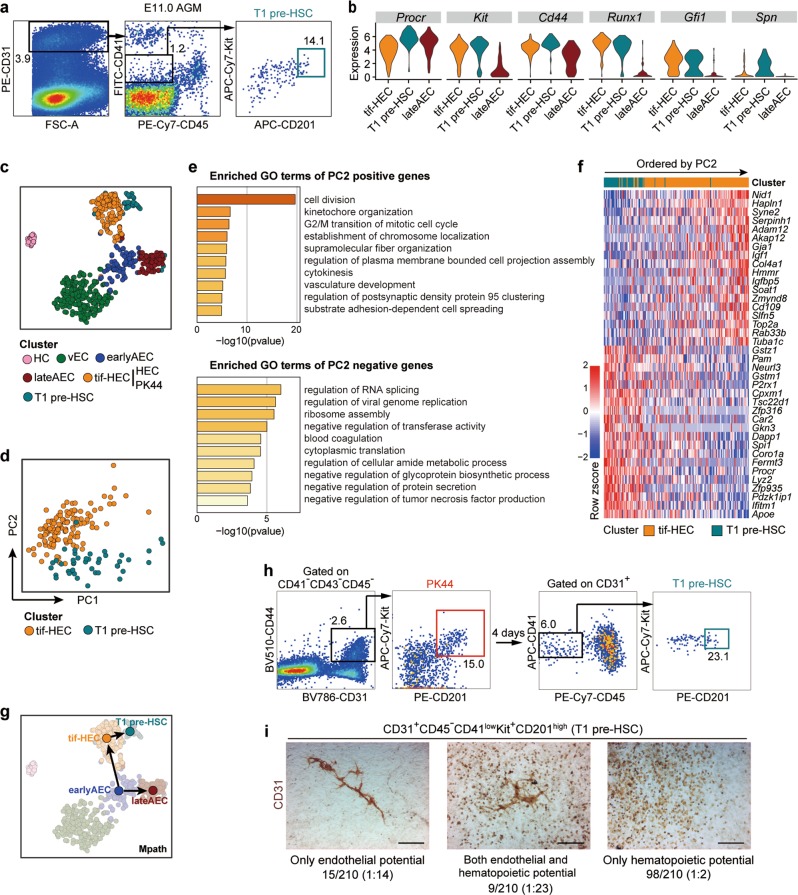
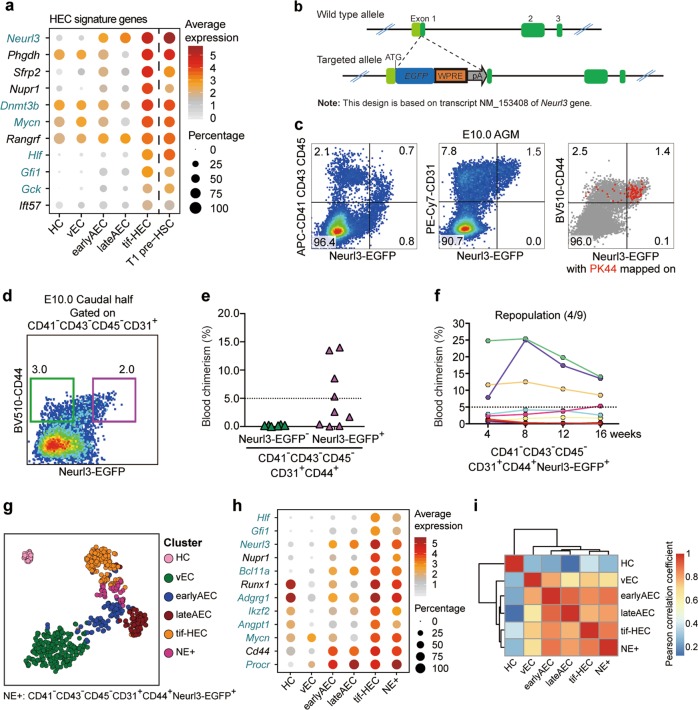
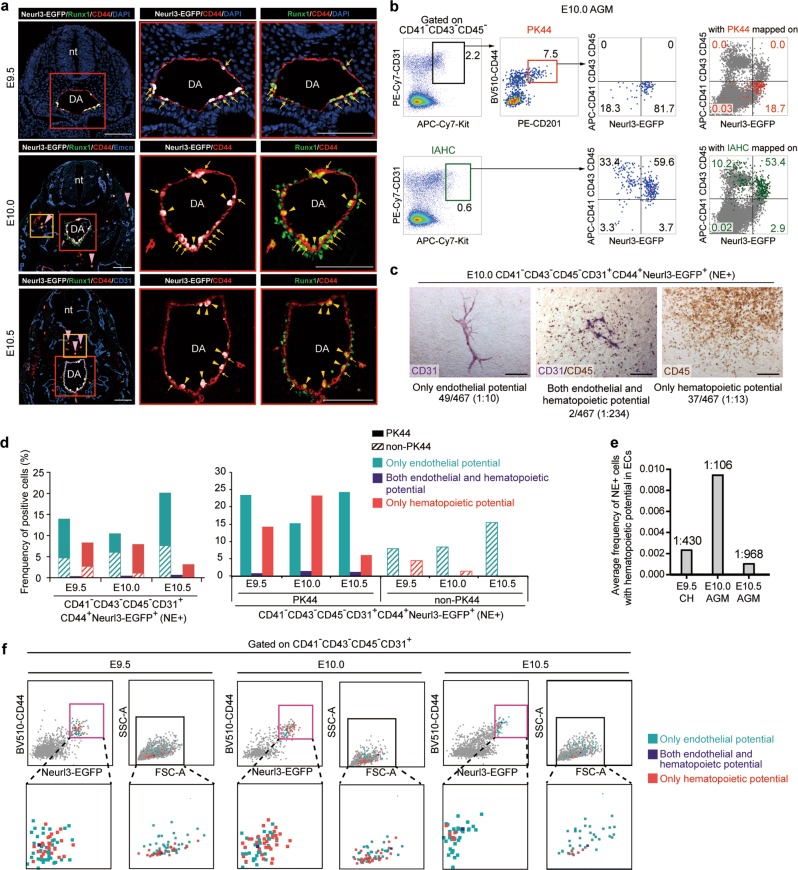
Hematopoietic stem cells (HSCs) in adults are believed to be born from hemogenic endothelial cells (HECs) in mid-gestational embryos. Due to the rare and transient nature, the HSC-competent HECs have never been stringently identified and accurately captured, let alone their genuine vascular precursors. Here, we first used high-precision single-cell transcriptomics to unbiasedly examine the relevant EC populations at continuous developmental stages with intervals of 0.5 days from embryonic day (E) 9.5 to E11.0. As a consequence, we transcriptomically identified two molecularly different arterial EC populations and putative HSC-primed HECs, whose number peaked at E10.0 and sharply decreased thereafter, in the dorsal aorta of the aorta-gonad-mesonephros (AGM) region. Combining computational prediction and in vivo functional validation, we precisely captured HSC-competent HECs by the newly constructed Neurl3-EGFP reporter mouse model, and realized the enrichment further by a combination of surface markers (ProcrKitCD44, PK44). Surprisingly, the endothelial-hematopoietic dual potential was rarely but reliably witnessed in the cultures of single HECs. Noteworthy, primitive vascular ECs from E8.0 experienced two-step fate choices to become HSC-primed HECs, namely an initial arterial fate choice followed by a hemogenic fate conversion. This finding resolves several previously observed contradictions. Taken together, comprehensive understanding of endothelial evolutions and molecular programs underlying HSC-primed HEC specification in vivo will facilitate future investigations directing HSC production in vitro.
成体造血干细胞(HSCs)被认为起源于中胚层胚胎中期的造血内皮细胞(HECs)。由于其稀有性和瞬时性,具有 HSC 潜能的 HEC 从未被严格鉴定和准确捕获,更不用说其真正的血管前体了。在这里,我们首次使用高精度单细胞转录组学,在胚胎第 9.5 天(E)至 E11.0 期间,以 0.5 天为间隔,对连续发育阶段的相关 EC 群体进行了无偏分析。结果,我们在背主动脉中从转录组上鉴定出了两个分子上不同的动脉 EC 群体和潜在的 HSC 前体细胞 HEC,其数量在 E10.0 时达到峰值,此后急剧下降。通过计算预测和体内功能验证相结合,我们使用新构建的 Neurl3-EGFP 报告小鼠模型精确地捕获了具有 HSC 潜能的 HEC,并通过表面标记物(ProcrKitCD44、PK44)的组合进一步进行了富集。令人惊讶的是,在单个 HEC 的培养物中很少但可靠地观察到了内皮-造血双潜能。值得注意的是,来自 E8.0 的原始血管 EC 经历了两步命运选择,成为 HSC 前体细胞 HEC,即初始动脉命运选择,随后是造血命运转换。这一发现解决了几个以前观察到的矛盾。总之,对体内 HSC 前体细胞 HEC 鉴定的内皮进化和分子程序的全面理解将有助于未来在体外指导 HSC 产生的研究。