Zhao Mengmeng, Wang Menglong, Zhang Jishou, Gu Jian, Zhang Pingan, Xu Yao, Ye Jing, Wang Zhen, Ye Di, Pan Wei, Shen Bo, He Hua, Liu Mingxiao, Liu Menglin, Luo Zhen, Li Dan, Liu Jianfang, Wan Jun
Department of Cardiology, Renmin Hospital of Wuhan University, Wuhan, China.
Cardiovascular Research Institute, Wuhan University, Wuhan, China.
Aging (Albany NY). 2020 Jun 4;12(11):10070-10086. doi: 10.18632/aging.103298.
Information about the clinical characteristics and mortality of patients with coronavirus disease 2019 at different ages is limited.
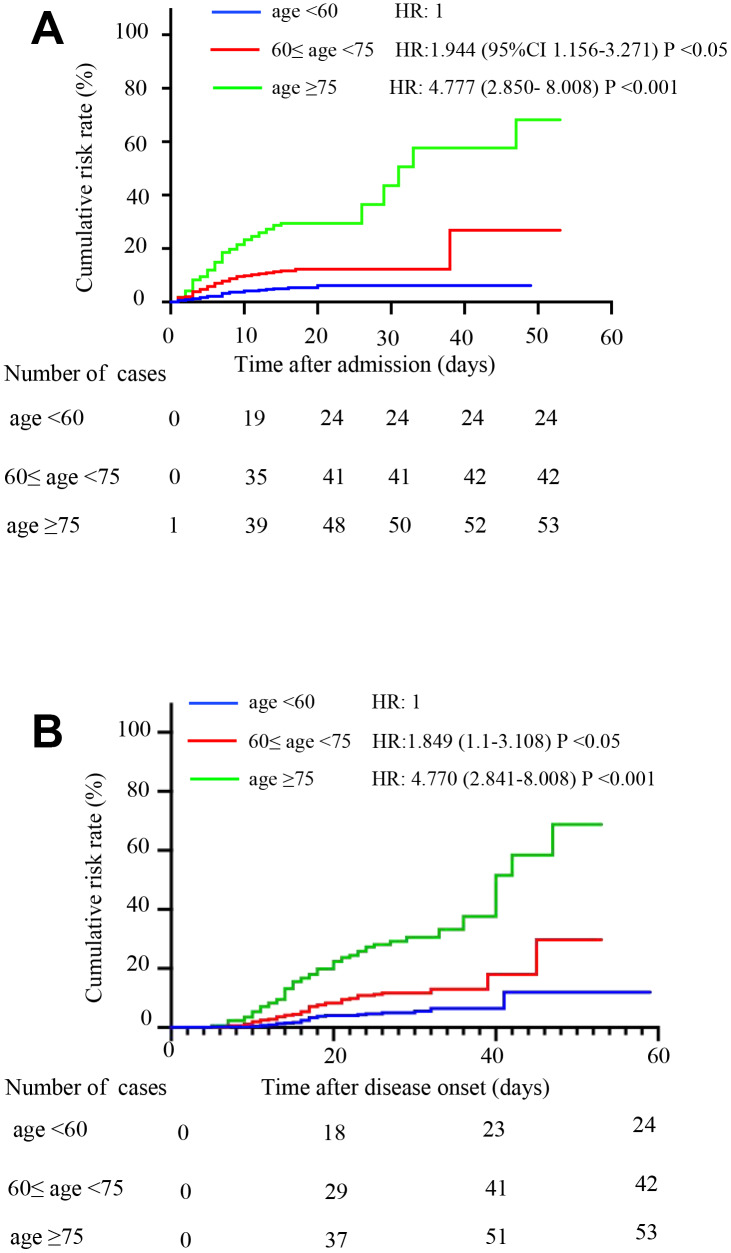
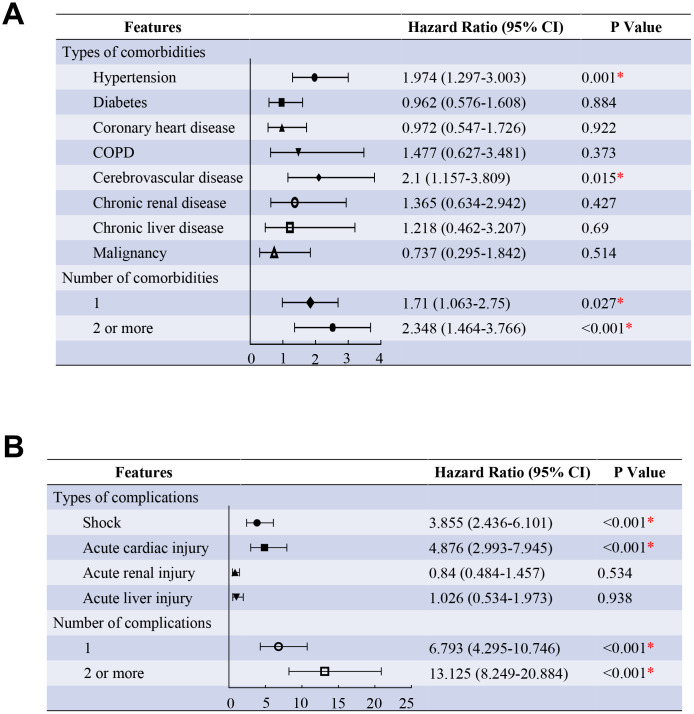
The older group had more patients with dyspnea and fewer patients with fever and muscle pain. Older patients had more underlying diseases, secondary infection, myocardial injury, renal dysfunction, coagulation dysfunction, and immune dysfunction on admission. More older patients received immunoglobulin therapy and mechanical ventilation. The proportions of patients with multiple organ injuries, critically ill patients and death increased significantly with age. The older groups had higher cumulative death risk than the younger group. Hypertension, cerebrovascular disease, comorbidities, acute cardiac injury, shock and complications are independent predictors of death.
The symptoms of the elderly patients were more atypical, with more comorbidities, secondary infection, organ injuries, immune dysfunction and a higher risk of critical illness. Older age was an important risk factor for mortality.
1000 patients diagnosed with coronavirus disease 2019 from January 1, 2020 to February 14, 2020 were enrolled. According to age, patients were divided into group 1 (<60 years old), group 2 (60-74 years old) and group 3 (≥75 years old). The clinical symptoms, first laboratory results, CT findings, organ injuries, disease severity and mortality were analyzed.
关于2019冠状病毒病不同年龄段患者的临床特征和死亡率的信息有限。
老年组呼吸困难患者更多,发热和肌肉疼痛患者更少。老年患者入院时合并基础疾病、继发感染、心肌损伤、肾功能不全、凝血功能障碍及免疫功能障碍更多。更多老年患者接受了免疫球蛋白治疗和机械通气。多器官损伤患者、危重症患者及死亡患者的比例随年龄显著增加。老年组累积死亡风险高于年轻组。高血压、脑血管疾病、合并症、急性心脏损伤、休克及并发症是死亡的独立预测因素。
老年患者症状更不典型,合并基础疾病、继发感染、器官损伤、免疫功能障碍更多,危重症风险更高。高龄是死亡的重要危险因素。
纳入2020年1月1日至2020年2月14日确诊的1000例2019冠状病毒病患者。根据年龄,患者分为1组(<60岁)、2组(60-74岁)和3组(≥75岁)。分析临床症状、首次实验室检查结果、CT表现、器官损伤、疾病严重程度及死亡率。