Department of Ophthalmology and Visual Sciences, University of Michigan, 1000 Wall St., Ann Arbor, MI, 48105, US.
University of Michigan, Ann Arbor, MI, US.
Cell Death Dis. 2020 Jun 4;11(6):422. doi: 10.1038/s41419-020-2638-2.
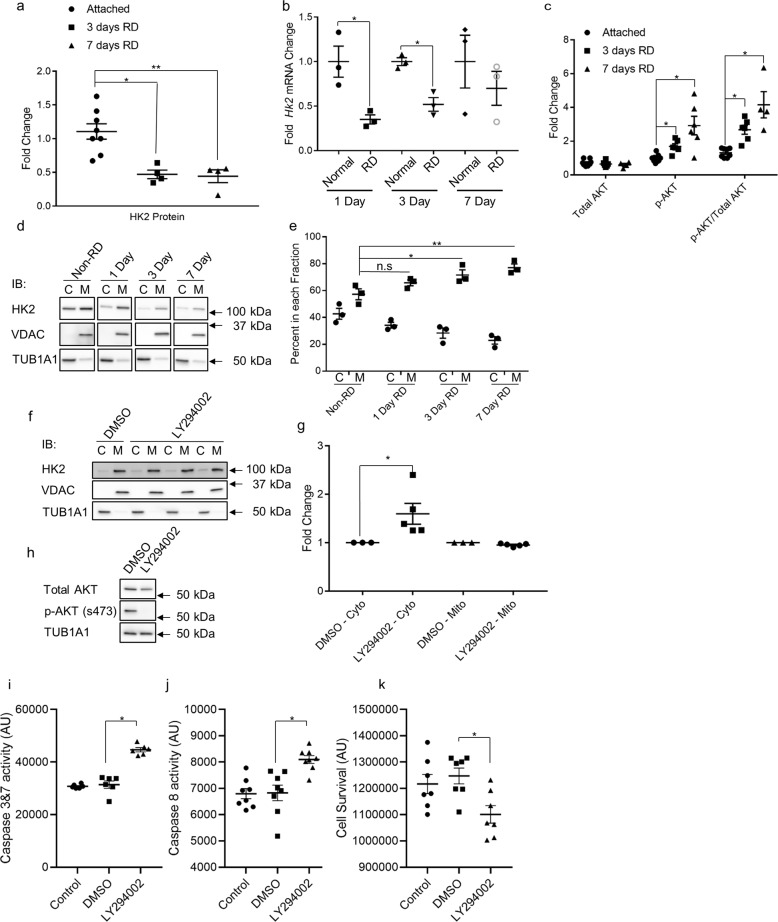
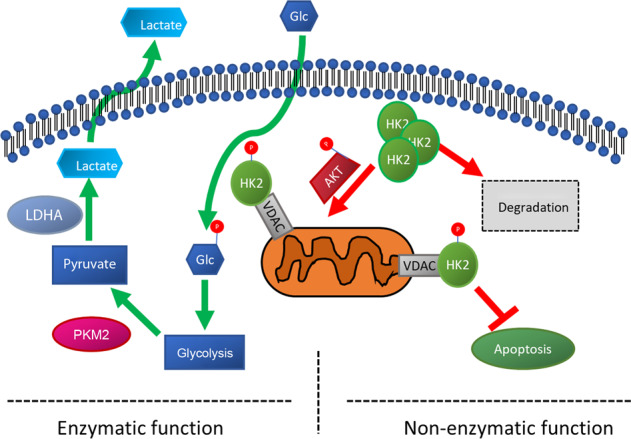
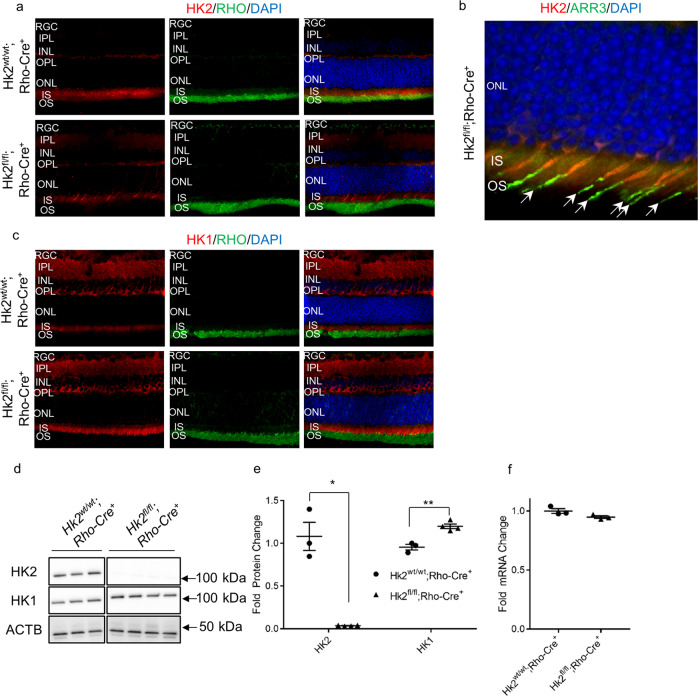
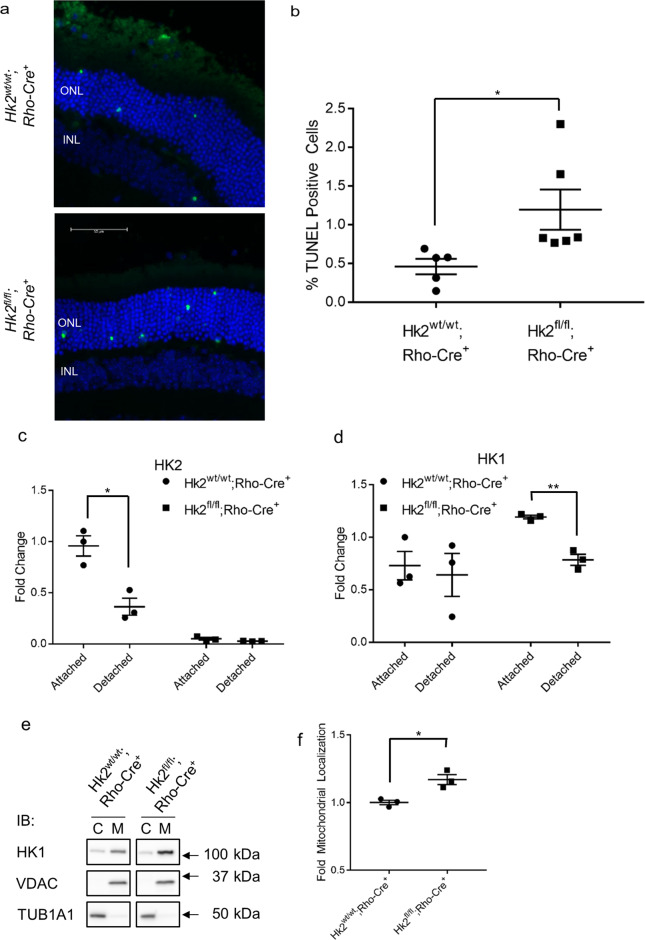
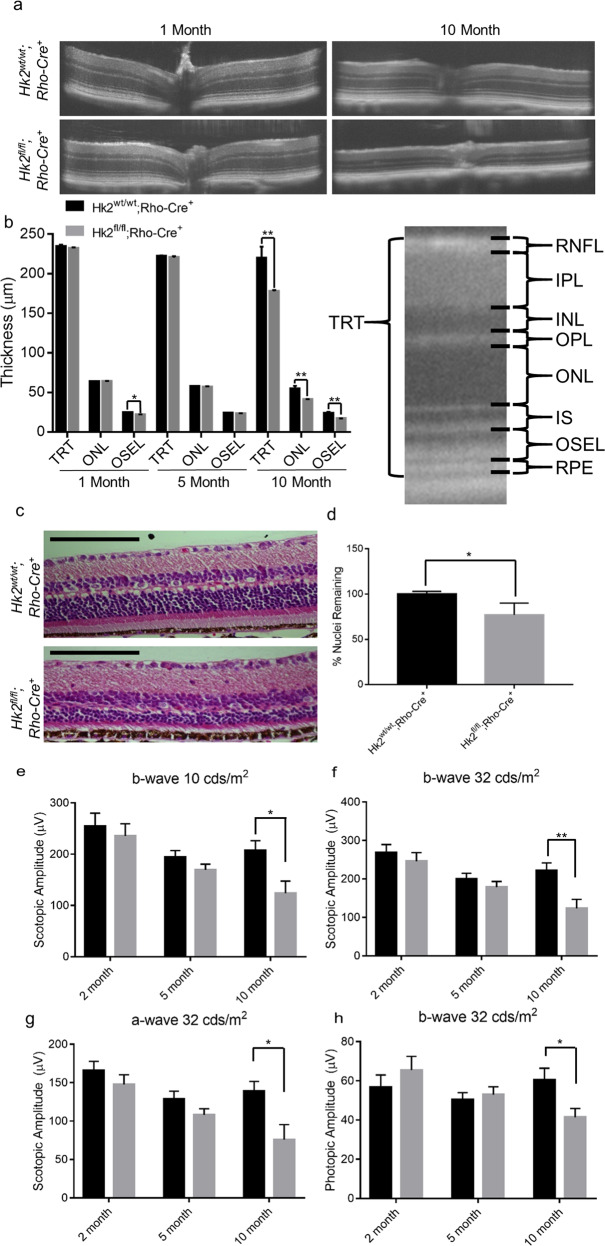
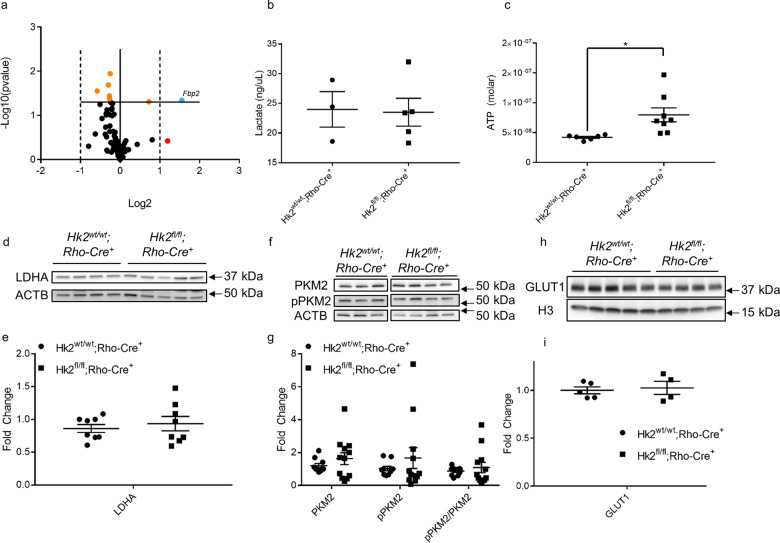
Photoreceptor death is the ultimate cause of vision loss in many retinal degenerative conditions. Identifying novel therapeutic avenues for prolonging photoreceptor health and function has the potential to improve vision and quality of life for patients suffering from degenerative retinal disorders. Photoreceptors are metabolically unique among other neurons in that they process the majority of their glucose via aerobic glycolysis. One of the main regulators of aerobic glycolysis is hexokinase 2 (HK2). Beyond its enzymatic function of phosphorylating glucose to glucose-6-phosphate, HK2 has additional non-enzymatic roles, including the regulation of apoptotic signaling via AKT signaling. Determining the role of HK2 in photoreceptor homeostasis may identify novel signaling pathways that can be targeted with neuroprotective agents to boost photoreceptor survival during metabolic stress. Here we show that following experimental retinal detachment, p-AKT is upregulated and HK2 translocates to mitochondria. Inhibition of AKT phosphorylation in 661W photoreceptor-like cells results in translocation of mitochondrial HK2 to the cytoplasm, increased caspase activity, and decreased cell viability. Rod-photoreceptors lacking HK2 upregulate HK1 and appear to develop normally. Interestingly, we found that HK2-deficient photoreceptors are more susceptible to acute nutrient deprivation in the experimental retinal detachment model. Additionally, HK2 appears to be important for preserving photoreceptors during aging. We show that retinal glucose metabolism is largely unchanged after HK2 deletion, suggesting that the non-enzymatic role of HK2 is important for maintaining photoreceptor health. These results suggest that HK2 expression is critical for preserving photoreceptors during acute nutrient stress and aging. More specifically, p-AKT mediated translocation of HK2 to the mitochondrial surface may be critical for protecting photoreceptors from acute and chronic stress.
光感受器的死亡是许多视网膜退行性疾病导致视力丧失的最终原因。寻找新的治疗方法来延长光感受器的健康和功能,有可能改善患有退行性视网膜疾病的患者的视力和生活质量。光感受器在代谢上与其他神经元不同,因为它们通过有氧糖酵解处理大部分葡萄糖。有氧糖酵解的主要调节因子之一是己糖激酶 2(HK2)。除了将葡萄糖磷酸化为葡萄糖-6-磷酸的酶功能外,HK2 还具有其他非酶功能,包括通过 AKT 信号调节细胞凋亡信号。确定 HK2 在光感受器稳态中的作用可能会确定新的信号通路,这些通路可以通过神经保护剂来靶向,以在代谢应激期间促进光感受器的存活。在这里,我们表明在实验性视网膜脱离后,p-AKT 上调并且 HK2 易位到线粒体。在 661W 光感受器样细胞中抑制 AKT 磷酸化会导致线粒体 HK2 易位到细胞质,增加半胱氨酸天冬氨酸蛋白酶活性并降低细胞活力。缺乏 HK2 的杆状光感受器上调 HK1,并且似乎正常发育。有趣的是,我们发现 HK2 缺陷型光感受器对实验性视网膜脱离模型中的急性营养剥夺更敏感。此外,HK2 似乎对于在衰老过程中保存光感受器很重要。我们表明,在 HK2 缺失后,视网膜葡萄糖代谢基本保持不变,这表明 HK2 的非酶作用对于维持光感受器健康很重要。这些结果表明,在急性营养胁迫和衰老过程中,HK2 的表达对于保护光感受器至关重要。更具体地说,p-AKT 介导的 HK2 易位到线粒体表面可能对于保护光感受器免受急性和慢性应激至关重要。