Department of Radiology, College of Medicine, The Catholic University of Korea, Seoul, 06591, Korea.
Department of Psychology, Yonsei University, Seoul, 03722, Korea.
Sci Rep. 2020 Jun 4;10(1):9110. doi: 10.1038/s41598-020-66058-x.
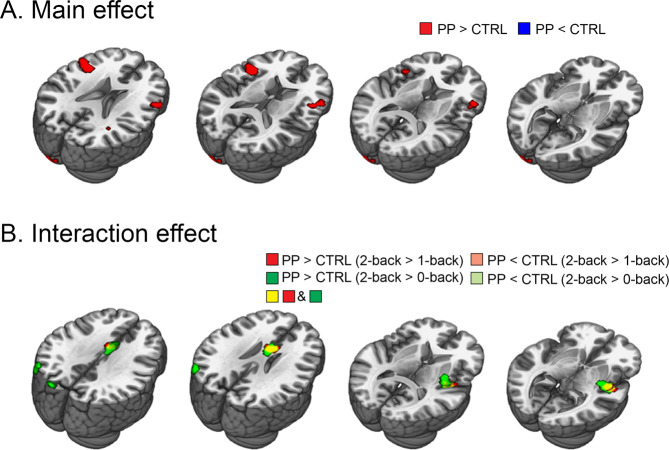
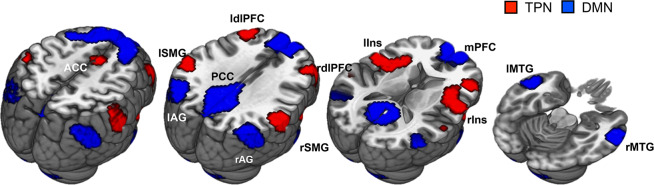
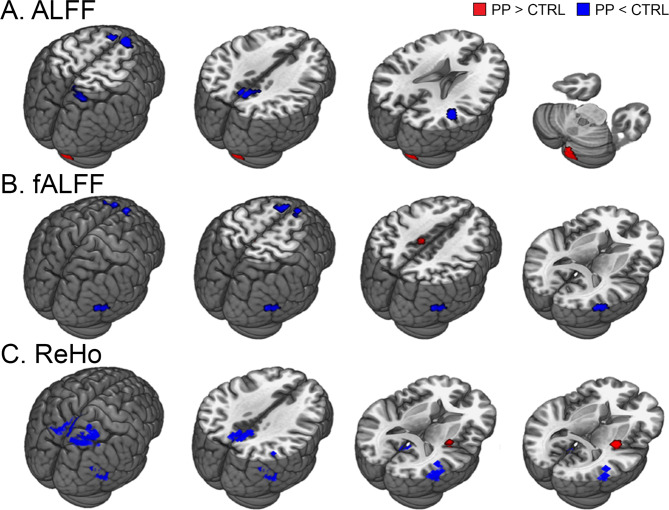
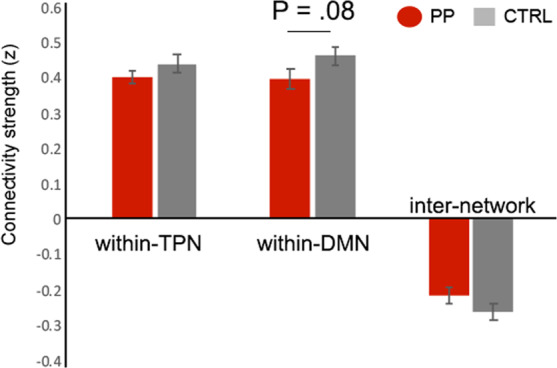
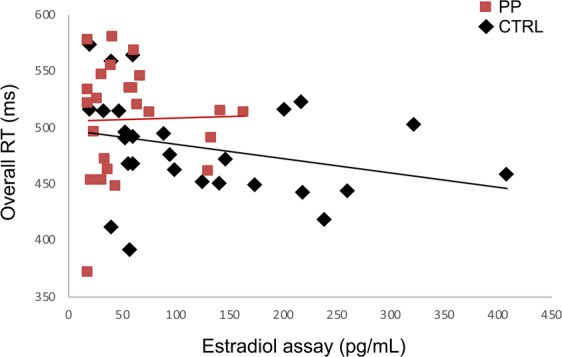
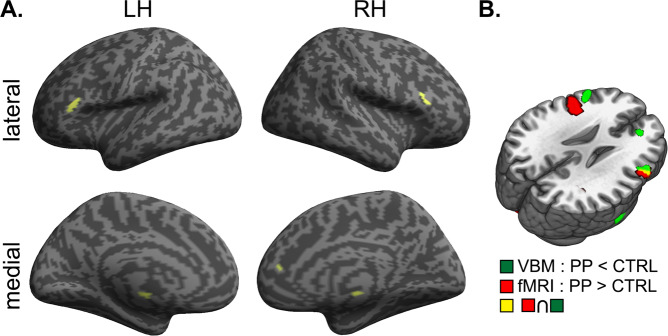
Postpartum working memory decline has been investigated mostly with neuropsychological tests, but neural evidence is almost unknown. Here we investigated task-related neural alterations during working memory task (n-back) and intrinsic alterations during resting-state (rs) in postpartum women using functional MRI (fMRI). Behaviorally, postpartum women showed comparable working memory performances to the controls although there was a tendency of prolonged response time. fMRI analysis results showed hyper-activation in regions belong to the task positive network (TPN) during the task and hypo-rsfMRI values in the default mode network (DMN) regions during rest in postpartum women. Based on these results, we performed network connectivity analysis using nodes of the TPN and DMN. As a result, the DMN showed a tendency of decreased connectivity in postpartum women during the working memory process compared to the controls. Our results suggest that postpartum women might have functional alterations in the DMN, and that hyper-activation in the TPN during a task might be a compensatory mechanism to maintain working memory performance in postpartum women.
产后工作记忆衰退大多通过神经心理学测试进行研究,但神经学证据几乎未知。在这里,我们使用功能磁共振成像(fMRI)研究了产后女性在工作记忆任务(n-back)期间的与任务相关的神经变化和静息状态(rs)期间的固有变化。行为上,产后女性的工作记忆表现与对照组相当,尽管反应时间有延长的趋势。fMRI 分析结果表明,产后女性在任务期间属于任务正网络(TPN)的区域表现出过度激活,而在休息时默认模式网络(DMN)区域的 rsfMRI 值降低。基于这些结果,我们使用 TPN 和 DMN 的节点进行了网络连接分析。结果表明,与对照组相比,产后女性在工作记忆过程中 DMN 的连接性呈下降趋势。我们的研究结果表明,产后女性的 DMN 可能存在功能改变,而任务期间 TPN 的过度激活可能是维持产后女性工作记忆表现的一种补偿机制。