Zong Shaoqi, Tang Yufei, Li Wen, Han Susu, Shi Qi, Ruan Xiaofeng, Hou Fenggang
Department of Oncology, Shanghai Municipal Hospital of Traditional Chinese Medicine, Shanghai University of Traditional Chinese Medicine, Shanghai, China.
Graduate School of Shanghai University of Traditional Chinese Medicine, Shanghai, China.
Front Pharmacol. 2020 May 15;11:705. doi: 10.3389/fphar.2020.00705. eCollection 2020.
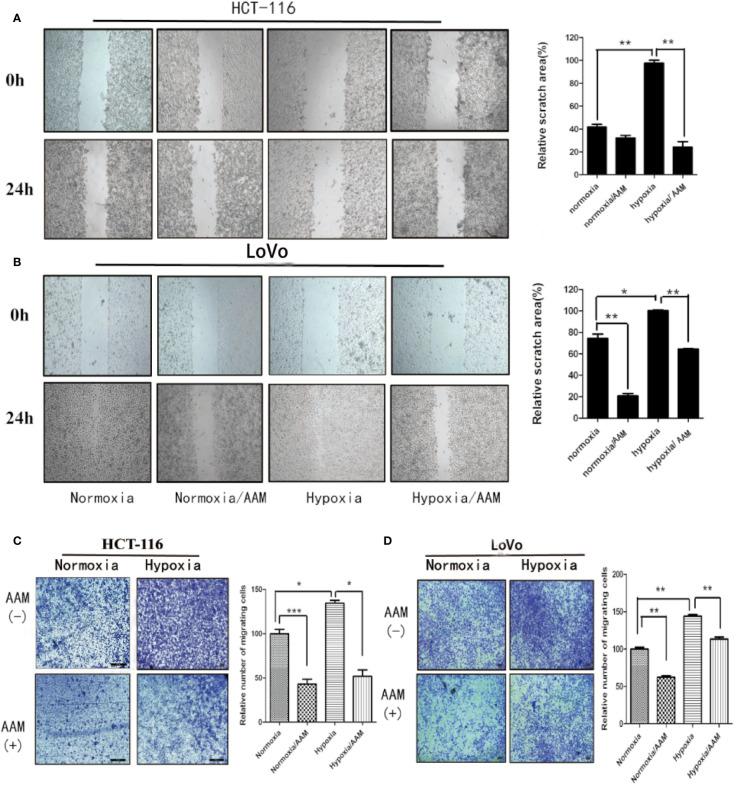
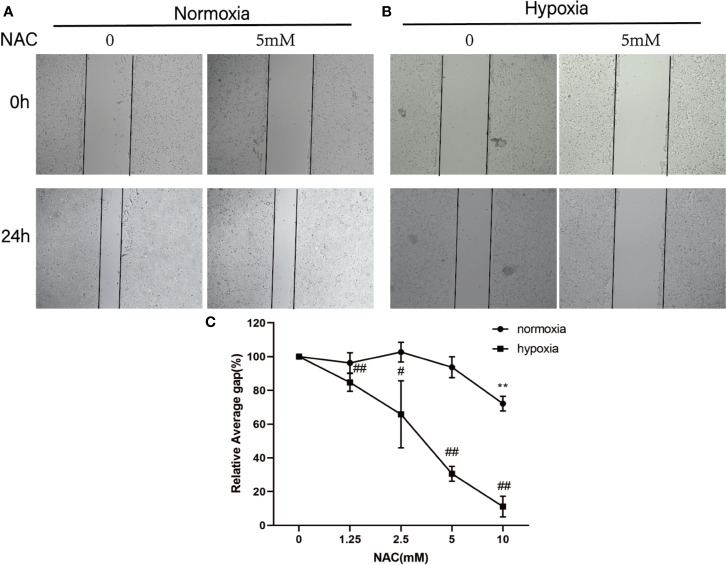
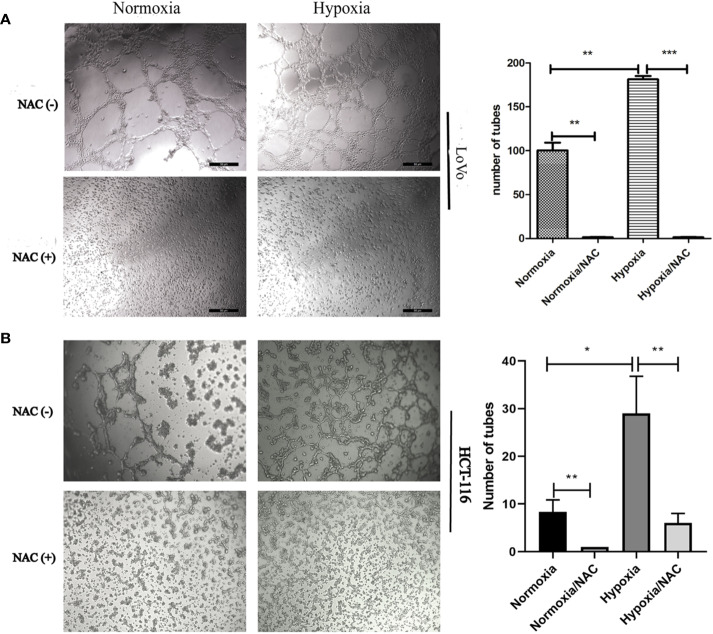
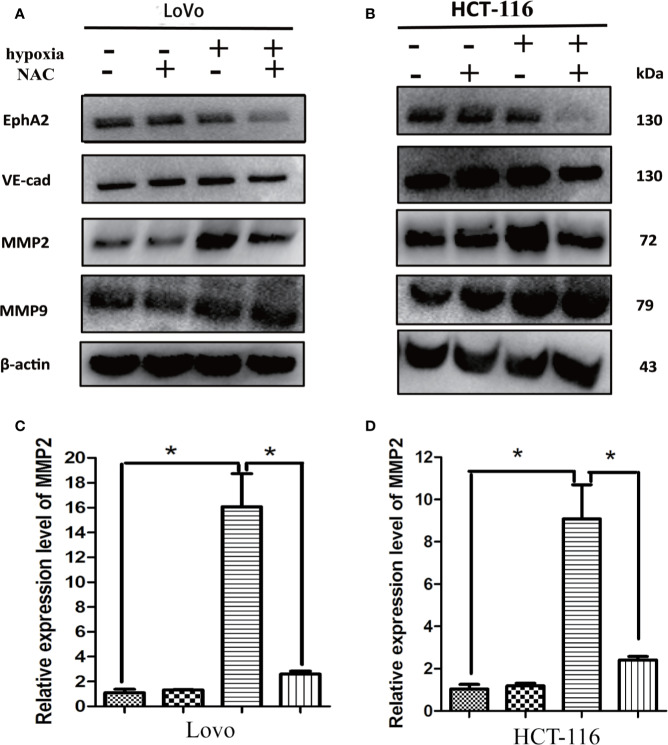
Various malignant tumors, including colorectal cancer, have the ability to form functional blood vessels for tumor growth and metastasis. Vasculogenic mimicry (VM) refers to the ability of highly invasive tumor cells to link each other to form vessels, which is associated with poor cancer prognosis. However, the antitumor VM agents are still lacking in the clinic. Astragalus Atractylodes mixture (AAM), a traditional Chinese medicine, has shown to inhibit VM formation; however the exact mechanism is not completely clarified. In this study, we found that HCT-116 and LoVo could form a VM network. Additionally, hypoxia increases the intracellular reactive oxygen species (ROS) level and accelerates migration, VM formation in colorectal cancer cells, while N-Acetylcysteine (NAC) could reverse these phenomena. Notably, further mechanical exploration confirmed that the matrix metalloprotease 2 (MMP2) induction is ROS dependent under hypoxic condition. On the basis, we found that AAM could effectively inhibit hypoxia-induced ROS generation, migration, VM formation as well as HIF-1 and MMP2 expression. , AAM significantly inhibits metastasis of colorectal cancer in murine lung-metastasis model. Taken together, these results verified that AAM effectively inhibits migration and VM formation by suppressing ROS/HIF-1/MMP2 pathway in colorectal cancer under hypoxic condition, suggesting AAM could serve as a therapeutic agent to inhibit VM formation in human colorectal cancer.
包括结直肠癌在内的各种恶性肿瘤都有能力形成功能性血管以促进肿瘤生长和转移。血管生成拟态(VM)是指高侵袭性肿瘤细胞相互连接形成血管的能力,这与癌症预后不良有关。然而,临床上仍缺乏抗肿瘤VM的药物。中药黄芪白术合剂(AAM)已显示出抑制VM形成的作用;然而,确切机制尚未完全阐明。在本研究中,我们发现HCT-116和LoVo细胞能够形成VM网络。此外,缺氧会增加细胞内活性氧(ROS)水平,并加速结直肠癌细胞的迁移和VM形成,而N-乙酰半胱氨酸(NAC)可以逆转这些现象。值得注意的是,进一步的机制探究证实,在缺氧条件下基质金属蛋白酶2(MMP2)的诱导是ROS依赖性的。在此基础上,我们发现AAM可以有效抑制缺氧诱导的ROS生成、迁移、VM形成以及HIF-1和MMP2的表达。此外,AAM在小鼠肺转移模型中显著抑制结直肠癌的转移。综上所述,这些结果证实AAM通过在缺氧条件下抑制结直肠癌中的ROS/HIF-1/MMP2通路有效抑制迁移和VM形成,表明AAM可作为一种治疗药物来抑制人类结直肠癌中的VM形成。