Juhász Laura, Moldován Krisztián, Herman Petra, Erdélyi Zoltán, Fábián István, Kalmár József, Cserháti Csaba
Department of Solid State Physics, University of Debrecen, Egyetem sqr. 1, H-4032 Debrecen, Hungary.
Doctoral School of Physics, University of Debrecen, Egyetem sqr. 1, H-4032 Debrecen, Hungary.
Nanomaterials (Basel). 2020 Jun 3;10(6):1107. doi: 10.3390/nano10061107.
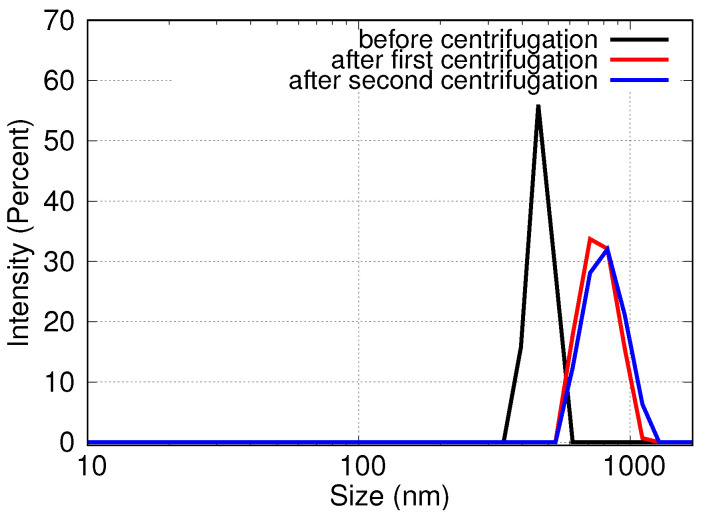
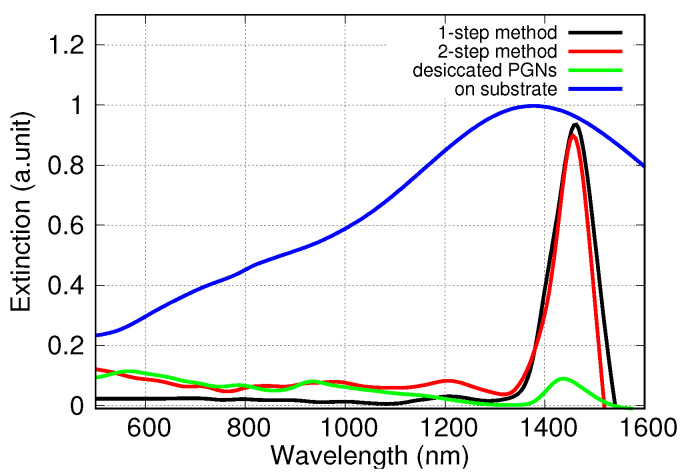
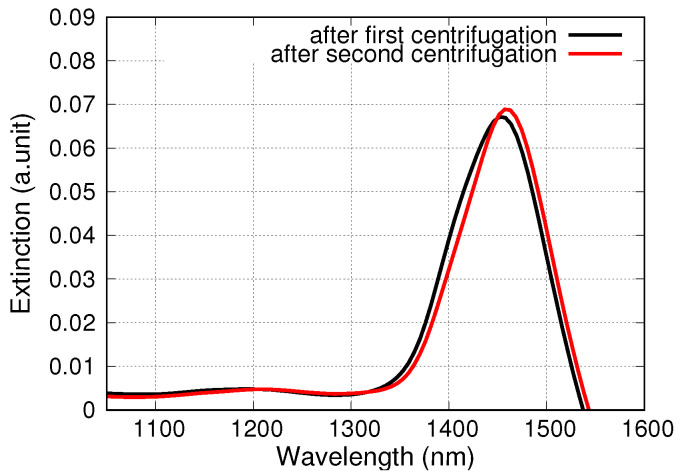
Porous gold nanoparticles (PGNs) are usually prepared in an immobilized form on a solid substrate, which is not practical in many applications. In this work, a simple method is reported for the preparation and stabilization of mesoporous gold particles of a few hundred nanometers in size in aqueous suspension. Nanoparticles of Ag-Au alloy were fabricated on CaF 2 and Si/SiO 2 substrates by the solid-state dewetting method. Silver was selectively dissolved (dealloyed), and the resulting porous gold nanoparticles were chemically removed from the substrate either in a concerted step with dealloying, or in a subsequent step. Nitric acid was used for the one-step dealloying and detachment of the particles from CaF 2 substrate. The consecutive use of HNO 3 and HF resulted in the dealloying and the subsequent detachment of the particles from Si/SiO 2 substrate. The PGNs were recovered from the aqueous suspensions by centrifugation. The Au content of the suspensions was monitored by using elemental analysis (ICP-OES), and recovery was optimized. The morphology and the optical characteristics of the support-free PGNs were analyzed by scanning electron microscopy (SEM), dynamic light scattering spectroscopy (DLS), and near-infrared spectrophotometry (NIR). The obtained PGNs are spherical disk-shaped with a mean particle size of 765 ± 149 nm. The suspended, support-free PGNs display an ideally narrow dipole plasmon peak at around 1450 nm in the NIR spectral region. Thus, the new colloidal PGNs are ideal candidates for biomedical applications, for instance photothermal therapy.
多孔金纳米颗粒(PGNs)通常以固定形式制备在固体基质上,这在许多应用中并不实用。在这项工作中,报道了一种简单的方法,用于制备和稳定尺寸为几百纳米的介孔金颗粒在水悬浮液中的状态。通过固态去湿方法在CaF₂和Si/SiO₂衬底上制备了Ag-Au合金纳米颗粒。银被选择性溶解(脱合金化),然后通过与脱合金化协同的步骤或在后续步骤中,将所得的多孔金纳米颗粒从衬底上化学去除。硝酸用于一步脱合金化以及将颗粒从CaF₂衬底上分离。依次使用HNO₃和HF导致颗粒从Si/SiO₂衬底上脱合金化并随后分离。通过离心从水悬浮液中回收PGNs。使用元素分析(ICP-OES)监测悬浮液中的金含量,并优化回收率。通过扫描电子显微镜(SEM)、动态光散射光谱(DLS)和近红外分光光度法(NIR)分析了无载体PGNs的形态和光学特性。所获得的PGNs为球形盘状,平均粒径为765±149nm。悬浮的无载体PGNs在近红外光谱区域约1450nm处显示出理想的窄偶极等离子体峰。因此,新型胶体PGNs是生物医学应用(例如光热疗法)的理想候选材料。