Ryu Jaeyoon, Jhun Jooyeon, Park Min-Jung, Baek Jin-Ah, Kim Se-Young, Cho Keun-Hyung, Choi Jeong-Won, Park Sung-Hwan, Choi Jong Young, Cho Mi-La
The Rheumatism Research Center, Catholic Research Institute of Medical Science, College of Medicine, The Catholic University of Korea, Seoul, Republic of Korea.
Division of Rheumatology, Department of Internal Medicine, Seoul St. Mary's Hospital, College of Medicine, The Catholic University of Korea, Seoul, South Korea.
J Transl Med. 2020 Jun 6;18(1):225. doi: 10.1186/s12967-020-02386-w.
Fibrosis is the formation of excess connective tissue in an organ or tissue during a reparative or reactive process. Graft-versus-host disease (GvHD) is a medical complication of allogeneic tissue transplantation with transplanted donor T cell-mediated inflammatory response; it is characterized by a severe immune response with fibrosis in the final stage of the inflammatory process. T helper 17 cells play a critical role in the pathogenesis of GvHD. Fingolimod (FTY720), an analogue of sphingosine-1-phosphate (S1P), is an effective immunosuppressive agent in experimental transplantation models.
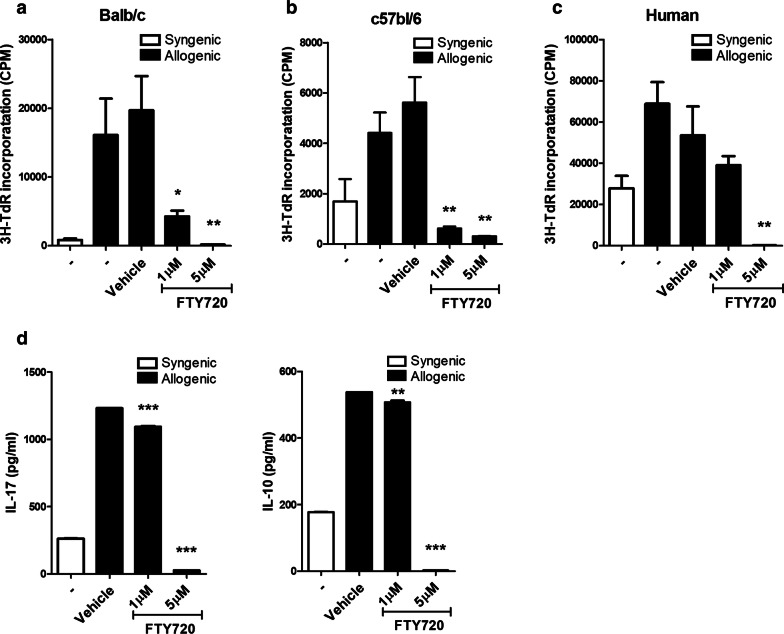
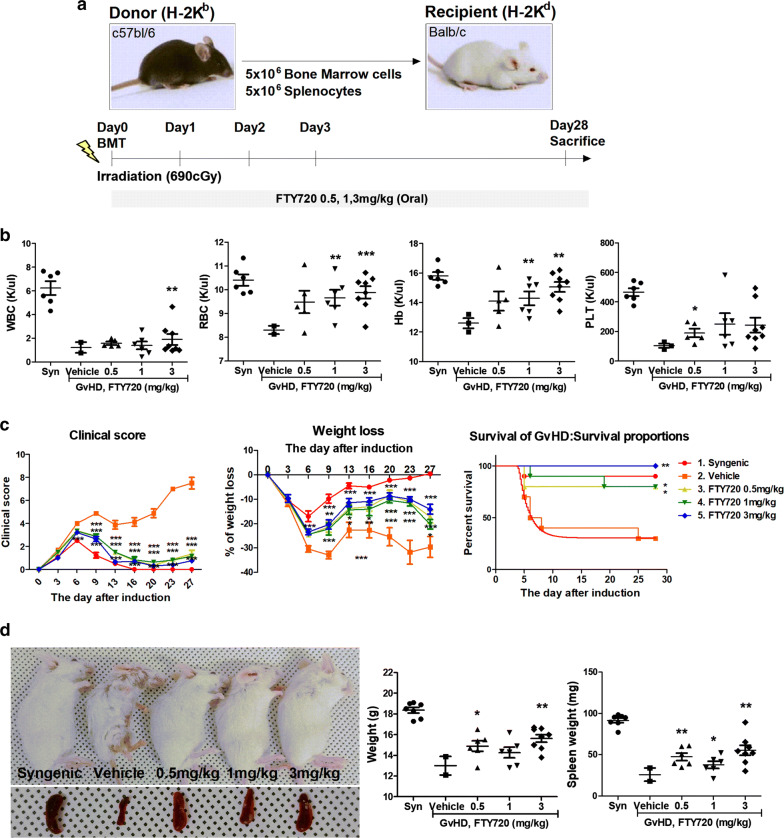
In this study, we evaluated the effects of FTY720 as a treatment for an animal GvHD model with inflammation and fibrosis. The splenocytes, lymph nodes, blood, tissues from Syngeneic mice and GvHD-induced mice treated vehicle or FTY720 were compared using flow cytometry, hematological analyses, histologic analyses.
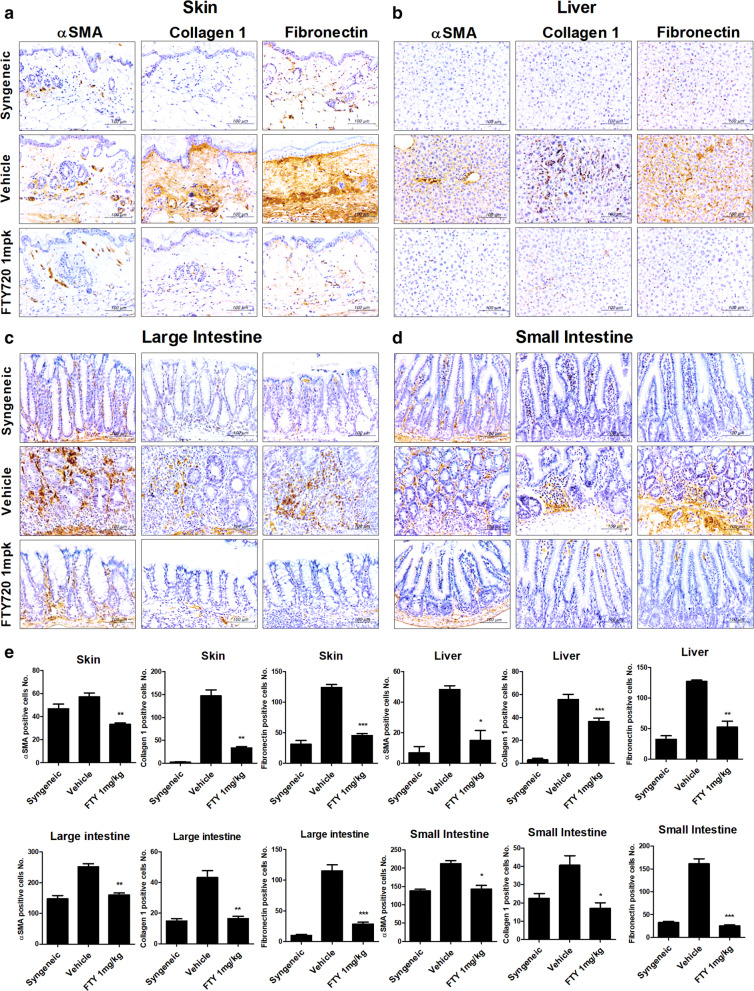
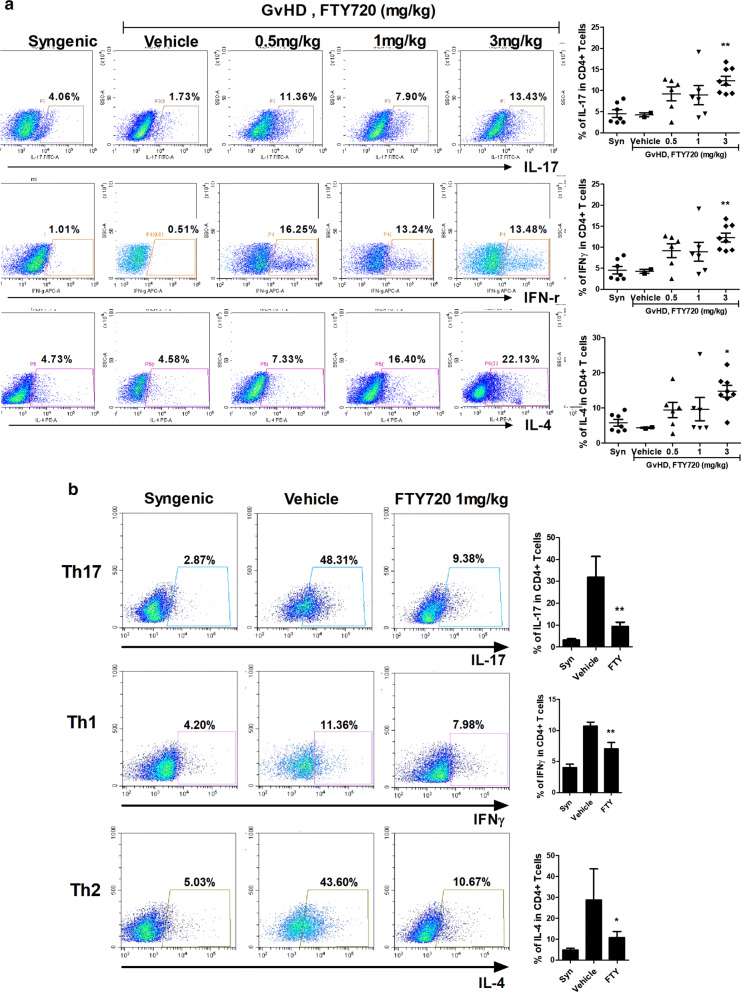
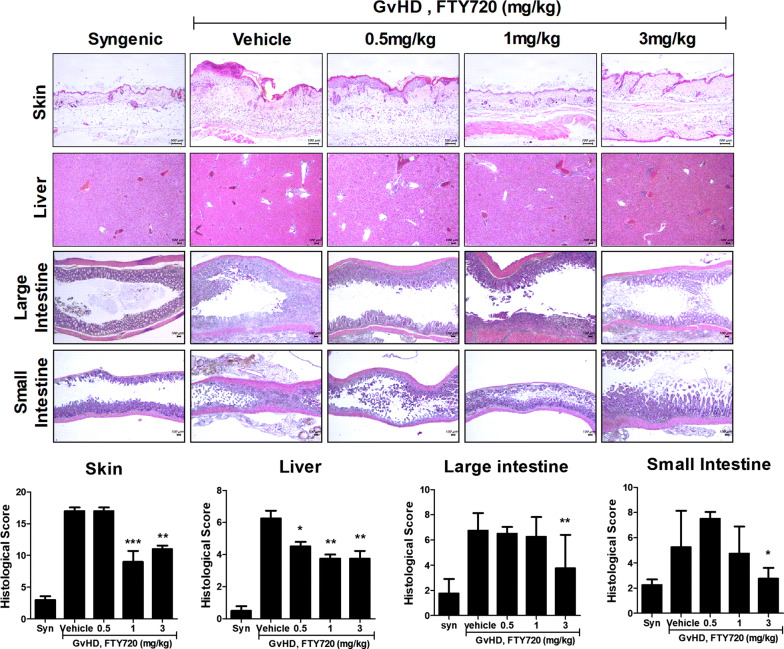
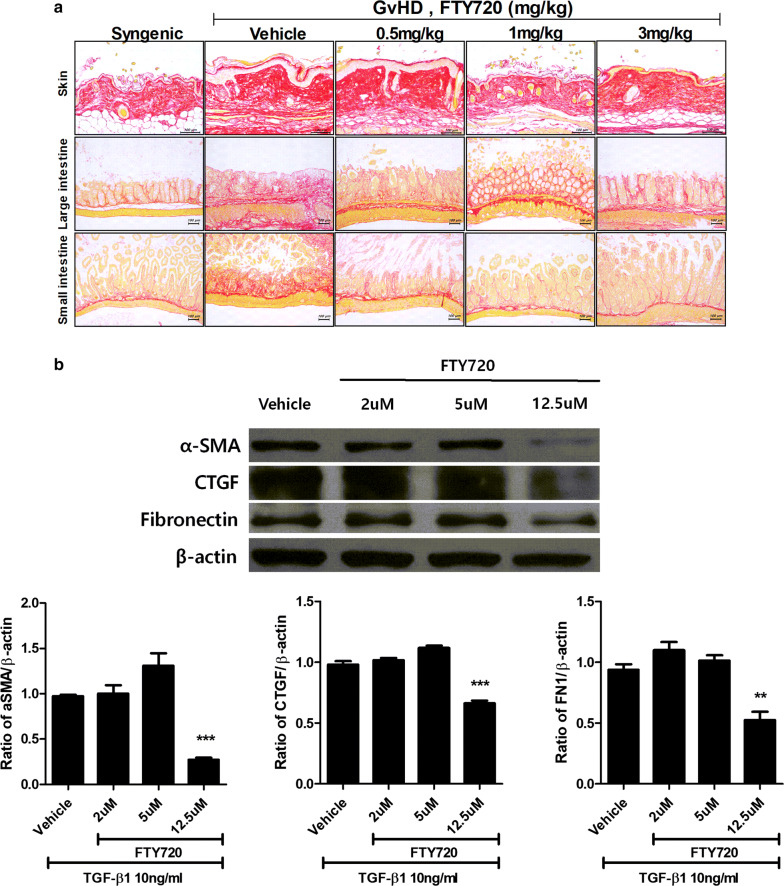
FTY720 reduced clinical scores based on the following five clinical parameters: weight loss, posture, activity, fur texture, and skin integrity. FACS data showed that T lymphocyte numbers increased in mesenteric lymph nodes and decreased in splenocytes of FTY720-treated mice. Tissue analysis showed that FTY720 reduced skin, intestinal inflammation, and fibrotic markers. FTY720 dramatically decreased α-smooth muscle actin, connective tissue growth factor, and fibronectin protein levels in keloid skin fibroblasts.
Thus, FTY720 suppressed migration of pathogenic T cells to target organs, reducing inflammation. FTY720 also inhibited fibrogenesis marker expression in vitro and in vivo. Together, these results suggest that FTY720 prevents GvHD progression via immunosuppression of TH17 and simultaneously acts an anti-fibrotic agent.
纤维化是在修复或反应过程中器官或组织内过量结缔组织的形成。移植物抗宿主病(GvHD)是同种异体组织移植的一种医学并发症,由移植的供体T细胞介导炎症反应;其特征是在炎症过程的最后阶段出现严重免疫反应并伴有纤维化。辅助性T细胞17在GvHD的发病机制中起关键作用。芬戈莫德(FTY720)是1-磷酸鞘氨醇(S1P)的类似物,在实验性移植模型中是一种有效的免疫抑制剂。
在本研究中,我们评估了FTY720作为动物GvHD炎症和纤维化模型治疗药物的效果。使用流式细胞术、血液学分析、组织学分析比较了同基因小鼠以及接受载体或FTY720治疗的GvHD诱导小鼠的脾细胞、淋巴结、血液和组织。
基于以下五个临床参数,FTY720降低了临床评分:体重减轻、姿势、活动、皮毛质地和皮肤完整性。流式细胞术数据显示,接受FTY720治疗的小鼠肠系膜淋巴结中的T淋巴细胞数量增加,脾细胞中的T淋巴细胞数量减少。组织分析表明,FTY720减轻了皮肤和肠道炎症以及纤维化标志物。FTY720显著降低了瘢痕疙瘩皮肤成纤维细胞中α平滑肌肌动蛋白、结缔组织生长因子和纤连蛋白的蛋白水平。
因此,FTY720抑制致病性T细胞向靶器官的迁移,减轻炎症。FTY720还在体外和体内抑制纤维生成标志物的表达。总之,这些结果表明FTY720通过抑制TH17免疫来预防GvHD进展,同时起到抗纤维化药物的作用。