Erfanmanesh Ahmad, Ghalyanchilangeroudi Arash, Nikaein Donya, Hosseini Hossein, Mohajerfar Tahereh
The Academic Center for Education, Culture, and Research (ACECR), Faculty of Veterinary Medicine, University of Tehran, Tehran, Iran.
Department of Microbiology and Immunology, Faculty of Veterinary Medicine, University of Tehran, Tehran, Iran.
Comp Immunol Microbiol Infect Dis. 2020 May 30;71:101497. doi: 10.1016/j.cimid.2020.101497.
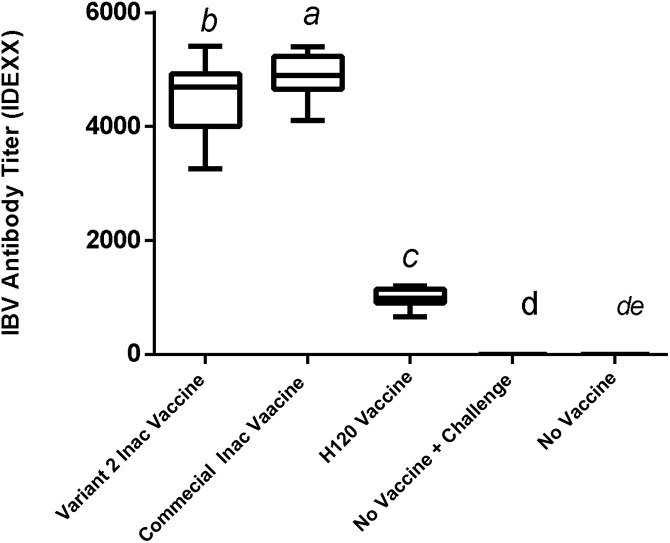
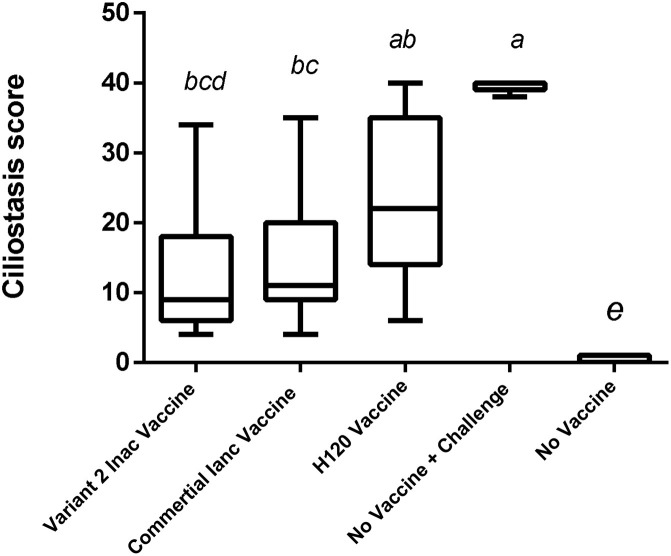
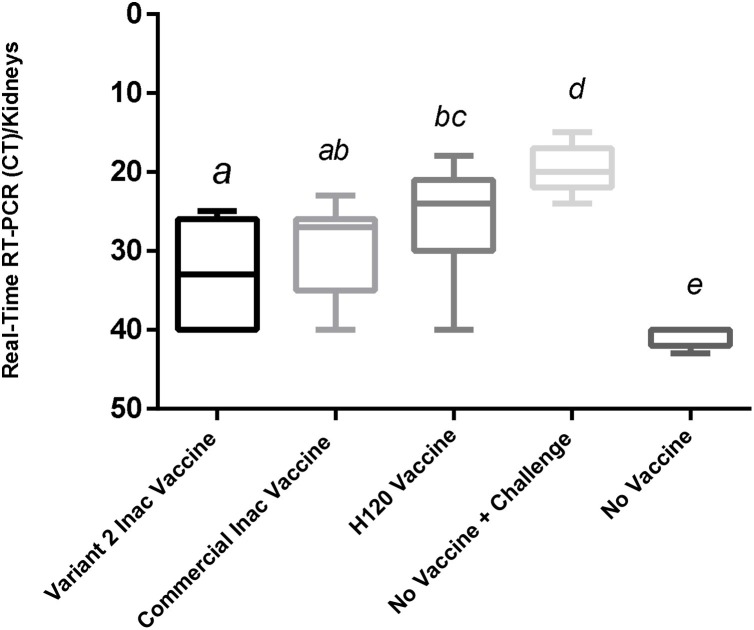
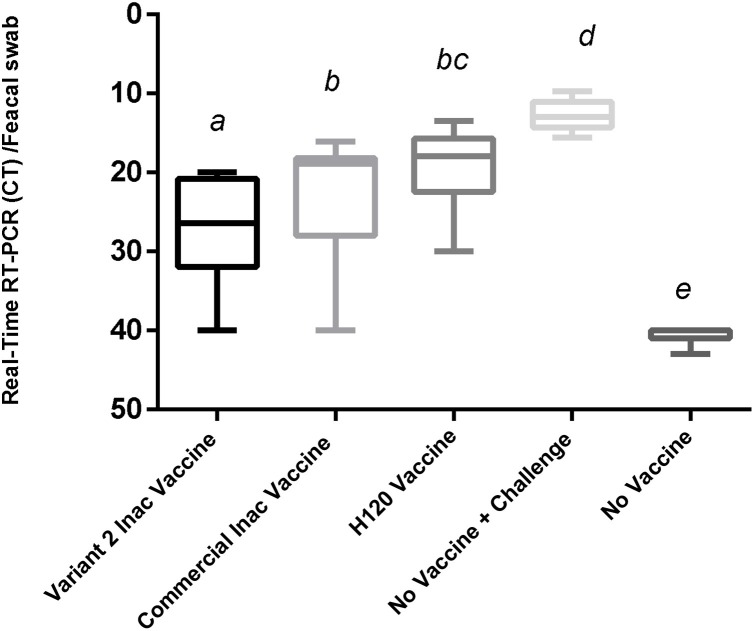
The infectious bronchitis virus (IBV) is the cause of avian infectious bronchitis (IB). IB is one of the most highly contagious diseases, which results in many economic losses in the poultry industry worldwide. The nature of this virus is such that it generates new genotypes continuously. Proper vaccination is the most suitable way of combatting IB. One of the novel genotypes of IBV, which has been circulating in the Middle Eastern countries, is the variant 2 (IS-1494/GI-23) genotype. This study aims to design and produce an autogenous variant 2 vaccines. After isolation and characterization of the Iranian variant 2, the inactivated vaccine was formulated according to the OIE guidelines, and its different aspects (Purity, titration, inactivation, immunization) were evaluated. The designed vaccine passed all of OIE quality control standards. In the assessment process, the protection rate in the groups receiving the variant 2 and commercial vaccines was 67 % and 60 %, respectively. Although the differences were not significant, they indicated better protection, and the viral load in the feces and the kidney of the group receiving the variant 2 vaccine was lower than that in the commercial vaccine. It is suggested that the variant2 strain should be added as one of the local strains to the commercial inactivated vaccines in areas affected by this genotype. The use of this vaccine in layer and breeder flocks can help to protect them against variant 2 during the production phase. Also, the transfer of maternal antibodies to offspring can provide strain-specific immunity for one-day-old chickens.
传染性支气管炎病毒(IBV)是禽传染性支气管炎(IB)的病原体。IB是传染性最强的疾病之一,给全球家禽业造成诸多经济损失。该病毒的特性使其不断产生新的基因型。适当接种疫苗是对抗IB最合适的方法。在中东国家传播的一种新型IBV基因型是变异2(IS-1494/GI-23)基因型。本研究旨在设计并生产一种自体变异2疫苗。在对伊朗变异2进行分离和鉴定后,按照世界动物卫生组织(OIE)的指导方针制备了灭活疫苗,并对其不同方面(纯度、滴定、灭活、免疫)进行了评估。所设计的疫苗通过了所有OIE质量控制标准。在评估过程中,接受变异2疫苗和商业疫苗组的保护率分别为67%和60%。虽然差异不显著,但表明变异2疫苗有更好的保护效果,且接受变异2疫苗组的粪便和肾脏中的病毒载量低于商业疫苗组。建议在受该基因型影响的地区,将变异2毒株作为当地毒株之一添加到商业灭活疫苗中。在蛋鸡和种鸡群中使用这种疫苗有助于在生产阶段保护它们免受变异2的侵害。此外,母源抗体向后代的传递可为一日龄雏鸡提供毒株特异性免疫力。